How to Choose a Chimney Sweep Company in Kingston, NY
The short answer: pick a company that holds a current CSIA certification, carries insurance you can check, has recent reviews from your area, and puts the price in writing before any work starts. A good sweep also follows the national inspection levels in NFPA 211 and can explain, in plain words, what your chimney needs. This guide walks you through each step so you can hire with confidence and keep your home safe through a cold Hudson Valley winter.
Kingston homes work hard once the cold rolls off the Catskills. Many were built long before central heat, and plenty still lean on a fireplace or wood stove all season. That makes a trustworthy chimney company worth finding before the busy months arrive.
What to look for, at a glance
- Holds a current CSIA certification
- Carries liability insurance you can verify
- Shows recent, local reviews with real photos
- Gives a written estimate before starting
- Explains the NFPA inspection level you are getting
- Does not push scary, same day repairs
- Knows older masonry and clay tile chimneys
- Serves Kingston and nearby Ulster County towns
What does a chimney sweep actually do?
A sweep checks your chimney and clears out the soot and creosote that build up when you burn wood. Creosote is the dark, sticky residue that wood smoke leaves behind on the flue walls. The Chimney Safety Institute of America points to it as a leading cause of chimney fires. Your technician removes it with brushes and a vacuum, then looks over the flue, damper, cap, and firebox for damage. The goal is simple. Your chimney should pull smoke up and out, and it should not catch fire while doing it.
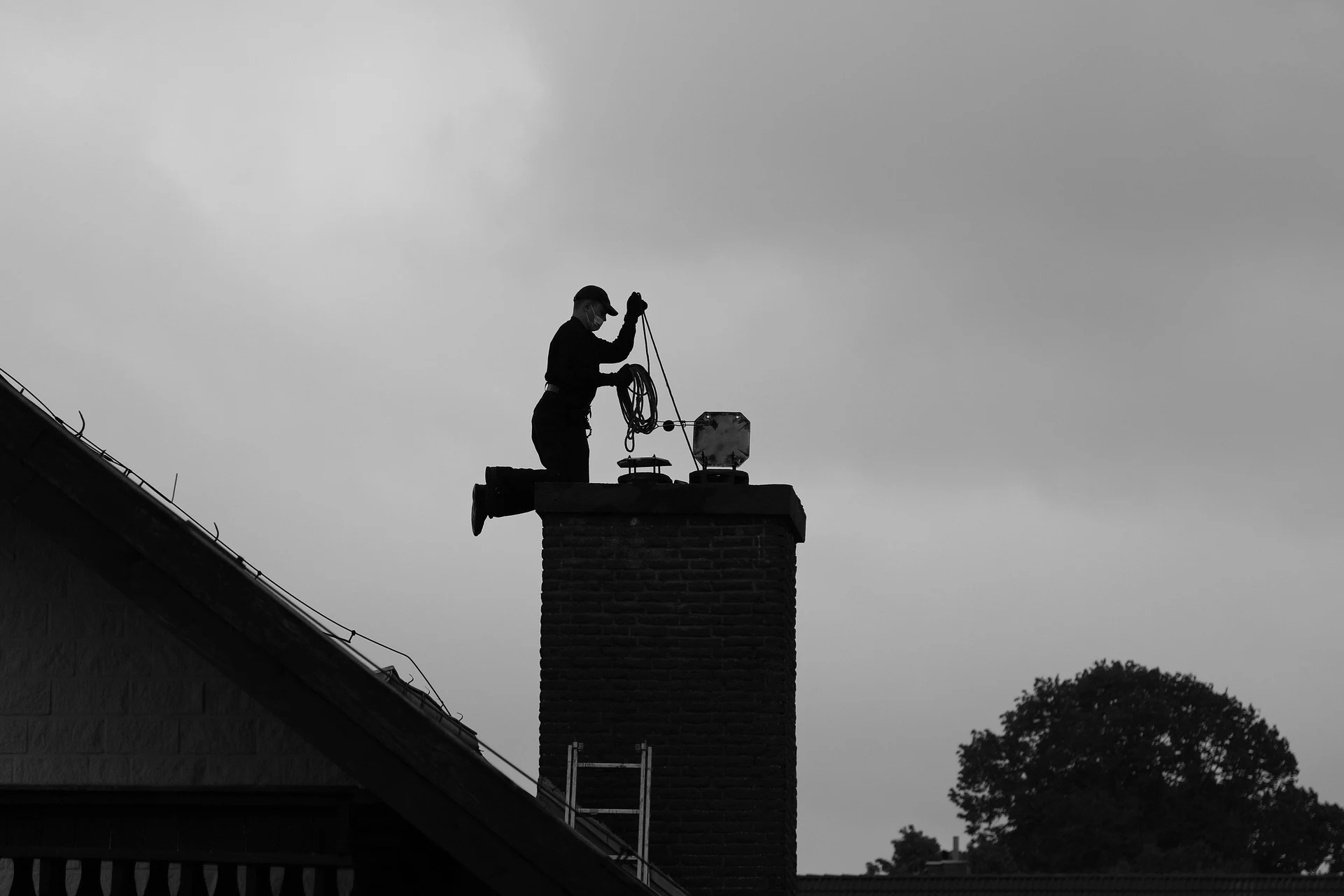
Most pros today work from the bottom up, inside the house. They lay down drop cloths and run a HEPA vacuum to keep soot off your floors. They climb to the roof only when they need to check the cap or crown. The job looks nothing like the old days of climbing boys, but the reason for it has not changed.
Why the right chimney company matters in Kingston
A neglected flue is a real hazard, not a small chore. The National Fire Protection Association reports that home heating equipment caused an average of 432 deaths and about $1.1 billion in property damage each year from 2019 to 2023. Many of those fires begin with creosote or a blocked flue. A yearly cleaning is the cheapest way to stay off that list.
There is also carbon monoxide to think about. This gas has no smell and no color. A cracked liner or a blocked flue can let it drift back into your living room. A certified pro checks for both problems in one visit, which is why the credential matters so much.
Older Kingston homes need extra care
Kingston is New York’s first capital, and its age shows on its rooftops. The Stockade District uptown still holds close to two dozen stone houses from the 1700s, and the Matthewis Persen House near the Four Corners at Crown and John Streets dates to about 1661. Down in the Rondout, the grand homes along West Chestnut Street were built for canal merchants in the 1800s. Even outside the historic districts, much of the housing here is old.
Older chimneys often have clay tile liners, aging mortar crowns, and brick that has faced more than a century of freeze and thaw. These need a technician who understands masonry, not someone who only knows new prefab flues. When you call, ask if they have worked on homes like yours. A pro who knows Kingston’s older chimneys will answer without missing a beat.
How to tell if your chimney needs cleaning
You do not have to guess. A few clear signs point to a flue that needs attention:
- A strong, smoky smell from the fireplace, even when it is cold
- Dark soot or a shiny, tar-like layer inside the flue
- Smoke drifting back into the room when you light a fire
- Weak draft, or fires that are hard to keep going
- Scratching or rustling that hints at a bird or animal nest
If you notice any of these, hold off on your next fire and call a professional to take a look.
How often should you have your chimney swept?
Once a year, for almost everyone. The national standard, NFPA 211, says chimneys, fireplaces, and vents should be checked at least once a year for soundness, buildup, and proper clearance. The CSIA backs the same yearly rule for every fuel type, gas included.
That surprises some people. A gas fireplace makes little creosote, but a bird can still nest in the flue and block the vent, and that turns into a carbon monoxide risk fast. If you burn wood often, or you burn wood that is not fully dry, you may need more than one visit a season.
The best time to book is late summer or early fall, before the first cold snap. Everyone in the area calls at once in November, so an early call means easier scheduling and a safe chimney before you light that first fire.
How to choose a chimney sweep: what to look for
This is the heart of it. Five checks separate a real pro from someone who bought a brush and a magnet sign for their truck.
Look for CSIA certification first
The Chimney Safety Institute of America is the most recognized name in the trade. A CSIA certified technician has passed a national exam built on the NFPA 211 standard, and has to re-test every three years to keep the credential current. You can look up certified pros by ZIP code on the CSIA website. If a company cannot show proof of certification anywhere, treat that as your answer.
Confirm they are licensed and insured
A sweep works on your roof and inside your home. If they get hurt or cause damage while uninsured, that bill can land on you. Ask for a certificate of liability insurance. A real professional hands it over without a fuss.
Ask which NFPA inspection level you are getting
NFPA 211 sets three inspection levels. A Level 1 is the yearly visual check for a chimney used the same way as always. A Level 2 adds a video camera scan of the flue and is required when you buy or sell a home, after a chimney fire, or after a major storm. A Level 3 is rare and involves opening up parts of the structure to reach a hidden problem.
Here is a quick test. If a company offers a Level 2 inspection but does not run a camera up the flue, it does not meet the standard. A technician who can explain these levels in plain words knows the trade.
Read local reviews and reputation
Start with the company’s Google Business Profile, then check their own site and ask your neighbors. Look past the star score. Read the recent reviews, look for photos of real work, and see how the company answers people who had a complaint. Steady local feedback tells you more than a single high number.
Get a written estimate and watch for upsells
Ask whether the visit fee is separate or rolls into the work, then get the number in writing before anyone starts. Be careful with a pro who suddenly finds urgent, costly damage on a routine visit and pushes you to fix it that same day. An honest technician shows you photos of the problem and lets you decide.
Questions to ask before you hire
A short phone call tells you a lot. Ask these:
- Are you CSIA certified, and what is your certification number?
- Do you carry liability insurance?
- What inspection level comes with the cleaning?
- Will you put the estimate in writing?
- Do you use drop cloths and a vacuum to protect my home?
- Have you worked on older Kingston or Ulster County chimneys?
- What happens if a problem shows up after you leave?
How they answer matters as much as the answers themselves. A pro is glad to talk it through. Someone who dodges the questions is telling you something.
Red flags and chimney sweep scams to avoid
Every trade has a few bad actors, and chimney work is no exception. Watch for these:
- A very cheap “special” that turns into a big bill once they arrive
- Invented or exaggerated damage with heavy pressure to fix it now
- No proof of certification or insurance
- Cash only, with no written receipt
- An unmarked vehicle and no local address or phone number
If a visit feels more like a sales pitch than a service call, trust your gut. You can always get a second opinion before spending a dollar. For the full breakdown of scam patterns and what to do if you’ve been targeted, see our guide on how to avoid chimney sweep scams in Kingston, NY.
What should a chimney sweep cost in Kingston, NY?
Price depends on your chimney’s condition, how much buildup there is, and whether repairs are needed. Across the country, a standard cleaning for a wood-burning fireplace usually runs about $150 to $350, and a basic Level 1 inspection runs about $100 to $250. A Level 2 inspection with a camera costs more. YYour local rate in Kingston typically runs $150 to $300. A first cleaning after years of neglect costs more than a yearly touch up.
Keep the math in view. A yearly inspection is small next to the cost of a chimney fire or a liner replacement, which can climb into the thousands. Skipping the visit to save a little now is how small problems turn into big ones.
Services a full-service chimney company should offer
A cleaning is one service. A full-service company can also inspect, reline a worn flue, install a cap, repair a crown, tuckpoint loose mortar, and clean a dryer vent. Hiring one team that does it all means the people who spot a problem are the same ones who can fix it.
Chimney service areas around Kingston
A good local company covers more than the city line. Look for one that serves Kingston (12401) and the towns around it, like Lake Katrine, Port Ewen, Hurley, West Hurley, Stone Ridge, Woodstock, and Saugerties, plus Rhinebeck and Red Hook across the Hudson. Local coverage means faster scheduling and a crew that already knows the area’s homes.
Ready to hire a trusted Kingston chimney sweep?
Choosing well comes down to a few clear checks. Look for CSIA certification, real insurance, honest reviews, and a written price. Book early, ask good questions, and pick a team that knows Kingston’s older chimneys. Do that, and you can enjoy a warm fire all winter without the worry.
Frequently asked questions
What is the difference between chimney sweeping and chimney cleaning?
They mean the same thing. “Sweeping” is the old trade word and “cleaning” is the plain version. Both clear soot and creosote from the flue. Some companies use “cleaning” for a lighter job, so ask what the visit includes.
Do chimney sweeps make a mess?
A professional should not. Modern crews use drop cloths and a HEPA vacuum, and most work from the bottom up so dust stays contained. Dirty floors when they leave mean corners were cut.
How long does a chimney cleaning take?
A routine cleaning with a basic inspection usually takes about 45 minutes to an hour. A chimney that has not been touched in years can take longer.
Should you tip your chimney sweep?
Tipping is not expected for this kind of skilled work. If someone does a great job, a tip or a kind review is always welcome.
Are chimney sweeps worth it?
For anyone who burns wood, yes. A yearly cleaning clears the creosote that causes fires and catches small problems before they get expensive.