
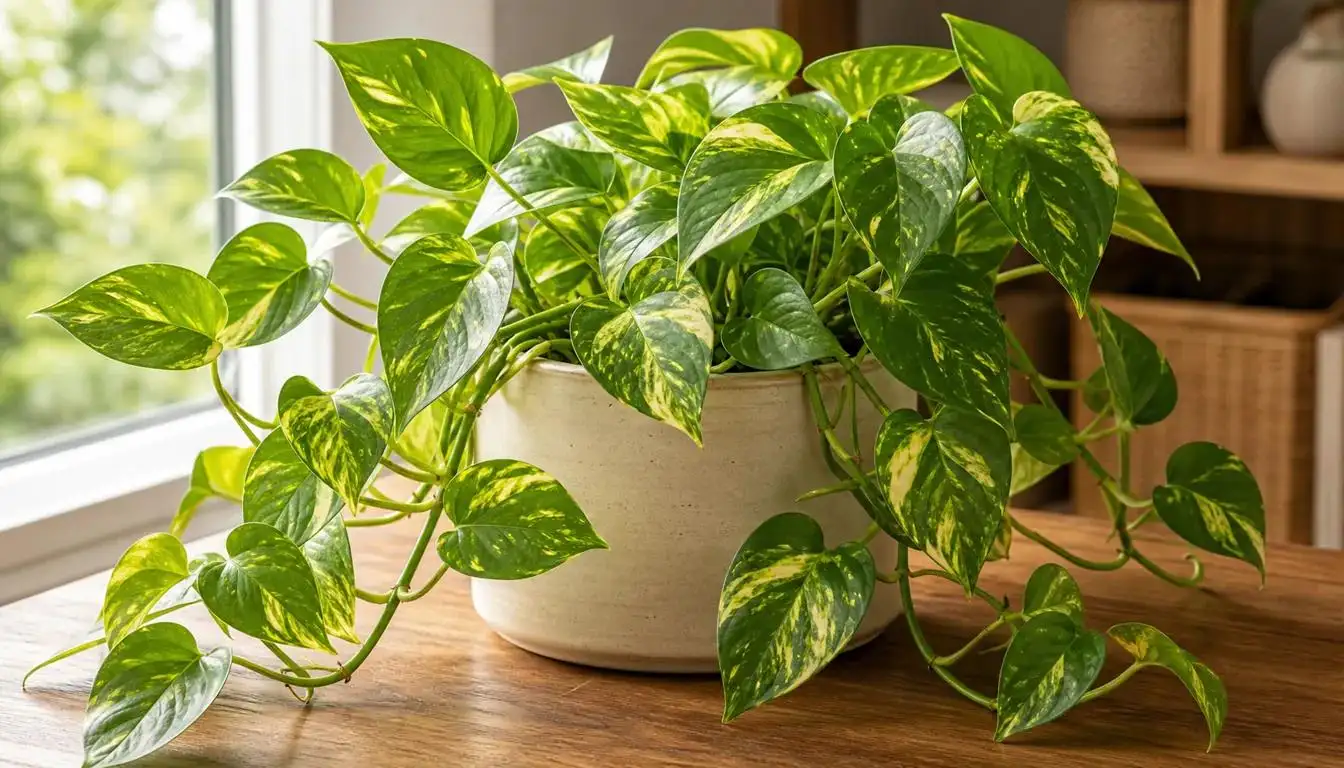
How to Propagate Pothos: A Step-by-Step Guide
Pothos is one of the easiest houseplants to propagate. You can turn one healthy vine into several new plants with a few simple steps.
The secret is choosing the right part of the stem. Every successful cutting needs at least one healthy node. This small section allows new roots and shoots to develop.
You can root pothos cuttings in water or plant them directly in soil. Both methods work well when you provide the right conditions.
This guide explains how to propagate pothos, where to cut the vine, when to transplant it, and how to fix common problems.
Quick answer: Cut a healthy pothos vine just below a node. Place the node in water or moist potting mix, keeping the leaves above the growing medium. Provide bright, indirect light and allow the cutting time to develop roots.
What You Need to Propagate a Pothos Plant
Gather a few basic supplies before taking your cuttings.
| Supply | Purpose |
|---|---|
| Healthy pothos plant | Provides strong stems for propagation |
| Clean, sharp scissors or pruning shears | Makes clean cuts and reduces stem damage |
| Clear glass or jar | Holds water during propagation |
| Fresh water | Keeps the submerged node hydrated |
| Small pot with drainage holes | Holds soil-rooted cuttings |
| Well-draining potting mix | Supports healthy root development |
| Perlite or sphagnum moss | Optional materials for a light rooting medium |
You do not need rooting hormone for most pothos cuttings. Healthy stems can develop roots without it.
Choose a healthy mother plant with firm stems and no obvious signs of pests or disease. Avoid weak, damaged, or mushy vines.
How to Identify a Pothos Node Before Cutting
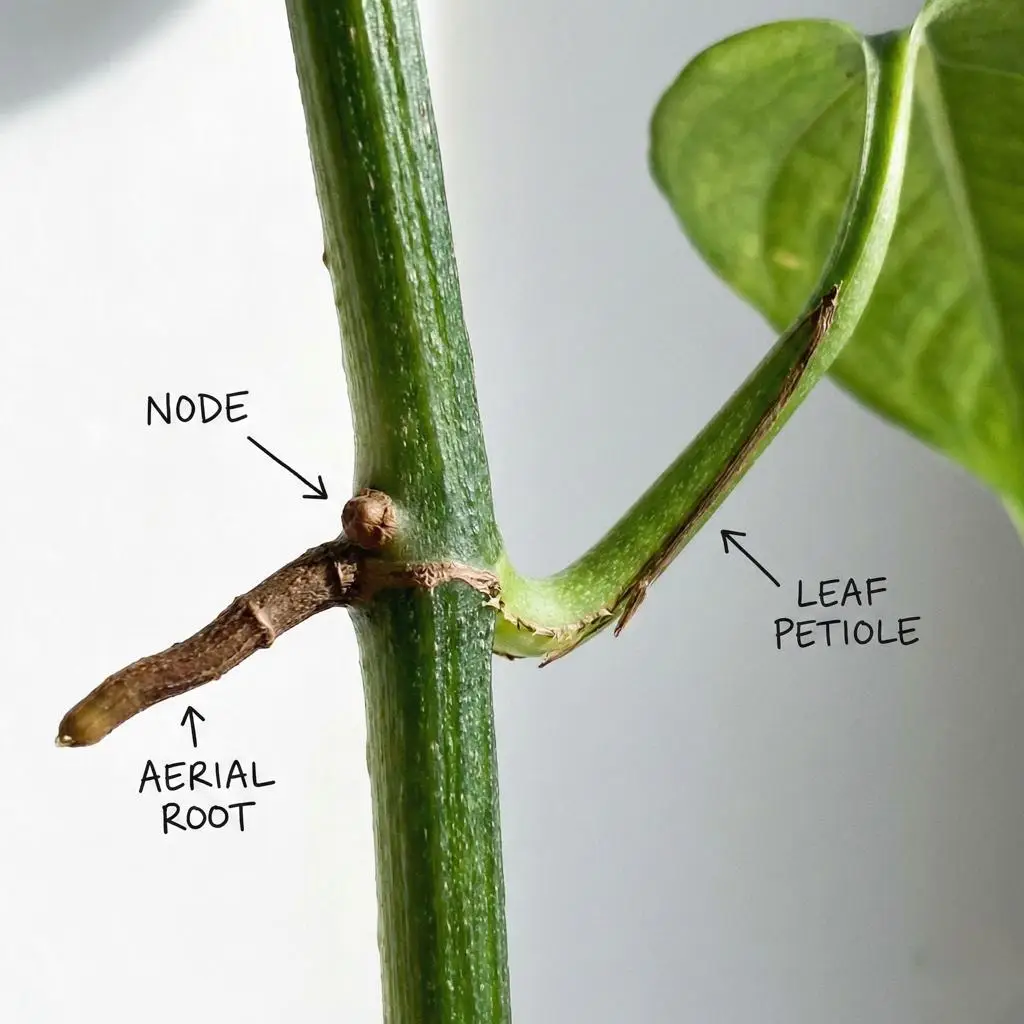
Identifying a node is the most important part of pothos propagation.
A node is the point on a stem where a leaf and its petiole attach. You may also see a small brown bump or an aerial root growing from this area.
New roots and shoots can develop from viable nodes.
An internode is the section of stem between two nodes. Cutting through an internode alone will not give you the same propagation potential as a cutting that includes a node.
Before cutting, look for:
- A healthy section of stem.
- At least one visible node.
- One or more healthy leaves, if available.
- A firm stem without dark, mushy areas.
Where to Cut Pothos to Propagate
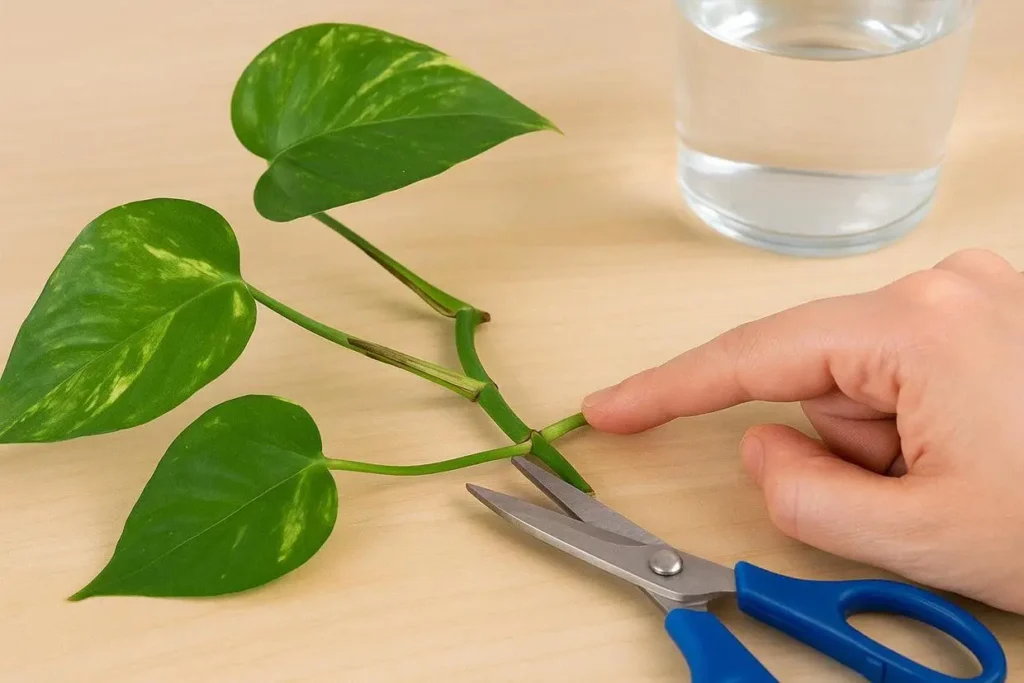
Find a healthy node on the vine. Make your cut about ¼ inch below it.
This leaves the node attached to the cutting.
For a longer cutting, choose a section with two or three nodes and at least one healthy leaf. Remove any leaves that would sit underwater or become buried in soil.
Can You Propagate Pothos from a Single Node?
Yes. A single-node cutting can produce a new pothos plant.
Cut a small section of stem that includes one node. Keep any attached leaf above the water or soil.
Place the node in your chosen rooting medium. Give it bright, indirect light and consistent moisture.
A single-node cutting may develop more slowly than a larger cutting. However, it can still produce roots and new growth when the node is healthy.
How to Propagate Pothos in Water
Water propagation is a popular method because you can watch the roots develop.
Follow these steps to grow pothos cuttings in water.
Step 1: Select a Healthy Vine
Choose a healthy pothos vine with firm stems and green leaves.
Avoid sections with yellowing, black spots, or soft stems. Healthy plant material gives your cutting a better starting point.
Step 2: Cut Below a Node
Use clean, sharp scissors or pruning shears.
Cut about ¼ inch below a node. Make sure the cutting includes at least one node and preferably one or more healthy leaves.
You can prepare several cuttings from one long vine. Each cutting must have its own viable node.
Step 3: Remove the Lower Leaves
Remove leaves near the bottom of each cutting.
These leaves should not sit underwater. Submerged leaves can decay and affect water quality.
Keep the upper leaves attached. They help the cutting continue its growth.
Step 4: Place the Cutting in Water
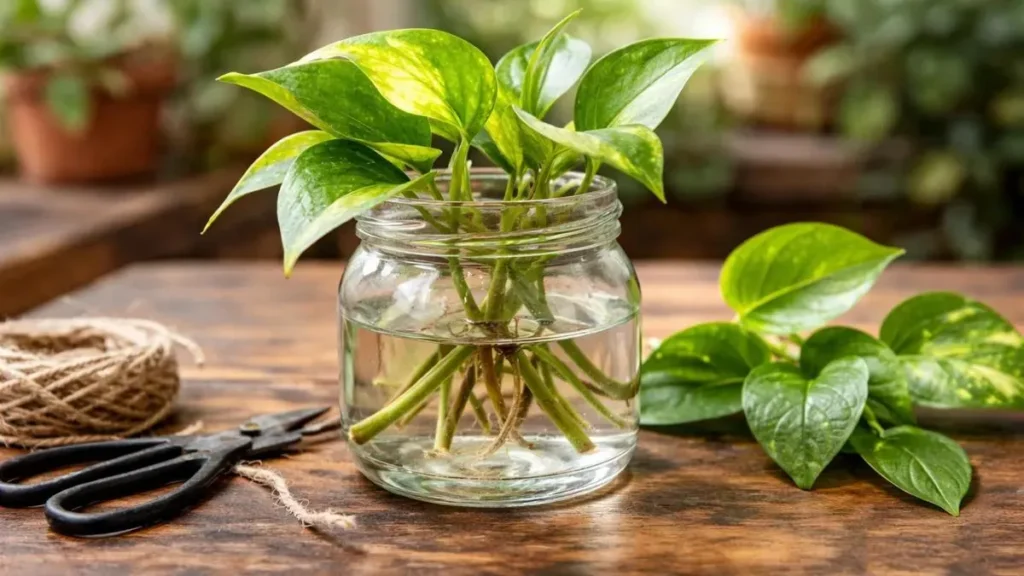
Put the cutting in a clean glass or jar filled with room-temperature water.
Make sure at least one node stays underwater. Keep all leaves above the waterline.
If the cutting has several nodes, you can submerge more than one. This gives additional points where roots may develop.
Step 5: Choose the Right Location
Place the jar in a warm spot with bright, indirect light.
Avoid strong direct sunlight. It can heat the water and stress the cutting.
A location near a bright window usually works well if the glass does not receive harsh afternoon sun.
Step 6: Maintain the Water
Check the water level regularly. Keep the node submerged while roots develop.
Iowa State University Extension’s propagation guidance recommends changing propagation water one or two times each week. Replace it sooner if it becomes cloudy or develops an unpleasant smell.
Clean the jar if you notice buildup. Fresh water helps maintain a suitable environment for developing roots.
Step 7: Wait for Roots to Develop
Check your cutting regularly for new roots.
According to University of Wisconsin–Madison Extension, pothos vines can root in water or vermiculite within three to four weeks. Temperature, light, and cutting health can affect this timeline.
Once the roots reach around 1 inch or form a small healthy network, you can move the cutting into soil.
Do not wait until the roots become excessively long and tangled. A smaller root system can be easier to handle during transplanting.
How to Propagate Pothos Directly in Soil
You can also root pothos without using water first.
This method allows the cutting to develop roots directly in a growing medium. It also avoids the need to transfer water-grown roots into soil later.
Step 1: Prepare Your Cutting
Choose a healthy vine with at least one node.
Cut just below the node using clean scissors. Remove the lower leaves so they do not become buried.
Step 2: Prepare the Potting Mix
Choose a small pot with drainage holes.
Fill it with a light, well-draining houseplant potting mix. You can add perlite to improve airflow and drainage.
Avoid heavy, compacted soil. It can hold too much moisture around the cutting.
Step 3: Plant the Cutting
Make a small hole in the potting mix.
Insert the cutting so at least one node sits below the surface. Keep the leaves above the soil.
Gently press the mix around the stem to hold it in place. Do not pack the soil too tightly.
Step 4: Maintain Moisture and Humidity
Water the mix lightly after planting.
Keep it evenly moist while roots develop, but avoid waterlogging. The pot must drain freely.
UNH Extension’s guide to propagating houseplants explains why humidity matters while cuttings develop roots. A clear plastic cover or propagation bag can help maintain humidity.
Keep the cover from touching the leaves. Open it regularly for fresh air and remove it once the cutting is established.
Step 5: Provide Bright, Indirect Light
Place the pot in a warm location with bright, indirect light.
Avoid direct sunlight and cold drafts.
Check the soil regularly. Water when needed to prevent the rooting medium from drying out completely.
Give the cutting time to establish. New growth may appear after roots begin developing.
Should You Propagate Pothos in Water or Soil?
Both methods can produce healthy pothos plants. Your choice depends on how you prefer to manage the cutting.
| Feature | Water Propagation | Soil Propagation |
|---|---|---|
| Root visibility | You can watch roots develop | Roots remain hidden |
| Maintenance | Requires regular water checks and changes | Requires careful moisture control |
| Transplanting | Requires moving the cutting into soil | No water-to-soil transfer |
| Main risk | Poor water quality or submerged leaves | Excess moisture or drying out |
| Best for | Beginners who want to monitor root growth | Growers who prefer direct planting |
Choose water if you want to monitor root development. Choose soil if you want to avoid transplanting later.
Neither method guarantees that every cutting will survive. Healthy nodes and suitable growing conditions matter most.
Can You Propagate Pothos from a Single Leaf or a Stem Without Leaves?
Pothos propagation depends on the stem tissue, especially the node. A detached leaf alone is not enough.
Here is what you need to know about different cutting types.
Can You Propagate Pothos from Just One Leaf?
A detached pothos leaf without a piece of stem containing a node cannot produce a new pothos vine.
The leaf may remain green for some time. However, it will not develop into a complete plant without the required node tissue.
A leaf attached to a piece of stem with a viable node is different. That cutting can develop roots and potentially produce new growth.
Can You Propagate Pothos Stems Without Leaves?
Yes. A leafless stem section can develop roots if it contains a healthy node.
However, roots and new shoots are separate stages of growth. A cutting may develop roots before producing a visible shoot.
Place the node in water or a suitable rooting medium. Keep it warm and provide bright, indirect light.
Do not assume a leafless cutting has failed simply because it has not produced a new leaf yet. Check that the stem remains firm and healthy.
Can You Propagate Pothos Without Roots?
Yes. Pothos cuttings do not need existing roots before propagation.
That is the purpose of taking a stem cutting. The node can produce new roots after you place it in water or a suitable rooting medium.
Choose a firm cutting with a healthy node. Avoid stems that are already soft, black, or decaying.
How Long Does Pothos Propagation Take?
Pothos cuttings commonly develop roots within three to four weeks under suitable conditions.
The exact timeline depends on several factors:
- Temperature: Warm conditions generally support faster root development.
- Light: Bright, indirect light supports healthy growth.
- Cutting health: Firm stems with healthy nodes provide a better starting point.
- Moisture: Water or soil must remain suitable for root development.
- Growing medium: Water and soil can produce different rooting experiences.
The University of Florida IFAS Extension reports that pothos buds can break in two to three weeks and roots can develop in three to four weeks under production conditions.
Do not judge a cutting by the calendar alone. Look for firm stems, healthy roots, and signs of new growth.
How to Transfer Water-Propagated Pothos to Soil
Once your cutting has a small, healthy root system, you can transfer it into soil.
Follow these steps to reduce unnecessary root damage.
Step 1: Choose a Suitable Pot
Select a small pot with drainage holes.
A pot that is too large can hold excess moisture around the roots. Choose one that comfortably fits the cutting and its developing root system.
Step 2: Prepare the Potting Mix
Use a well-draining houseplant potting mix.
You can add perlite to improve the mix’s structure and drainage. Fill the pot, leaving enough space for the cutting.
Step 3: Plant the Cutting
Make a hole in the soil and gently position the roots inside.
Cover the roots with potting mix. Keep the stem and leaves above the soil surface.
Avoid pulling or forcing delicate roots into the pot.
Step 4: Water the Soil
Water the pot thoroughly until excess water drains from the bottom.
Empty any water collected in the saucer. Do not leave the pot sitting in standing water.
Step 5: Provide Consistent Care
Place the new plant in bright, indirect light.
Keep the potting mix lightly moist while the cutting adjusts. Avoid both waterlogging and letting the root area dry out completely.
Some adjustment stress can occur after moving water-rooted cuttings into soil. However, yellowing, wilting, or curling can also indicate excess moisture, root damage, or unsuitable light.
Check the soil and roots before deciding what caused the problem.
Common Pothos Propagation Problems and How to Fix Them
Not every cutting develops roots immediately. Some cuttings may also struggle after transplanting.
Use this table to identify common problems and practical solutions.
| Problem | Possible Cause | What to Do |
|---|---|---|
| Cutting has no roots | Missing node, cool conditions, or unhealthy stem | Check for a viable node and provide suitable warmth and light |
| Stem becomes mushy | Rot or poor water conditions | Remove decayed sections and restart with healthy stem tissue |
| Water becomes cloudy | Organic buildup or decaying plant material | Clean the jar and replace the water |
| Leaves turn yellow | Submerged leaves, excess moisture, or stress | Remove damaged leaves and check water or soil conditions |
| Cutting wilts after planting | Root damage or moisture imbalance | Check the soil and maintain suitable moisture |
| Roots develop but no new leaves appear | Shoot development may take longer | Keep the node healthy and allow more time |
Why Is My Pothos Cutting Not Rooting?
Start by checking the node.
A cutting without a viable node is unlikely to produce a new pothos plant. A healthy node can still take several weeks to develop roots.
Also check the temperature, light, and water quality. Avoid placing the cutting in direct sunlight or allowing the stem to decay.
Why Are My Pothos Leaves Yellow After Transplanting?
Yellow leaves can result from several issues.
The cutting may be adjusting to soil, but yellowing can also indicate overwatering, underwatering, root damage, or poor drainage.
Check the moisture level before watering again. Make sure the pot has drainage holes and the roots remain healthy.
Remove badly damaged leaves if necessary.
Why Does My Pothos Cutting Have Roots but No New Leaves?
Root development does not always mean new leaves will appear immediately.
A cutting may need more time to produce a new shoot. Check that the node remains firm and healthy.
If the stem becomes soft or black, rot may be developing. Remove damaged sections and keep only healthy plant material.
Tips for Growing Fuller Pothos Plants from Cuttings
You can use propagation to create a fuller pothos plant rather than growing several separate plants.
Try these practical tips:
- Take several cuttings: Prepare multiple healthy cuttings from a long vine.
- Choose cuttings with nodes: Each cutting needs at least one viable node.
- Use a suitable pot: Choose a container with enough space for the cuttings and drainage holes.
- Plant multiple rooted cuttings together: This creates a fuller appearance in one pot.
- Provide bright, indirect light: Good light supports healthy growth.
- Water carefully: Avoid leaving the soil constantly waterlogged.
- Prune long vines: Regular pruning can encourage a more compact shape over time.
The University of Wisconsin–Madison Extension also recommends planting several rooted pothos cuttings together in one pot to create a fuller plant.
Frequently Asked Questions About Pothos Propagation
1. Can you propagate pothos from just one leaf?
No. A detached leaf without a piece of stem containing a viable node cannot produce a new pothos vine. The cutting needs node tissue to develop into a new plant.
2. Can pothos grow from a stem without leaves?
Yes. A healthy stem section with at least one viable node can develop roots without leaves. However, new shoot growth may take additional time.
3. Can you propagate pothos without roots?
Yes. Pothos stem cuttings can develop new roots in water or a suitable growing medium. Start with a healthy cutting that includes a node.
4. Is it better to propagate pothos in water or soil?
Both methods work. Water lets you monitor root growth, while soil avoids the need to transplant water-rooted cuttings. Choose the method that suits your preference.
5. How long can pothos cuttings stay in water?
You can keep pothos cuttings in water for an extended period if you maintain clean water and suitable light. If you want to grow them in soil, transplant them once a small, healthy root system develops.
6. Can you propagate pothos from an aerial root?
Yes. An aerial root can help you identify a node, but the cutting still needs the stem tissue containing that node. Place the node in water or a suitable rooting medium.
7. Can you propagate pothos in sphagnum moss?
Yes. You can use lightly moist sphagnum moss as a rooting medium. Keep the node in contact with the moss, maintain suitable moisture, and avoid waterlogging.
8. Do you need rooting hormone to propagate pothos?
No. Rooting hormone is not usually necessary for pothos cuttings. A healthy stem, a viable node, and suitable growing conditions are more important.
Final Thoughts
Propagating pothos is a simple way to grow new plants from an existing vine.
Start with a healthy cutting that includes at least one node. Choose water or soil propagation based on your preference, then provide suitable light, warmth, and moisture.
Be patient while the roots develop. With the right cutting and consistent care, you can turn one pothos vine into several healthy plants.
Safety note: Pothos is listed as harmful if eaten by the Royal Horticultural Society. Keep cuttings and plant material away from children and pets, and wash your hands after handling damaged stems or sap.