
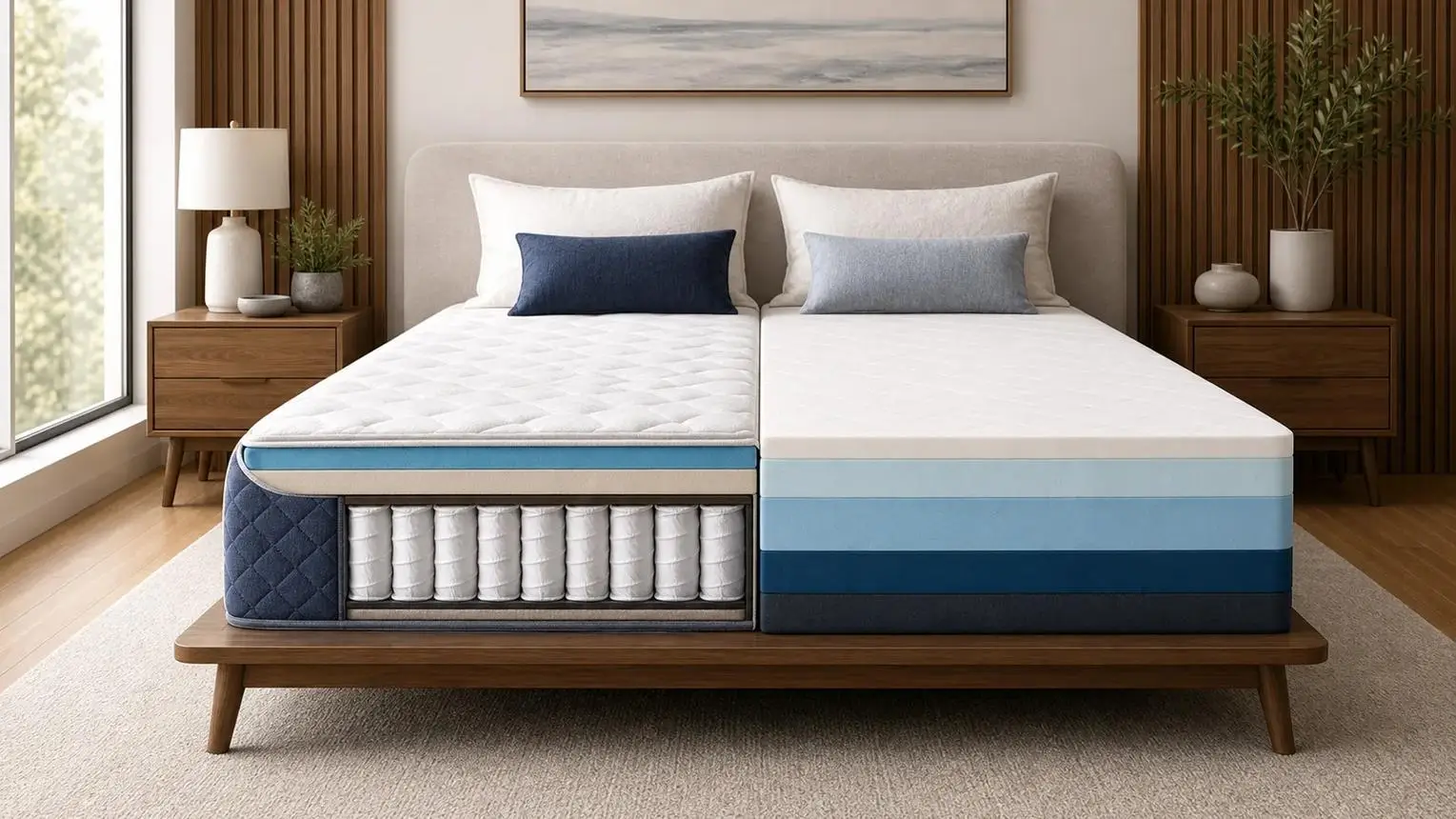
Memory Foam vs. Hybrid Mattress: Which Is Better for You?
Choosing between a memory foam and hybrid mattress depends on how you sleep, how much support you need, and what feels comfortable.
Both mattress types can provide pressure relief and proper support. However, they use different construction methods and deliver different sleeping experiences.
If you’re searching for make a table comparing memory foam vs hybrid mattresses, this guide breaks down their main differences. You’ll learn how they compare in comfort, cooling, motion isolation, edge support, durability, and price.
Memory Foam vs. Hybrid Mattress: Quick Comparison Table
| Comparison Factor | Memory Foam Mattress | Hybrid Mattress |
|---|---|---|
| Construction | Multiple layers of foam | Foam or other comfort layers over a coil support core |
| Feel | Contouring, cushioning, and slower response | More responsive, lifted, and slightly bouncy |
| Pressure Relief | Often excellent because foam contours around the body | Good to excellent, depending on comfort layers and firmness |
| Support | Depends on foam quality, density, and layer design | Combines comfort layers with a coil support system |
| Temperature Regulation | Traditional memory foam may retain body heat | Coil systems can improve airflow, but materials still matter |
| Motion Isolation | Usually excellent | Varies by coil design and comfort layers |
| Bounce | Minimal bounce | Usually more bounce and responsiveness |
| Edge Support | Varies by foam density and construction | Often stronger, especially with reinforced edges |
| Ease of Movement | Slow response may make repositioning harder | Usually easier because of the responsive coil system |
| Noise | Generally quiet | Usually quiet with pocketed coils, but construction varies |
| Durability | Depends on foam density, quality, and construction | Depends on foam quality, coil construction, and overall materials |
| Price | Available across a wide range of budgets | Often has a higher starting price |
| Best For | Side sleepers, couples, and people who prefer close contouring | Combination sleepers, hot sleepers, and people who prefer responsiveness |
Quick answer: Memory foam may suit you better if you want deep contouring and motion isolation. A hybrid may be a better choice if you prefer bounce, easier movement, and a more responsive feel.
Neither construction is automatically better. The quality of materials and mattress design matter just as much.
What Is a Memory Foam Mattress?
A memory foam mattress uses layers of foam instead of a traditional spring support system. Its main comfort material is viscoelastic foam, which responds to body heat and pressure.
This material gradually contours around your body. It creates a close, cushioned feeling that can help reduce pressure around the shoulders, hips, and other pressure points.
Memory foam mattresses can use several foam formulations. These include traditional memory foam, gel-infused foam, open-cell foam, and other polyurethane foam layers.
How Is a Memory Foam Mattress Made?
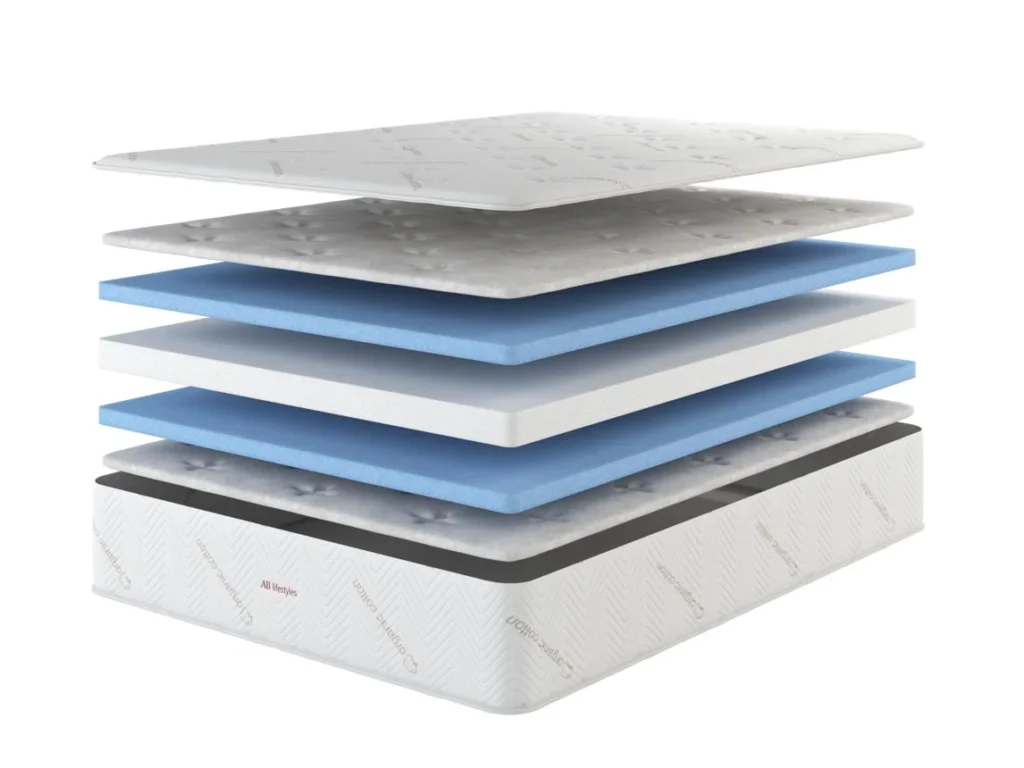
Most all-foam mattresses contain multiple layers. Each layer serves a different purpose.
1. Comfort Layer
The top layer provides cushioning and body contouring. It is often made from memory foam or another soft foam material.
2. Transition Layer
This layer sits beneath the comfort foam. It helps distribute body weight and creates a gradual transition toward the firmer support base.
3. Support Layer
The bottom layer usually contains high-density polyfoam. It provides the mattress with structure and helps support the upper layers.
The exact number of layers and materials varies between mattress models.
Advantages of Memory Foam Mattresses
- Pressure relief: Memory foam contours around the body and cushions pressure points.
- Motion isolation: Foam absorbs movement, which can help reduce disturbances between partners.
- Quiet performance: All-foam mattresses do not have metal coils that can create spring-related noise.
- Close contouring: The material creates a hugging sensation for people who enjoy sinking into their mattress.
- Wide price selection: Memory foam mattresses are available at different price points.
Disadvantages of Memory Foam Mattresses
- Heat retention: Traditional memory foam can retain body heat.
- Limited bounce: Foam generally responds more slowly than a coil system.
- Movement difficulties: Some sleepers find deep contouring makes changing positions harder.
- Variable edge support: Some all-foam mattresses compress noticeably near the perimeter.
- Initial odor: Certain new foam mattresses release a temporary manufacturing smell after unpacking.
These disadvantages are not present in every model. Foam formulation, density, thickness, and overall construction can change performance.
What Is a Hybrid Mattress?
A hybrid mattress combines a coil support system with comfort layers made from foam or other cushioning materials.
Many hybrids use individually wrapped pocketed coils. Each coil sits inside its own fabric pocket and can respond more independently to pressure.
The comfort layers may contain memory foam, polyfoam, latex, microcoils, or other materials.
This combination aims to provide cushioning from the upper layers and support from the coil system.
How Is a Hybrid Mattress Made?
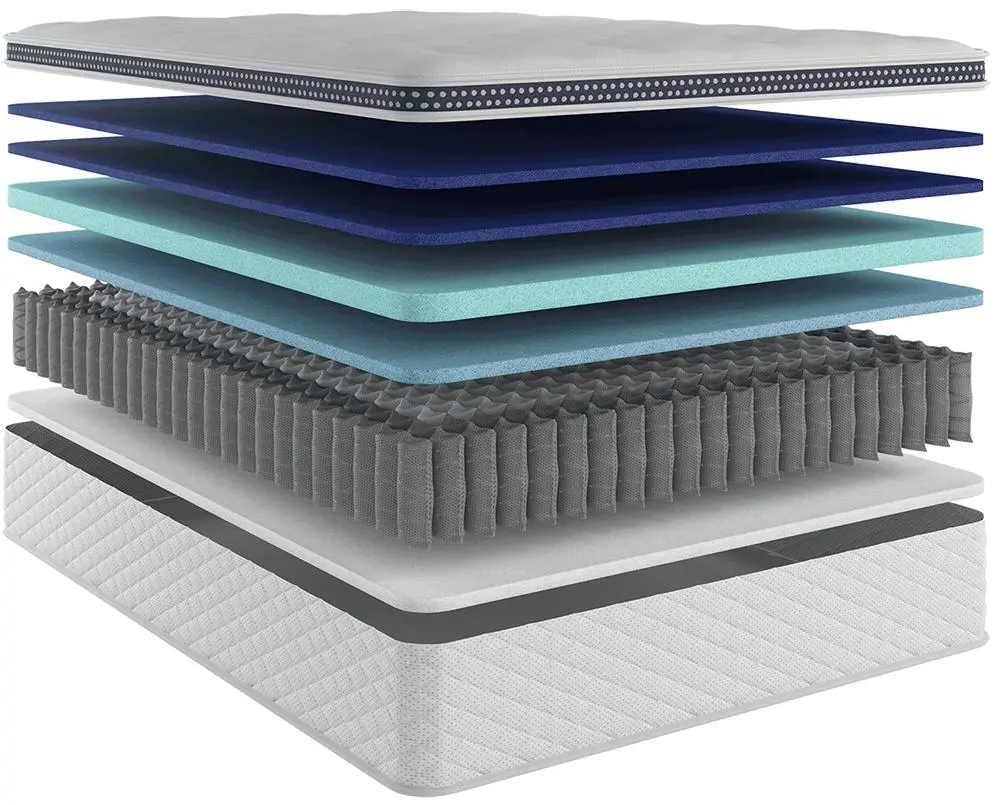
A typical hybrid mattress contains several components.
1. Comfort Layer
The upper layer provides cushioning and controls the initial feel. Manufacturers may use memory foam, latex, polyfoam, or other materials.
2. Transition Layer
This layer helps distribute weight between the comfort system and coil core. It can also influence how firm or responsive the mattress feels.
3. Pocketed Coil Support Core
The coil system provides support and responsiveness. Individually wrapped coils can move more independently than traditional interconnected springs.
4. Base Layer
The bottom layer stabilizes the coil system and helps maintain the mattress structure.
Not every hybrid uses the same materials or layer arrangement. Some models also include zoned support or reinforced perimeter coils.
Advantages of Hybrid Mattresses
- Responsive feel: Coils provide more bounce than most all-foam designs.
- Airflow: Space around the coil system can support ventilation through the mattress.
- Edge support: Reinforced coil systems can create a more stable perimeter.
- Easier movement: A responsive surface can make changing sleeping positions easier.
- Construction options: Hybrids combine different comfort materials and coil designs.
Disadvantages of Hybrid Mattresses
- Higher starting prices: Some hybrid designs cost more because they combine several materials and components.
- Heavier construction: Coil systems can make mattresses difficult to move.
- Variable motion isolation: Some coil designs transfer more movement than all-foam mattresses.
- Potential noise: Coil quality and construction can influence noise over time.
- Different comfort levels: Not every hybrid provides the same balance of cushioning and support.
Memory Foam vs. Hybrid Mattress: Key Differences
The biggest difference is how each mattress combines cushioning and support.
Memory foam relies on foam layers for both functions. A hybrid combines a coil support core with foam or other comfort materials.
Let’s compare their performance in everyday use.
1. Comfort and Feel
Memory foam provides a close, contouring sensation. It gradually responds to body pressure and allows sleepers to sink into the surface.
This feel can suit people who enjoy a cushioned sleeping experience.
Hybrid mattresses generally feel more responsive. Their coil systems provide a lifted sensation, although thick comfort layers can make some hybrids feel more like foam mattresses.
Which is better?
Choose memory foam if you prefer a close, hugging feel. Choose a hybrid if you want more bounce and responsiveness.
2. Pressure Relief
Pressure relief matters because your body places different amounts of weight on different areas while sleeping.
Memory foam contours around the shoulders, hips, and other pressure points. This can help distribute body weight across the mattress surface.
Hybrid mattresses can also provide excellent pressure relief. Their comfort layers determine how much cushioning they offer.
A hybrid with thick memory foam may provide a similar contouring experience to an all-foam mattress.
Which is better?
Memory foam often provides more noticeable contouring. However, the best choice depends on your body weight, sleeping position, firmness preference, and mattress design.
3. Support and Spinal Alignment
Support and firmness are related, but they are not the same.
Firmness describes how soft or hard a mattress feels. Support describes how well it helps maintain a comfortable sleeping posture.
Memory foam uses its support layers to help distribute body weight. Poorly designed or overly soft foam can allow excessive sinking.
Hybrid mattresses use a coil system beneath their comfort layers. Some models also include zoned support to provide different levels of resistance across the mattress.
However, a coil system does not automatically guarantee better spinal alignment.
Which is better?
Both can provide suitable support. Look for a mattress that keeps your spine comfortably aligned without creating excessive pressure.
4. Temperature Regulation
Temperature can affect how comfortable you feel throughout the night.
Traditional memory foam may retain body heat. Its dense structure can limit airflow compared with some other mattress constructions.
Manufacturers use different materials to address this issue. These include gel-infused foam, open-cell foam, breathable covers, and ventilation features.
Hybrid mattresses can benefit from airflow through their coil systems. However, thick foam layers, covers, and other materials still influence temperature.
Which is better?
Hybrids often have an airflow advantage. However, not every hybrid sleeps cooler than every memory foam mattress.
5. Motion Isolation
Motion isolation matters when two people share a bed.
Memory foam absorbs movement rather than transferring it across the mattress. This can reduce disturbances when one partner changes positions or gets out of bed.
Hybrid mattresses vary in motion isolation. Individually wrapped coils can reduce movement transfer, while comfort layers can absorb additional motion.
Which is better?
Memory foam generally has an advantage for motion isolation. A hybrid with suitable pocketed coils and cushioning can still perform well.
6. Bounce and Responsiveness
Bounce describes how quickly a mattress responds when you move or change positions.
Memory foam has a slower response. It gradually returns to its original shape after pressure is removed.
Hybrid mattresses usually respond faster because their coil systems provide additional springiness.
Which is better?
Hybrids generally suit people who prefer bounce. Memory foam suits sleepers who prefer a slower, more contouring surface.
7. Edge Support
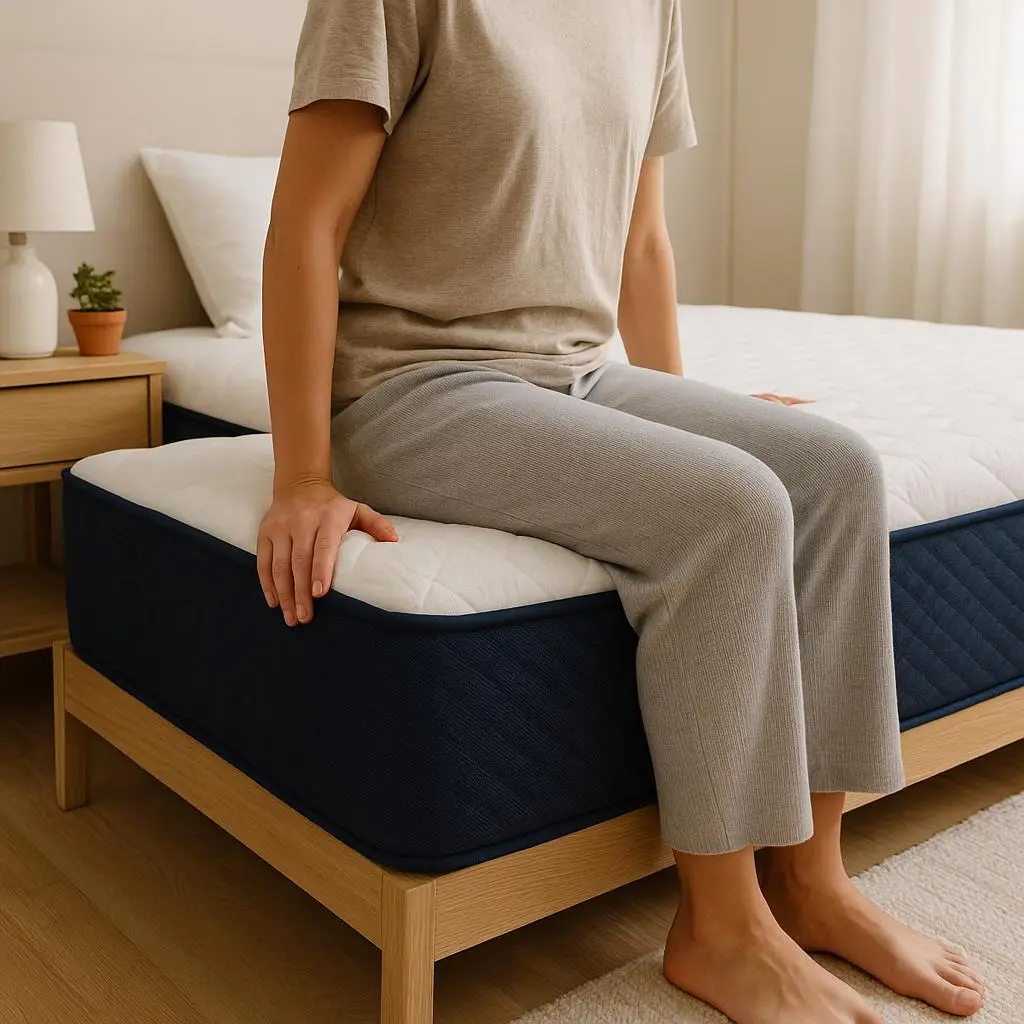
Edge support describes how stable the mattress feels near its perimeter.
It matters when sitting on the edge, getting out of bed, or sleeping close to the side.
All-foam mattresses rely on their foam construction to support the perimeter. Some models compress more near the edges.
Hybrid mattresses may use reinforced perimeter coils or firmer edge materials. These features can improve stability.
Which is better?
Hybrids often provide stronger edge support, especially when they include reinforced perimeter construction. However, the design of each model matters.
8. Noise
Memory foam mattresses generally operate quietly because they do not use a coil support core.
Hybrid mattresses with pocketed coils can also be quiet. However, worn or poorly constructed components may eventually create noise.
Which is better?
Memory foam has a simple advantage because it contains no spring system. A well-built hybrid can still provide quiet performance.
9. Durability and Lifespan
Mattress durability depends on the quality of its materials and how well the construction handles regular use.
For memory foam, density, formulation, and layer thickness can affect resistance to wear.
For hybrids, durability depends on both the foam layers and the coil system. Coil gauge, construction, and perimeter reinforcement can also matter.
A higher coil count alone does not guarantee a better mattress.
Which is better?
Neither type always lasts longer. Compare material specifications, warranty coverage, and independent durability testing rather than relying on mattress type alone.
10. Price and Overall Value
Memory foam mattresses are available across a wide range of budgets. Basic models can cost less than many hybrids.
Hybrid mattresses often have higher starting prices because they combine foam layers with a coil system.
However, prices vary by brand, materials, thickness, size, and construction.
Which is better?
Memory foam may offer more affordable entry-level options. A hybrid may justify a higher price if its materials and construction provide the features you need.
Which Mattress Is Better for Different Sleeping Positions?
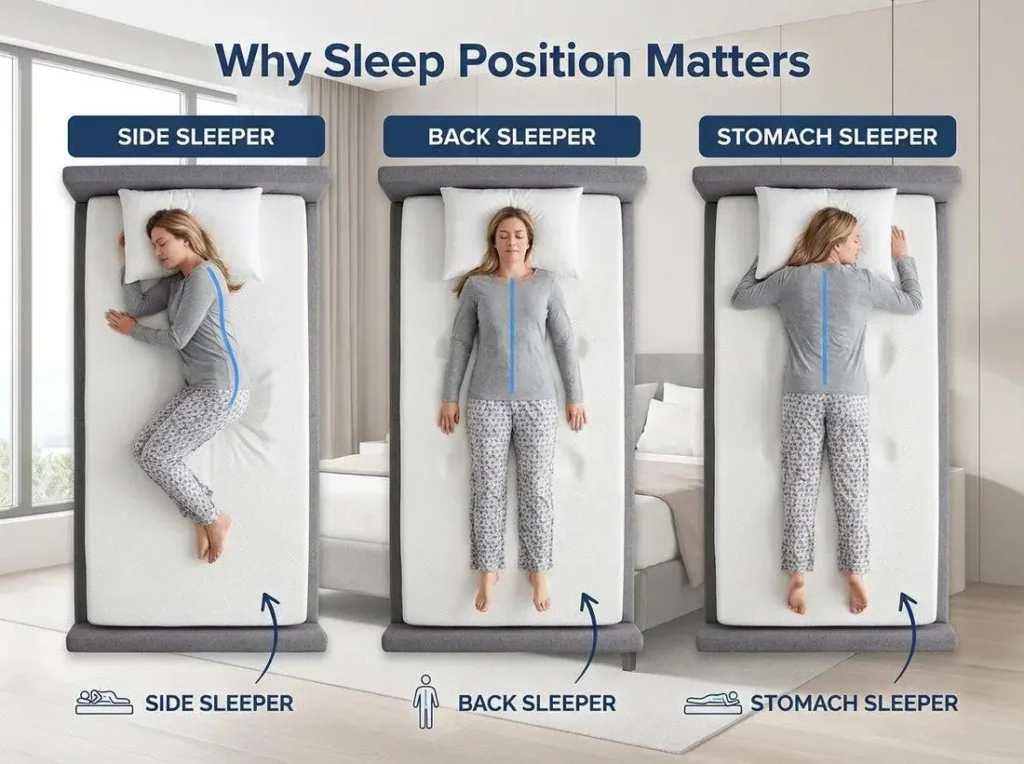
Your sleeping position influences how much cushioning and support you need.
The right mattress should help maintain a comfortable posture while reducing unnecessary pressure.
Side Sleepers
Side sleepers often place more pressure on their shoulders and hips.
Memory foam can cushion these areas through its contouring properties. A suitable hybrid can also provide pressure relief through its comfort layers.
Recommendation: Consider memory foam if you prefer deeper cushioning. Choose a hybrid if you want cushioning with a more responsive feel.
Back Sleepers
Back sleepers generally need a balance between cushioning and support.
A mattress should support the lower back without allowing excessive sinking around the hips.
Both memory foam and hybrid mattresses can work. Firmness and construction are more important than the category alone.
Recommendation: Compare medium and medium-firm options based on your body weight and comfort preference.
Stomach Sleepers
Stomach sleepers may need a firmer surface to reduce excessive sinking around the hips.
Some softer memory foam mattresses may allow too much compression for certain stomach sleepers.
A firmer memory foam mattress or a supportive hybrid may provide a better fit.
Recommendation: Look for a mattress that keeps your hips from sinking excessively.
Combination Sleepers
Combination sleepers change positions throughout the night.
A responsive mattress can make repositioning easier.
Hybrid mattresses often provide more bounce because of their coil support systems. Some responsive foam mattresses can also work well.
Recommendation: Consider a hybrid if you frequently change sleeping positions and prefer easier movement.
Which Mattress Is Better for Different Types of Sleepers?
Sleeping position is only one part of mattress selection. Your temperature preference, body weight, and sensitivity to movement also matter.
Hot Sleepers
If you regularly feel hot at night, mattress materials deserve attention.
Traditional memory foam may retain heat. Hybrid mattresses can provide additional airflow through their coil systems.
However, a breathable memory foam mattress may still perform better than a poorly ventilated hybrid.
Consider: Open-cell foam, breathable covers, ventilation features, and coil construction.
Couples and Light Sleepers
Couples may prioritize motion isolation.
Memory foam absorbs movement and can reduce disturbances when one partner moves.
Hybrids vary depending on their coil design and comfort layers.
Consider: Memory foam if minimizing motion transfer is your main priority. Compare hybrid models carefully if you also want bounce.
Heavier Sleepers
Heavier sleepers may need stronger support and durable materials.
A supportive hybrid can offer a stable coil core with reinforced edges. However, some high-quality foam mattresses can also provide suitable support.
Look beyond mattress labels. Check weight recommendations, foam density, coil construction, and comfort-layer thickness.
Consider: A mattress with suitable support specifications and a firmness level that prevents excessive sinking.
Sleepers Who Prefer a Soft, Contouring Feel
Some people enjoy sinking into their mattress.
Memory foam is designed to contour around the body. It can provide a close and cushioned feel.
Some hybrids also use thick memory foam comfort layers.
Consider: Memory foam if you prefer a traditional foam hug. Compare hybrid comfort layers if you want contouring with more responsiveness.
Sleepers Who Prefer a Responsive Feel
If you dislike feeling stuck in your mattress, responsiveness matters.
Hybrid mattresses usually provide more bounce because of their coil support systems.
Latex and responsive foam can also offer a quicker response than traditional memory foam.
Consider: A hybrid if you want a combination of cushioning and spring-like responsiveness.
Memory Foam vs. Hybrid Mattress for Back Pain
People with back discomfort often look for a mattress that supports a comfortable sleeping posture.
However, neither memory foam nor hybrid construction is a guaranteed solution for back pain.
A randomized clinical trial published in The Lancet studied 313 adults with chronic nonspecific low-back pain. Participants using medium-firm mattresses reported better outcomes than those using firm mattresses.
This finding highlights the importance of mattress firmness. It does not prove that memory foam or hybrid mattresses are universally better for back pain.
You should consider:
- Your preferred sleeping position.
- Your body weight.
- The amount of pressure around your hips and shoulders.
- Whether your lower back feels adequately supported.
- Whether you sink too deeply into the mattress.
- Whether the mattress allows comfortable movement.
Which should you choose?
Memory foam may suit you if you want close contouring and pressure relief. A hybrid may suit you if you prefer a responsive surface and coil-based support.
Focus on the mattress’s actual firmness and support rather than its construction label.
Gel Memory Foam vs. Hybrid Mattress
Gel memory foam and hybrid mattresses are not exactly the same type of product.
Gel memory foam describes a foam material. Hybrid describes a mattress construction method.
A gel-infused memory foam mattress may still be an all-foam mattress. A hybrid may also contain gel-infused memory foam in its comfort layers.
| Feature | Gel Memory Foam Mattress | Hybrid Mattress |
|---|---|---|
| Construction | Foam layers with gel-infused memory foam | Comfort layers over a coil support system |
| Main Feel | Contouring and cushioning | Usually more responsive |
| Cooling | Gel formulation may help manage heat, depending on design | Coil airflow may improve ventilation |
| Motion Isolation | Usually very good | Depends on coil design and comfort layers |
| Bounce | Usually limited | Usually more responsive |
| Pressure Relief | Foam contours around the body | Depends on the comfort materials |
| Best For | People who prefer foam contouring with cooling features | People who prefer coils, responsiveness, and airflow |
Which is better?
Choose gel memory foam if you prefer a foam feel and want features designed to manage heat. Choose a hybrid if you want a coil support system and a more responsive surface.
Remember that gel infusion alone does not guarantee a cool sleeping experience.
Memory Foam vs. Hybrid Mattress: Pros and Cons
Memory Foam Mattress
Pros
- Excellent motion isolation in many models.
- Close body contouring.
- Good pressure relief.
- Quiet construction.
- Wide range of prices.
Cons
- Traditional foam may retain heat.
- Limited bounce.
- Some models make movement harder.
- Edge support varies.
- Performance depends heavily on foam quality.
Hybrid Mattress
Pros
- Responsive feel and bounce.
- Potentially better airflow.
- Often stronger edge support.
- Multiple comfort-layer options.
- Suitable for many sleeping positions.
Cons
- Often higher starting prices.
- Can be heavier to move.
- Motion isolation varies.
- Coil quality affects performance.
- Not every hybrid sleeps cool or provides strong support.
Which Mattress Should You Buy?
The best choice depends on the features you value most.
Choose a Memory Foam Mattress If:
- You prefer a close, contouring feel.
- You want strong motion isolation.
- You share a bed with a light sleeper.
- You want cushioning around pressure points.
- You prefer a quieter all-foam construction.
- You want access to different budget options.
Choose a Hybrid Mattress If:
- You prefer a more responsive surface.
- You want more bounce.
- You frequently change sleeping positions.
- You value coil-based support.
- You want potential airflow benefits.
- You prefer stronger edge support.
When Should You Consider Neither?
Memory foam and hybrid mattresses are not your only options.
You may prefer another construction if neither provides the feel you want.
For example, a latex mattress may suit people who want a responsive surface without a traditional coil core. An innerspring mattress may suit people who prefer a more traditional spring feel.
Compare materials and construction rather than assuming one category fits everyone.
What to Check Before Buying a Mattress
Before choosing between memory foam and hybrid mattresses, review the specifications carefully.
1. Check the Firmness Level
Firmness affects how soft or hard the mattress feels.
There is no universal firmness measurement across every manufacturer.
Your body weight and sleeping position influence how a mattress feels. A medium mattress may feel different to two people with different body weights. Before choosing, review this guide on how to choose a comfortable mattress.
2. Review Foam Quality
Foam density can help you understand the materials used in a mattress.
Higher-density foam is generally associated with better resistance to wear than lower-density foam. However, density alone does not establish overall mattress quality.
Check the foam specifications and comfort-layer thickness where available.
3. Understand the Coil Construction
If you are buying a hybrid, review its coil system.
Check whether it uses pocketed coils, zoned support, and reinforced perimeter construction.
Coil gauge can provide information about wire thickness. However, gauge should not be used alone to judge quality.
Coil count is also not a reliable quality guarantee by itself.
4. Check Mattress Thickness and Weight
Mattress thickness can influence the available comfort and support layers.
However, a thicker mattress is not automatically better.
Also consider weight. Some hybrid mattresses are heavier because of their coil systems and layered construction.
5. Confirm Foundation Compatibility
Not every mattress works with every foundation.
Check the manufacturer’s guidance before placing a mattress on a platform bed, slatted base, box spring, or adjustable bed.
Follow the required support spacing and compatibility instructions.
6. Read the Sleep Trial and Return Policy
A mattress may feel different after several nights of use.
Check the trial period, return conditions, pickup arrangements, and possible fees.
Do not assume every company offers free returns.
7. Review the Warranty
Read the warranty before purchasing.
Check what it covers, how long coverage lasts, and what conditions can affect a claim.
A long warranty does not automatically mean a mattress will remain comfortable for that entire period.
8. Compare the Total Cost
Compare the final price rather than the advertised discount alone.
Include delivery, setup, foundation requirements, taxes, and possible return fees.
A mattress with a higher price may offer better materials, but the specifications should support that difference.
How to Test a Mattress Before Buying
If possible, test the mattress in person before making a decision.
Use this simple checklist:
- Lie in your usual sleeping position.
- Spend enough time to assess pressure around your shoulders and hips.
- Check whether your lower back feels comfortably supported.
- Roll over to test how easily you can change positions.
- Sit near the edge and assess its stability.
- If you share a bed, test how much movement reaches the other side.
- Compare firmness across different models.
If you purchase online, review the sleep trial and return policy carefully.
Frequently Asked Questions
Is Memory Foam or a Hybrid Mattress Better?
Neither is universally better. Memory foam often provides stronger motion isolation and closer contouring. Hybrid mattresses usually offer more bounce, responsiveness, and potential airflow.
Your sleeping position, body weight, and comfort preferences should guide your choice.
Can a Hybrid Mattress Contain Memory Foam?
Yes. Many hybrid mattresses use memory foam in their comfort layers.
The defining feature of a hybrid mattress is its combination of a coil support core and a comfort system. The comfort materials can include memory foam, latex, or polyfoam.
Which Mattress Is Better for Side Sleepers?
Memory foam can suit side sleepers because it contours around the shoulders and hips.
However, a hybrid with suitable comfort layers can also provide excellent pressure relief.
Choose based on your body weight, preferred firmness, and how much cushioning you need.
Which Mattress Is Better for Back Pain?
Neither construction is guaranteed to relieve back pain.
Research suggests that mattress firmness can influence comfort and outcomes for some people with lower-back pain.
Choose a mattress that provides comfortable support and allows you to maintain a natural sleeping posture.
Which Mattress Sleeps Cooler?
Hybrid mattresses often have an airflow advantage because of their coil systems.
However, cooling also depends on foam formulation, mattress covers, comfort-layer thickness, and ventilation.
Some breathable memory foam mattresses may sleep cooler than certain hybrids.
Does a Hybrid Mattress Last Longer Than Memory Foam?
Not necessarily.
Durability depends on material quality, construction, usage, and care. Foam density and coil design can influence how well a mattress handles regular use.
Compare specifications and independent testing rather than assuming hybrids always last longer.
Is Gel Memory Foam Better Than a Hybrid?
They describe different things. Gel memory foam is a foam formulation, while hybrid refers to a mattress construction.
Gel-infused foam may appeal to people who prefer contouring. A hybrid may appeal to people who want a coil support system and more responsiveness.
Why Are Some People Moving Away From Memory Foam?
Some sleepers dislike the sinking sensation, slower response, or heat retention associated with certain memory foam mattresses.
Others prefer the bounce and airflow of hybrid or latex designs.
However, memory foam remains suitable for people who enjoy contouring and motion isolation.
What Type of Mattress Should You Stay Away From?
Avoid mattresses that do not provide suitable support or comfort for your needs.
Be cautious of unclear material specifications, misleading claims, unsuitable firmness, and restrictive return policies.
Do not reject an entire mattress category based on one feature. Compare individual models and their construction.
Is a Memory Foam Mattress Better for Couples?
Memory foam often performs well for couples because it absorbs movement.
However, some hybrids also provide good motion isolation, particularly when they use suitable pocketed coils and cushioning layers.
Consider how sensitive you and your partner are to movement.
Final Verdict: Memory Foam vs. Hybrid Mattress
Memory foam and hybrid mattresses offer different benefits.
Memory foam is a strong option for sleepers who prefer close contouring, pressure relief, and motion isolation.
Hybrid mattresses are worth considering if you want more bounce, easier movement, and potential airflow benefits from a coil system.
Neither option is automatically the best mattress for everyone.
Compare firmness, materials, support, and return policies before buying. The right mattress is the one that provides comfortable support and suits your sleeping habits.