Traditional Bouillabaisse Recipe: Marseille Fish Soup with Rouille
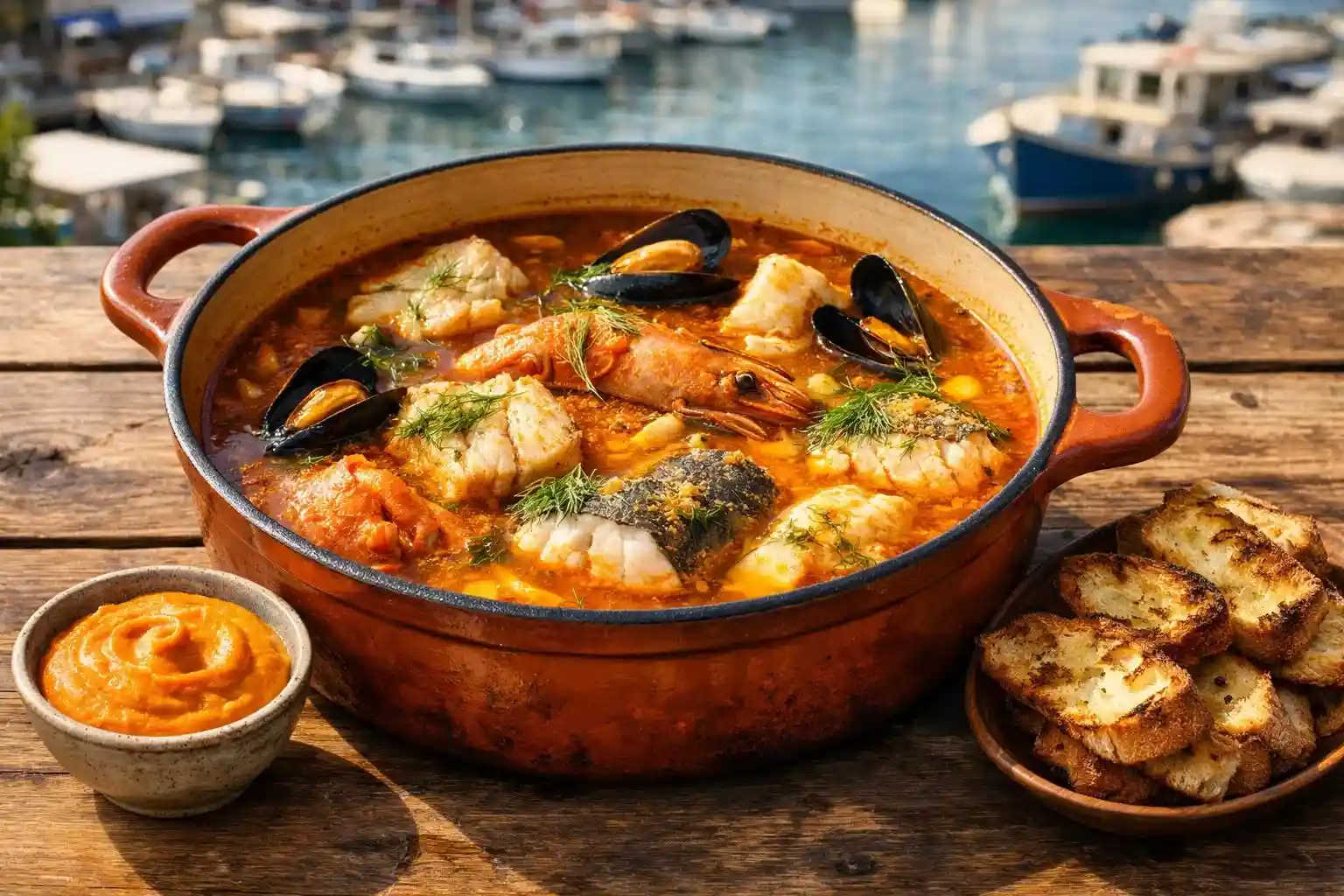
Bouillabaisse is a traditional fish soup from Marseille, France. It combines several types of fish with a broth made from olive oil, tomatoes, garlic, fennel, saffron, and herbs. It is traditionally served with rouille, a garlic sauce, and toasted bread.
The dish began as a simple meal among Marseille fishermen. Today, it is one of the best known dishes of Provençal cuisine. You can make a Marseille inspired version at home with fresh fish from your local seafood market.
Bouillabaisse Recipe at a Glance
Servings: 6
Total time: About 1 hour 35 minutes
Main ingredients: Mixed fresh fish, fish heads and frames, olive oil, tomatoes, garlic, onion, fennel, potatoes, saffron, and herbs, served with homemade rouille and toasted baguette.
Seven steps:
- Clean the fish heads and frames, and prepare the vegetables.
- Cook the aromatics in olive oil and add the fish for the broth.
- Add water, boil the broth, and simmer it.
- Strain the broth and cook the potatoes in the soup base.
- Toast the baguette and prepare the rouille while the potatoes cook.
- Add the firm fish first, followed by the delicate fish.
- Adjust the seasoning, arrange the fish, and serve with hot broth.
Bouillabaisse Recipe: Ingredients and Instructions
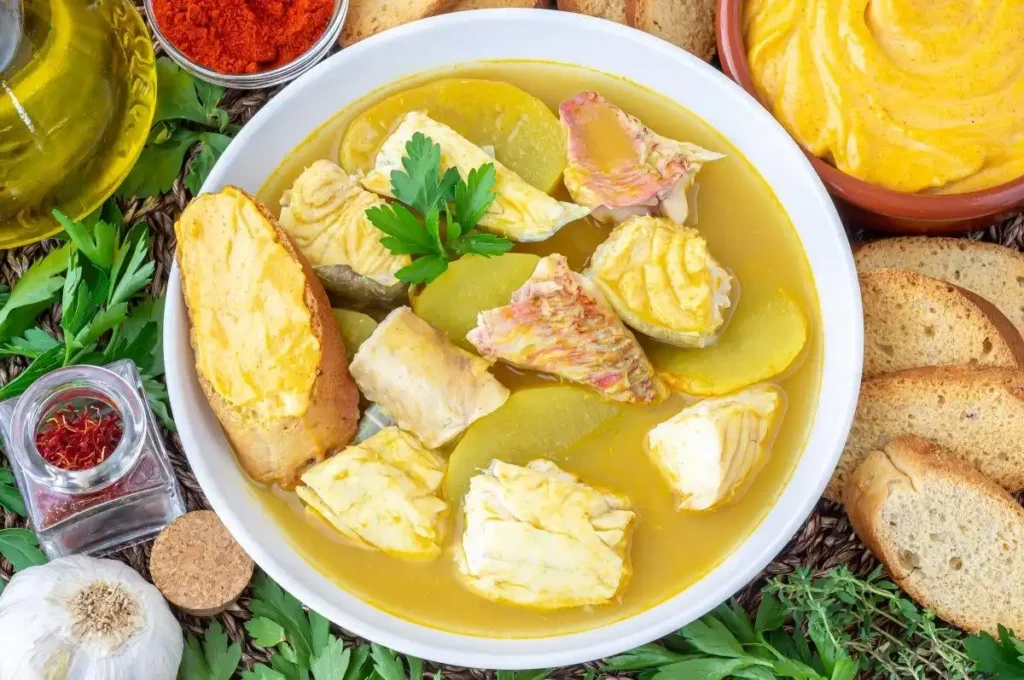
This home recipe uses fresh fish, homemade broth, potatoes, saffron, fennel, and rouille. It takes inspiration from Marseille cooking while using fish that are easier to find in many US seafood markets.
Recipe Information
| Detail | Amount |
|---|---|
| Servings | 6 |
| Preparation time | 35 minutes |
| Broth cooking time | 40 minutes |
| Final cooking time | 20 minutes |
| Total estimated time | About 1 hour 35 minutes |
| Cooking method | Stovetop |
| Cuisine | Provençal inspired |
Ingredients for the Fish Broth
| Ingredient | Quantity |
|---|---|
| Fresh white fish heads and frames, with gills removed | 2 lb |
| Olive oil | 2 tbsp |
| Onion, chopped | 1 medium |
| Leek, sliced | 1 small |
| Fennel bulb, sliced | ½ bulb |
| Garlic cloves, crushed | 3 |
| Tomatoes, chopped | 2 medium |
| Dried thyme | ½ tsp |
| Parsley stems | 5 to 6 |
| Bay leaf | 1 |
| Fennel seeds | ½ tsp |
| Orange peel | 1 small strip |
| Water | 10 cups |
Use fish heads, frames, and trimmings from white fish such as cod, snapper, bass, or grouper. Ask your fishmonger to remove the gills before selling the heads. Gills can add bitterness and unwanted flavors to the stock.
Ingredients for the Soup
| Ingredient | Quantity |
|---|---|
| Strained fish broth | 7 to 8 cups |
| Mixed firm and delicate fish fillets | 3 lb |
| Potatoes, peeled and sliced | 1 lb |
| Olive oil | 1 tbsp |
| Tomato, chopped | 1 medium |
| Onion, sliced | ½ medium |
| Saffron threads | A generous pinch, about 20 threads |
| Fresh parsley, chopped | 2 tbsp |
| Salt | To taste |
| Black pepper | To taste |
Choose two or three fish varieties when possible. Cod, halibut, monkfish, hake, and red snapper are good home options.
Ingredients for Rouille
| Ingredient | Quantity |
|---|---|
| Garlic cloves | 2 |
| Pasteurized egg yolk | 1 |
| Olive oil | ½ cup |
| Saffron threads | A generous pinch, about 20 threads |
| Cayenne pepper | ¼ tsp |
| Fresh breadcrumbs | 1 tbsp |
| Lemon juice | 1 tsp |
| Salt | A small pinch |
Use pasteurized egg yolk because this sauce is not cooked. Prepared mayonnaise can be used for a quicker variation.
Ingredients for Garlic Baguette
- 1 French baguette
- 2 tbsp olive oil
- 1 garlic clove, cut in half
Equipment Needed
- Large stockpot
- Sharp knife
- Cutting board
- Fine mesh strainer or food mill
- Ladle or large spoon
- Small mixing bowl
- Whisk
- Large serving platter
Step 1: Prepare the Fish Stock Ingredients
Clean the fish heads and frames. Make sure the gills have been removed.
Rinse them under cold running water and drain well. Keep the fish refrigerated until you are ready to make the broth.
Slice the onion, leek, and fennel. Chop the tomatoes and crush the garlic. Prepare the thyme, parsley, bay leaf, fennel seeds, and orange peel.
Step 2: Cook the Aromatics
Heat two tablespoons of olive oil in a large stockpot over medium heat.
Add the onion, leek, and fennel. Cook for about five minutes until they begin to soften.
Add the garlic and tomatoes. Stir and cook for another five minutes.
Add the fish heads, frames, parsley stems, thyme, bay leaf, fennel seeds, and orange peel.
Step 3: Add Water and Cook the Broth
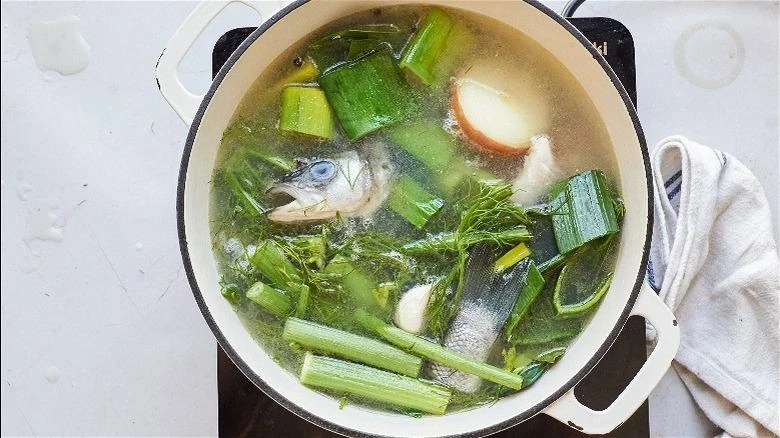
Pour in 10 cups of water and bring the mixture to a lively boil.
In the traditional Marseille method, the oil and water are brought to a vigorous boil to help them emulsify into the broth. Lower the heat afterward so the broth can cook steadily.
Cook for about 40 minutes. Skim off foam that collects on the surface.
Boiling 10 cups of water for 40 minutes should leave approximately 7 to 8 cups of strained broth. Add a little hot water if the liquid reduces too far.
Step 4: Strain the Fish Broth
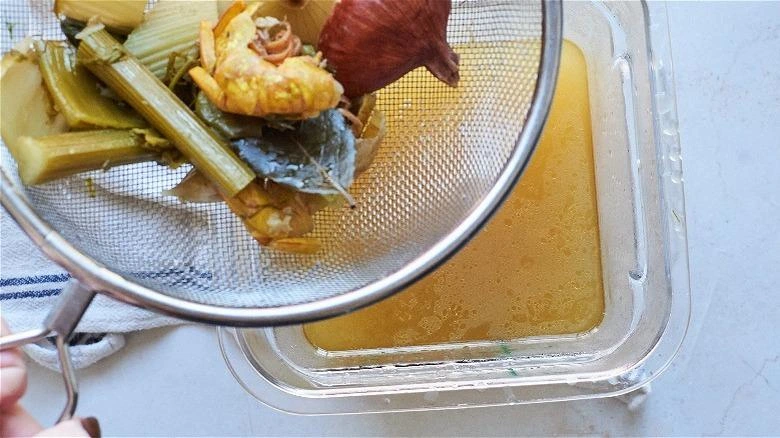
Remove the large fish heads and bones from the pot.
Press the soft cooked fish and vegetables through a fine mesh strainer or food mill with a ladle or spoon to extract their flavor. Discard the bones and hard pieces left behind.
Transfer the strained broth to a clean pot.
Taste it. The broth should have a clear fish flavor with a light aroma from the fennel and herbs.
Step 5: Start the Soup Base and Cook the Potatoes
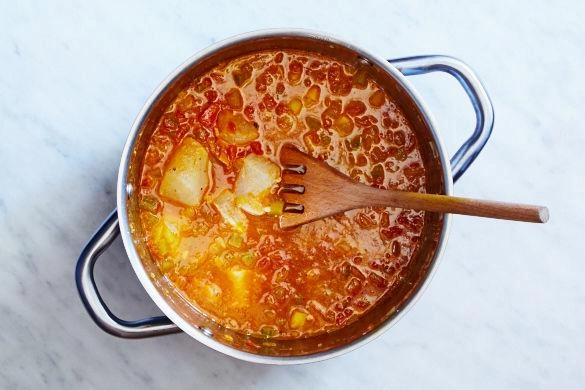
Heat one tablespoon of olive oil in a clean pot.
Add the sliced onion and chopped tomato. Cook until softened.
Pour in 7 to 8 cups of strained fish broth. Add the potatoes and bring the liquid to a boil.
Steep the saffron threads in a little warm broth for about 10 minutes. Add the saffron and its liquid to the pot.
Lower the heat and simmer until the potatoes are almost tender.
Step 6: Toast the Baguette and Prepare the Rouille
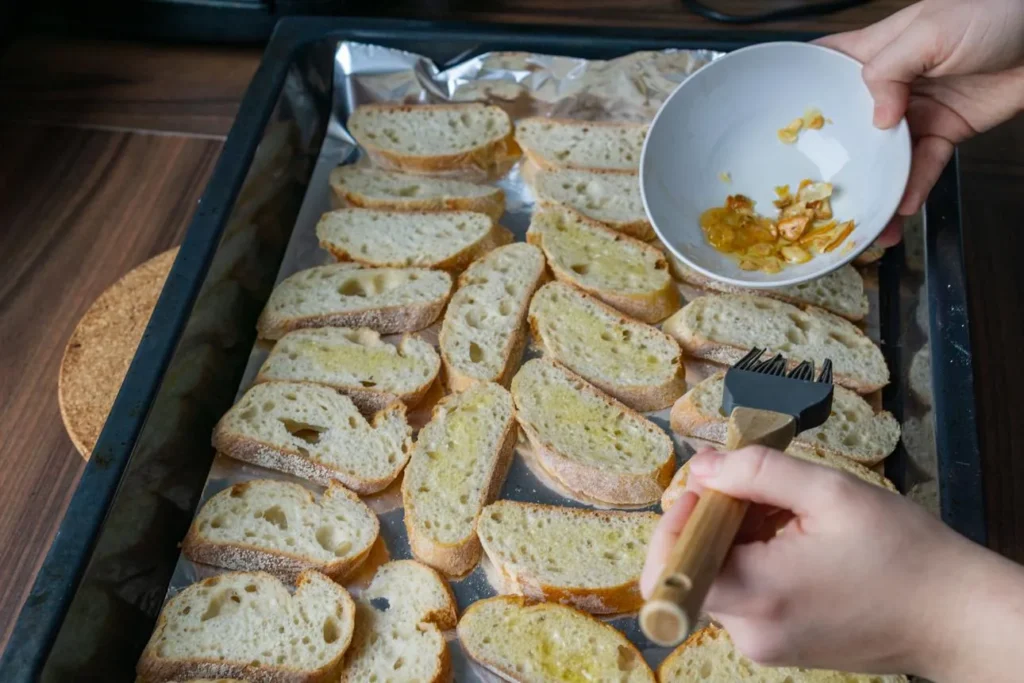
While the potatoes simmer, prepare the bread and sauce.
Preheat the oven to 325°F.
Slice the baguette into thick pieces and brush them lightly with olive oil. Bake for approximately 10 to 12 minutes until crisp, turning the slices once if they brown unevenly.
Rub one side of each slice with the cut garlic clove.
For the rouille, steep the saffron threads in a little warm broth for about 10 minutes.
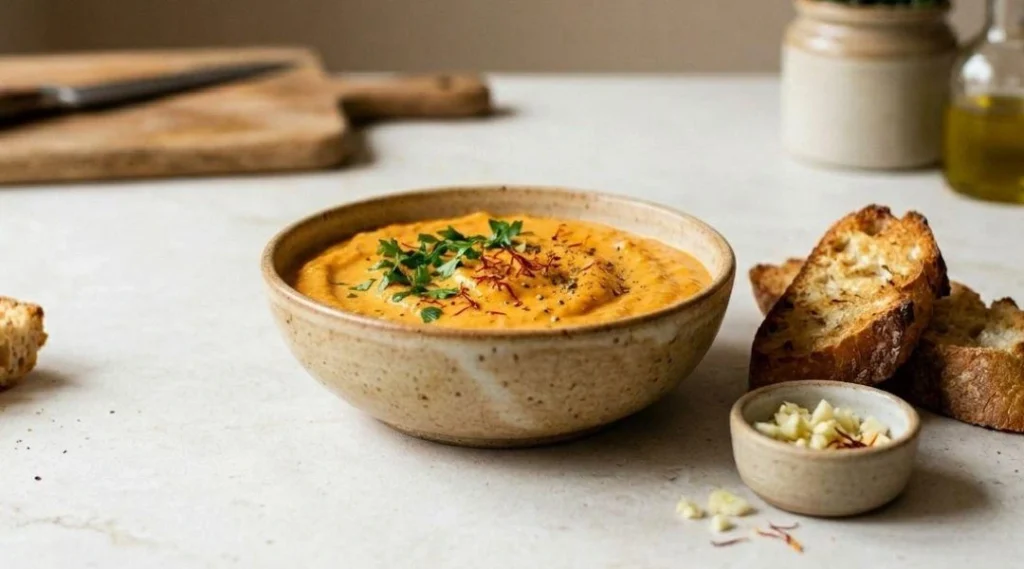
Mash the garlic with a small pinch of salt. Add the pasteurized egg yolk, saffron, cayenne pepper, and breadcrumbs. Whisk until combined.
Slowly add the olive oil while whisking continuously. Add the lemon juice and adjust the salt.
If the sauce becomes too thick, mix in a little warm broth. Cover the rouille and keep it refrigerated until serving.
Step 7: Add the Firm Fish, Then the Delicate Fish
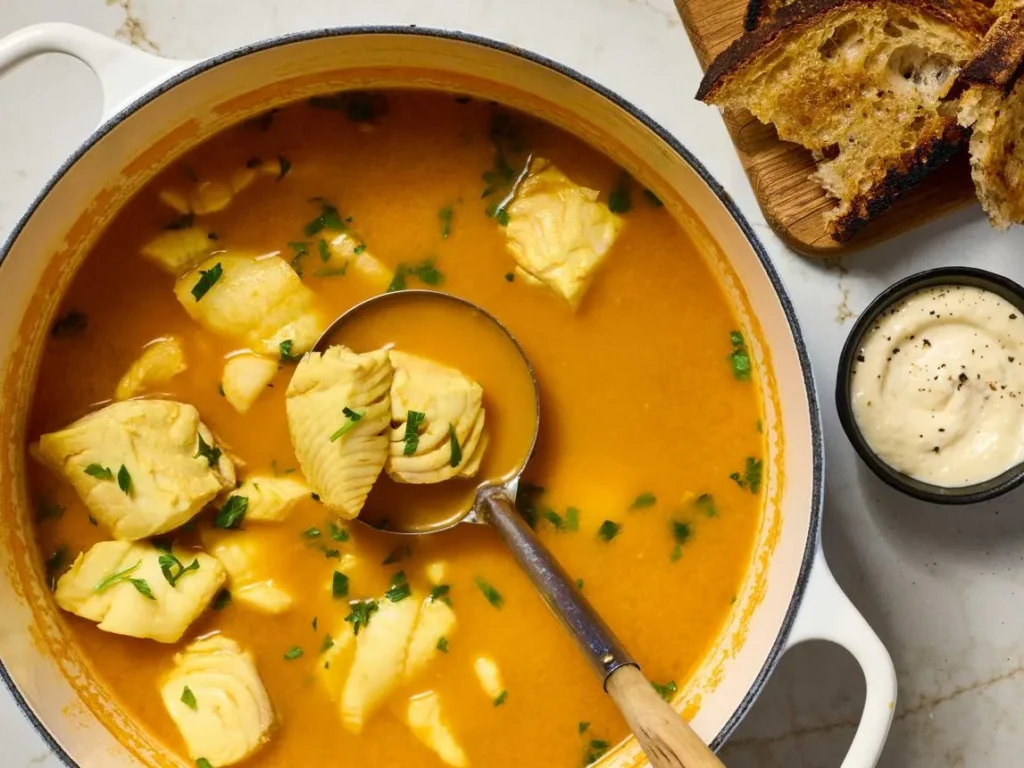
Cut the fish into large, similar sized portions.
Keep the broth at a gentle simmer. Add the firm fish first because it generally needs more cooking time.
Use these approximate cooking times as starting points:
| Fish | Approximate cooking time |
|---|---|
| Monkfish | 6 to 8 minutes |
| Halibut | 5 to 6 minutes |
| Red snapper | 5 to 6 minutes |
| Cod | 3 to 4 minutes |
| Hake | 3 to 4 minutes |
Add delicate fish after the firmer pieces have started cooking. Avoid stirring hard because the fish can break apart.
These times depend on the thickness and size of each piece. Check the thickest portion with a food thermometer. The FDA recommends an internal temperature of 145°F for fin fish.
Step 8: Finish and Serve
Taste the broth and adjust the salt and black pepper.
Add chopped parsley near the end.
If you are adding optional mussels or clams, cook them until their shells open. Discard any that remain closed after cooking.
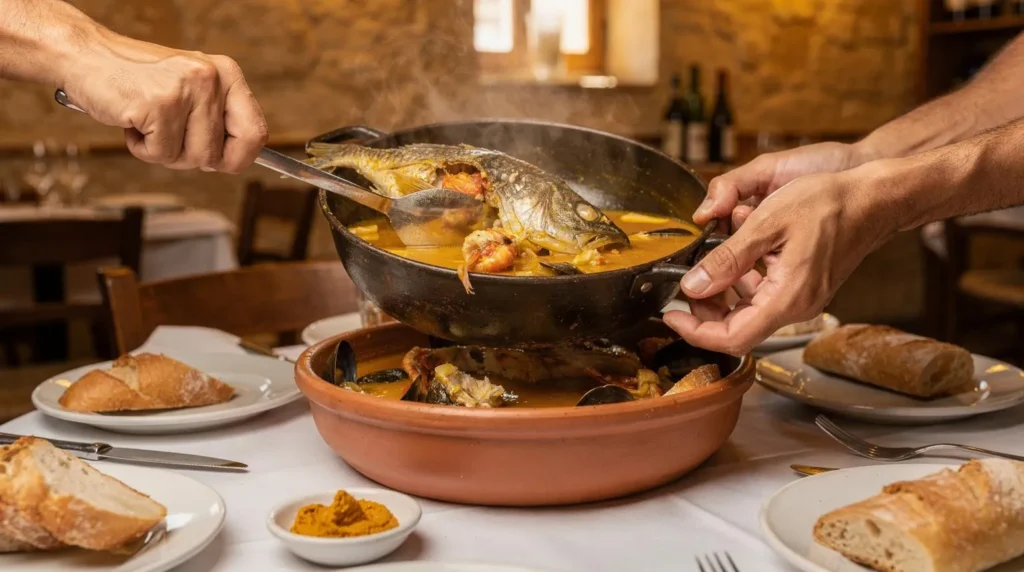
Arrange the fish and potatoes on a large serving platter.
Pour the hot broth into a separate serving pot or tureen. Place the rouille and toasted baguette on the table.
Guests can spread rouille on the bread, add it to their bowls, and pour in the broth. Serve the fish and potatoes alongside.
You can also place the fish and broth together in deep soup bowls. The separate presentation is closer to the traditional Marseille style.
Recipe Notes
Recipe Notes: This recipe is adapted for home cooks using fish commonly available in American seafood markets. I recommend preparing the fish broth ahead of time and adding the main fish just before serving. Cook firm fish first, then add delicate fillets to help them keep their shape. Adjust the saffron, salt, and cooking time according to your ingredients and fish thickness.
What Is Bouillabaisse?
Bouillabaisse is a Provençal fish soup that originated in Marseille on the Mediterranean coast of France. It combines local fish with tomatoes, garlic, olive oil, fennel, saffron, and herbs.
The French name is commonly linked to Provençal words associated with boiling and lowering the heat. The dish is sometimes called a fish stew in English because it contains substantial portions of fish and vegetables.
Where Did Bouillabaisse Originate?

Bouillabaisse originated in Marseille, where fishermen used fish from their daily catch that could not be sold.
Small and bony fish still had flavor, so families cooked them with water, olive oil, garlic, and vegetables. The dish later became a regional specialty served in Marseille restaurants.
The Vieux Port, or Old Port, remains closely connected to the city’s fishing history.
What Is the Bouillabaisse Charter of 1980?
In 1980, a group of Marseille restaurateurs created the Bouillabaisse Charter to establish basic ingredients and serving standards for participating restaurants.
The Charter calls for a minimum of four species from the following list:
| Fish or seafood | French or local name |
|---|---|
| Scorpionfish | Rascasse |
| Monkfish | Baudroie |
| White scorpionfish | White rascasse |
| Conger eel | Congre or fielas |
| Weever | Vive |
| Red scorpionfish | Chapon |
| John Dory | Saint-Pierre |
| Slipper lobster | Cigale de mer |
| Spiny lobster | Langouste |
| Gurnard | Galinette, optional |
Rascasse is the signature fish of the Marseille version. The Charter list applies only to participating restaurants.
The official Marseille Tourism Office guide explains the fish selection, freshness, ingredients, and presentation.
What Fish Is Traditionally Used in Bouillabaisse?
Traditional Marseille bouillabaisse uses several Mediterranean species. The fish selection depends on availability and the number of diners.
Some fish contribute flavor to the broth, while others provide the main portions.
What Is the Best Fish for Homemade Bouillabaisse?
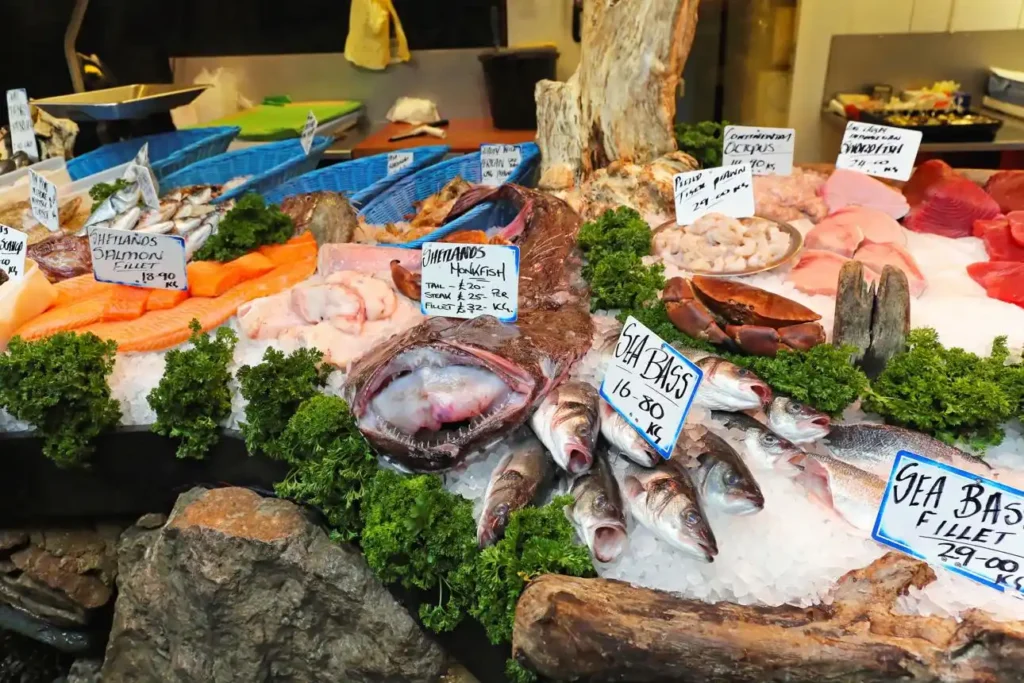
For a home recipe, choose a mix of firm and delicate white fish.
| Fish | Texture | Cooking guidance |
|---|---|---|
| Cod | Flaky and tender | Add near the end |
| Halibut | Firm and meaty | Cut into large portions |
| Monkfish | Firm and dense | Add before delicate fish |
| Sea bass | Tender and moist | Poach gently |
| Red snapper | Firm and mild | Cut into medium portions |
| Grouper | Firm | Cut into large pieces |
| Hake | Delicate | Cook for less time |
If rascasse is unavailable, use a mix of firm and delicate white fish, such as monkfish, halibut, cod, or snapper.
Julia Child is sometimes associated with home adaptations of Marseille fish soup. However, the fish substitutions in this article are presented as practical choices for American home cooks, not as a claim about her specific recipe.
What Is Bouillabaisse Made Of?
The main ingredients are fish, homemade fish broth, vegetables, Provençal aromatics, saffron, olive oil, and rouille.
| Ingredient | Purpose |
|---|---|
| Fish | Main flavor and protein |
| Fish heads and frames | Flavor the broth |
| Olive oil | Carries the aromatic flavors |
| Tomatoes | Add color and acidity |
| Garlic | Adds savory flavor |
| Fennel | Provides a mild anise taste |
| Saffron | Gives color and aroma |
| Orange peel | Adds a light citrus note |
| Potatoes | Make the meal more filling |
| Parsley and thyme | Add herbal flavor |
| Baguette | Served with rouille and broth |
Does Traditional Bouillabaisse Contain Shellfish?
Some recipes include mussels, clams, shrimp, lobster, and other seafood. These are additions in many modern home versions.
The traditional Marseille preparation remains centered on its fish selection. Shellfish should not replace the main fish and become the entire focus of the soup.
How Is Traditional Bouillabaisse Served in Marseille?
Traditional Marseille service often presents the hot broth and fish separately.
The broth is brought to the table in a tureen. The fish and potatoes are arranged on a platter. Diners can combine them in their bowls.
Rouille or aïoli is served with garlic rubbed croutons.
What Bread Goes with Bouillabaisse?
French baguette is a common choice. Toast thick slices, brush them with olive oil, and rub them with garlic.
Spread rouille on the bread or add a slice to the soup bowl. The bread absorbs the broth and gives the meal more texture.
What Wine Goes with Bouillabaisse?
Dry white wines from Provence are regional pairing options.
The Marseille Tourism Office lists Cassis, Bandol, Bellet, and other Provençal wines. A dry white wine with good acidity works well with the fish and aromatic broth.
Wine is optional. Sparkling water is also a good choice.
Bouillabaisse vs. Cioppino: What Is the Difference?
Bouillabaisse and cioppino are both seafood soups, but they come from different culinary traditions.
| Feature | Bouillabaisse | Cioppino |
|---|---|---|
| Origin | Marseille, France | San Francisco, USA |
| Cuisine | Provençal | Italian American |
| Main focus | Fish | Mixed seafood |
| Broth | Fish based with saffron and fennel | Commonly tomato based |
| Sauce | Rouille often served | No traditional rouille |
| Presentation | Fish and broth may be separate | Usually served together |
Bouillabaisse developed from the fishing traditions of Marseille. Cioppino developed in the Italian American fishing community of San Francisco.
Modern recipes may use similar seafood, but their origins, seasoning, and traditional presentation remain different.
Common Problems When Making Bouillabaisse
Why Does My Fish Broth Taste Bland?
The stock may contain too little fish material or too much water.
Use fresh fish heads and frames. Taste the strained broth before adding the main fish. Adjust the seasoning gradually.
Why Does the Fish Fall Apart?
Fish can break apart when it is cut too small, stirred too often, or cooked for too long.
Use large portions and add delicate fish near the end. Move the pieces gently with a ladle.
Why Is My Bouillabaisse Too Salty?
Prepared fish stock and clam juice can contain added salt.
Season the broth after straining. Add salt in small amounts because the flavor may become stronger as the liquid reduces.
Should You Blend Bouillabaisse?
Some recipes use a food mill, while others use a blender.
A food mill presses soft cooked fish and vegetables into the broth while keeping larger material behind. For home cooking, a fine mesh strainer is also useful.
Remove hard bones before processing. The finished broth can retain some body without being completely smooth.
Can You Make Bouillabaisse Ahead of Time?
Yes. The fish broth can be prepared ahead, which makes the final cooking easier.
How to Store Fish Broth
Cool the broth quickly and place it in a covered container in the refrigerator. Keep it at 40°F or below.
Cooked seafood should be refrigerated within two hours. If the surrounding temperature is above 90°F, refrigerate it within one hour.
The USDA leftover safety guide provides further storage guidance.
Can You Freeze Bouillabaisse?
The broth freezes better than cooked fish. For the best texture, freeze the strained broth separately and add fresh fish when preparing the meal.
Use a freezer safe container and label it with the date.
How to Reheat Bouillabaisse
Reheat the broth on the stove until it reaches a boil. Add fresh fish only when you are ready to finish the soup.
For cooked leftovers, USDA guidance recommends reheating to 165°F throughout. Avoid repeated reheating because it can affect the fish texture.
What Should You Serve with Bouillabaisse?
The soup is filling enough to serve as a main course. A few simple accompaniments are all you need.
French baguette: Toast thick slices and rub them with garlic.
Rouille: Serve the sauce in a small bowl so everyone can add the amount they prefer.
Fennel salad: Thinly sliced fennel with lemon juice and olive oil makes a fresh side.
Niçoise salad: A small salad can work as a starter.
Provençal white wine: Cassis, Bandol, and Bellet are regional pairing options.
Frequently Asked Questions About Bouillabaisse
Is Bouillabaisse a Main Dish or an Appetizer?
It is commonly served as a main course. The complete meal includes broth, fish, potatoes, bread, and rouille. A small serving of broth can also be offered as a starter.
Does Bouillabaisse Contain Shrimp?
Some modern recipes include shrimp, but it is not required in every traditional preparation. Fish remains the main ingredient.
Does Bouillabaisse Contain Meat?
The main ingredients are fish and, in some versions, shellfish. Beef, pork, and chicken are not typical ingredients.
Is Bouillabaisse Spicy?
It is usually aromatic rather than very hot. Rouille may contain cayenne pepper, which adds heat.
Why Is Bouillabaisse Yellow?
Saffron gives the broth its golden color. Tomatoes and olive oil also affect its final appearance.
Why Is Bouillabaisse Expensive in Restaurants?
Traditional restaurant versions may use several fresh Mediterranean fish species. Some are difficult to source and cost more than common white fish.
Can You Make Bouillabaisse with Frozen Fish?
Yes. Frozen fish can work if it has been stored and thawed safely.
Thaw it in the refrigerator. Avoid packages with damaged seals, heavy ice crystals, or signs of thawing and refreezing.
Is Bouillabaisse Healthy?
Fish and shellfish provide protein, while olive oil, potatoes, bread, and rouille contribute to the overall nutritional value of the meal. The FDA seafood guide explains the nutritional value and safe handling of seafood.
Final Thoughts
Bouillabaisse began as a fisherman’s meal in Marseille and became one of the best known dishes of Provençal cuisine.
Fresh fish, a flavorful broth, saffron, fennel, garlic, and rouille give it its character. You can adapt the fish selection to your local market while keeping the main cooking method and flavors intact.
Serve the broth with toasted baguette and rouille. Present the fish separately when you want to follow the Marseille tradition.