How to Fix a Loose Doorknob (With or Without Visible Screws)
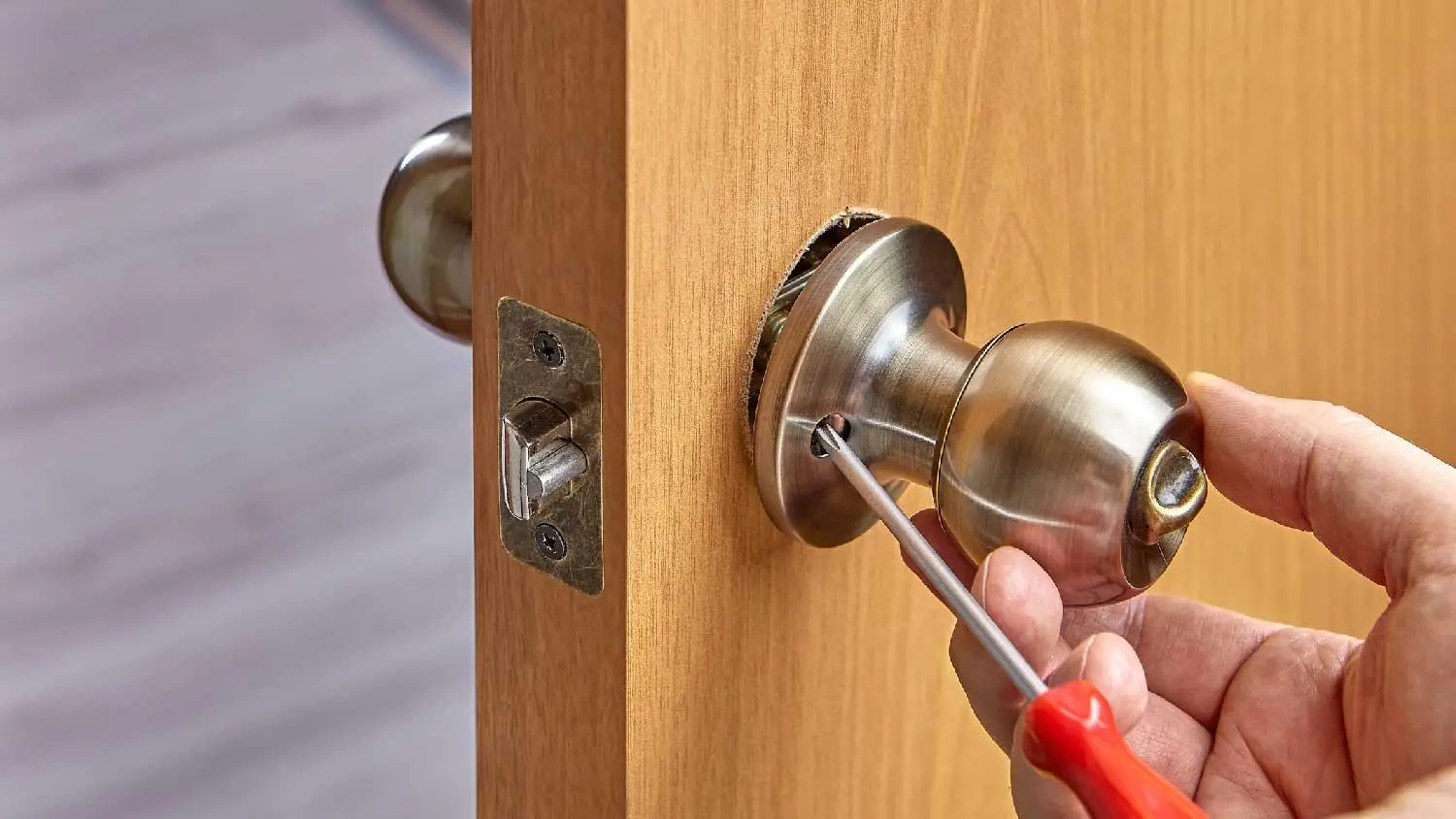
To fix a loose doorknob, start by tightening the mounting screws that hold both sides of the handle together. If the knob moves on its own shaft, tighten the set screw underneath or beside it. A doorknob with no visible screws usually has concealed fasteners beneath a removable rose or release cover. Test every repair before closing the door.
Quick Fix: Tighten a Loose Doorknob in 6 Steps
- Open the door. Keep it open throughout the repair so you cannot become locked out.
- Identify the loose part. Hold the handle and gently move it. Check whether the entire assembly wobbles or the knob moves independently.
- Look for visible screws. If you find mounting screws, tighten them evenly with a #2 Phillips screwdriver.
- Find hidden screws. If none are visible, inspect the handle for a pinhole, slot, or release button. Remove the handle and decorative rose if the design allows it.
- Inspect the set screw. Check underneath or beside a lever handle. Tighten a loose set screw with a hex key that fits fully.
- Test the repair. Turn the handle several times, operate the latch, and test the lock while the door remains open.
If the handle still wobbles, stop tightening and inspect the spindle, latch faceplate, and mounting hardware. A damaged component may need replacement.
Quick Troubleshooting Guide
Use this table to identify the likely problem before taking the handle apart.
| What you notice | Possible cause | Recommended fix |
|---|---|---|
| The entire doorknob wobbles | Loose mounting screws | Tighten both mounting screws evenly. |
| The knob moves on its shaft | Loose set screw | Secure the knob against the spindle. |
| The handle plate moves | Loose rose or backplate | Remove the cover and tighten its fasteners. |
| The knob keeps falling off | Loose retainer or damaged spindle | Inspect the spindle and retaining parts. |
| Screws turn without tightening | Stripped screw hole or damaged threads | Repair the hole or replace damaged hardware. |
| The handle becomes stiff after tightening | Misalignment or binding | Loosen both mounting screws a quarter turn, center the handle, then tighten evenly in small steps. |
| The handle turns but the latch does not move | Spindle or latch connection problem | Inspect the spindle connection. |
| The handle does not return to position | Failed or damaged return spring | Replace the handle or lockset if its internal spring has failed. |
| The latch assembly moves at the door edge | Loose latch faceplate screws | Tighten the latch faceplate screws. |
| Metal screws keep backing out | Vibration or unsuitable fasteners | Inspect the fasteners and threadlocker options. |
How to Identify Your Doorknob or Door Handle Type
Identify your handle before taking it apart. Different designs use different mounting and release systems, so look at the base and underside before removing anything.

Round or Cylindrical Doorknobs
These usually have a knob on each side of the door. The mounting screws may be visible or hidden beneath a decorative rose.
Lever Door Handles
Lever handles have a horizontal grip. Many use a small set screw underneath the lever, while others conceal their mounting screws.
Handles With Exposed or Hidden Screws
Exposed screws are usually around the handle base. Hidden screws require you to locate a release button, pinhole, slot, or removable rose.
Older Mortise and Glass Doorknobs
Older mortise locks may use square or threaded spindles. Glass knobs may use a threaded connection or a retaining screw in a metal collar. Their removal methods can differ from modern cylindrical locksets.
For a visual guide to common removal methods, see The Home Depot’s guide to removing a door knob.
How to Fix a Loose Doorknob With Visible Screws
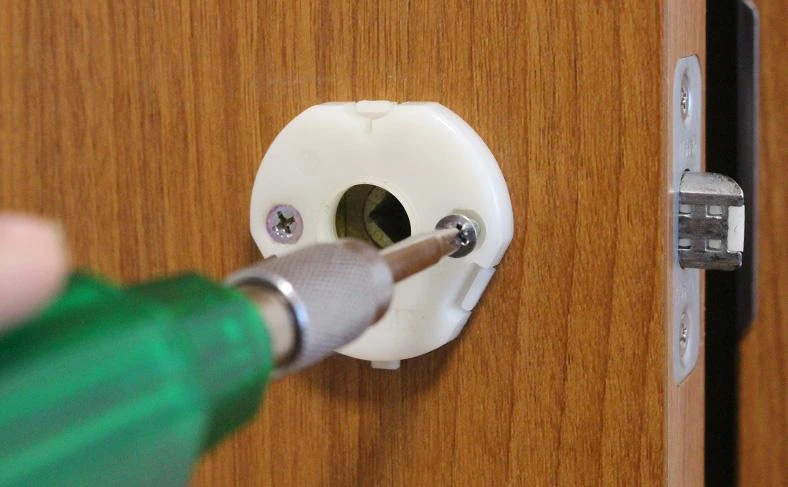
If you can see the mounting screws, you can usually tighten the handle without removing it.
- Locate the mounting screws on the interior side of the handle.
- Hold the opposite knob steady so the assembly stays aligned.
- Seat a #2 Phillips screwdriver firmly in the screw head.
- Tighten the first screw a little, then move to the second.
- Repeat until the handle sits firmly against the door.
Tighten both screws in small steps rather than fully tightening one side first. Uneven pressure can pull the assembly out of alignment. If the handle becomes stiff, loosen both screws a quarter turn, center the handle on the door, and tighten them evenly again.
The handle should turn smoothly, and the latch should retract and return when you release it. If the screws spin without gripping, the problem may be a stripped hole or damaged thread. See the section on repairing a stripped screw hole.
How to Fix a Loose Doorknob With No Visible Screws
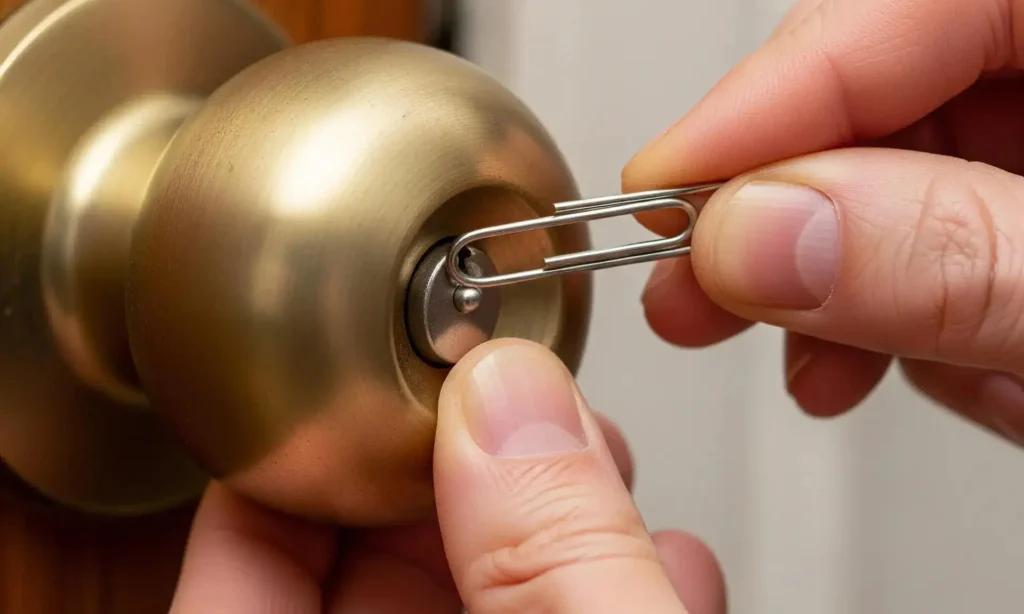
A doorknob with no visible screws usually hides its fasteners beneath the handle or decorative rose. Look for a release mechanism before trying to remove it.
Find the Hidden Release
Inspect the underside and sides of the handle. Look for a small pinhole, narrow slot, or spring-loaded button. This mechanism is often called a detent.
Remove the Interior Handle
Some designs release when you press the detent with a narrow pin or the supplied removal tool. Press it gently while pulling the handle away from its base.
The release method varies by model. A handle that does not move may use a retaining screw or a different release point.
Remove the Decorative Rose
Once the handle comes off, inspect the round cover around its base. Some roses have a small notch where you can release the cover. Others twist or use a retaining screw.
Tighten the Hidden Screws
With the cover removed, locate the mounting screws. Hold the opposite side of the assembly steady and tighten both screws evenly.
Reinstall the rose and handle. Make sure the release mechanism locks into place, then test the handle and latch.
How to Tighten a Loose Doorknob Set Screw or Lever Handle
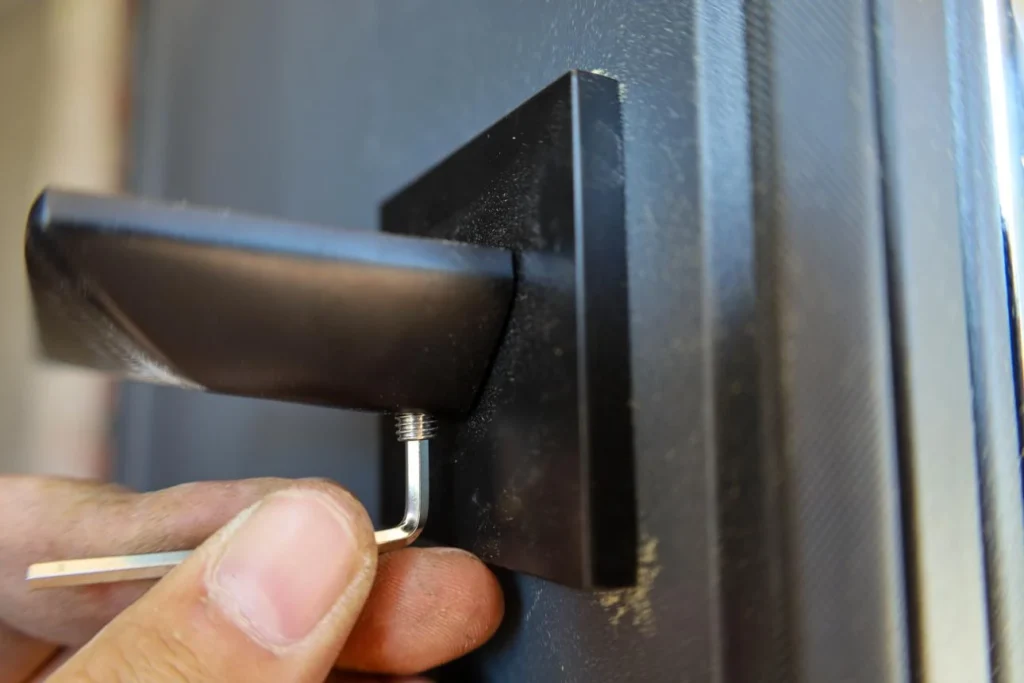
A loose set screw can make a lever handle wobble, rotate, or slide off its spindle. The screw usually sits underneath or beside the lever.
- Find the small set screw near the handle base.
- Check whether the screw head accepts a hex key.
- Choose a hex key that sits fully inside the screw head without wobbling.
- Push the handle onto the spindle and align it with the opposite side.
- Tighten the set screw until the handle stays in place.
- Turn the lever several times to check its movement.
A poorly fitting hex key can round off the screw head and make removal difficult, so avoid using one that slips.
The required size varies by model. For example, Kwikset specifies a 3/32-inch hex wrench for certain Milan lever models. That measurement does not apply to every Kwikset handle.
See Kwikset’s Milan Lever support instructions for that specific design.
How to Fix a Loose Doorknob Plate, Rose, or Backplate
If the knob feels secure but the plate moves against the door, inspect the rose or backplate. A loose rose may rotate when you turn the handle, click against the door, or leave a visible gap along one edge.
First, look around its edge for a retaining screw, small notch, or release point. Remove the cover only if it is designed to come off. Some covers snap into place, while others twist or have a small fixing screw.
Once you can see the mounting plate, check whether its screws have loosened. Hold the handle assembly in position and tighten the screws evenly. Refit the cover and test the handle.
Do not glue a moving rose to the door. You may need to remove it again to service the lock. If the plate still moves after its fasteners are secure, inspect its clips and retaining parts for damage.
How to Fix a Loose Doorknob Spindle
The spindle connects the handle to the latch mechanism. If the knob moves around the spindle, tightening the mounting screws may not solve the problem.
Remove the handle using its release method and inspect the shaft. Older hardware may use a square or threaded spindle. A knob that screws onto a threaded shaft needs a different repair from one held by a set screw.
A worn spindle may feel loose when you turn the handle. You might notice extra movement before the latch responds, a slipping connection, or a knob that turns without moving the spindle properly. Look for rounded edges, damaged threads, cracks, or a missing retaining screw.
If the spindle is damaged, compare a replacement with the old one. Check its shape, overall length, thread diameter and pitch, and set screw position. For a square spindle, compare the cross-section and the location of any screw contact point. The replacement also needs to work with the lock body and door thickness.
Some older assemblies use spacing washers to control movement along the spindle. A missing washer can leave too much play. Use a washer designed for that lockset rather than adding a random one.
For complex mortise hardware, ask a locksmith or hardware specialist to identify the replacement spindle.
How to Fix a Loose Glass Doorknob
Glass knobs need gentle handling because pressure on the glass can cause cracks or breakage.
Inspect the connection between the glass knob and its metal collar. Many glass knobs attach with a small set screw in the metal collar. Others use a threaded shank that screws onto the spindle.
If you find a set screw, support the glass knob with one hand while tightening the screw with the other. Use a hex key that sits securely in the screw head, and turn it gently. If the knob uses a threaded shank, support the glass while checking whether the connection has loosened. Avoid twisting the glass with excessive force.
If the glass is cracked, chipped around its mounting point, or separating from the metal fitting, stop using it. Replace the damaged knob or have a hardware specialist inspect it. A loose glass knob can break while someone is turning it.
How to Fix a Doorknob That Fell Off or Keeps Falling Off
If a doorknob keeps falling off, inspect the set screw, retaining mechanism, and spindle connection.
First, check whether the set screw is missing or loose. If it is present, remove the knob and inspect the shaft for worn threads or rounded surfaces. Refit the knob so it sits fully on the spindle, then tighten the set screw with a hex key that sits securely in the screw head.
If the knob slips off again, stop tightening it harder. The screw may no longer grip the spindle, or an internal retaining part may be broken. Replace the damaged component with one designed for that handle.
Do not rely on glue to hold a working doorknob onto its spindle. The handle needs a secure mechanical connection to operate the latch reliably.
How to Fix a Stripped Screw Hole
A stripped screw hole can prevent the mounting hardware from staying tight. First, identify whether the damaged part is wood or metal.
Repair a Stripped Hole in a Wooden Door
If a wood screw spins in a damaged wooden hole, remove the screw and handle. Fill the hole with wood glue and wooden toothpicks or a correctly sized wooden dowel.
Let the glue dry fully. Trim the filler level with the door, drill a pilot hole, and reinstall the screw. This gives the wood screw fresh material to grip.
This repair applies to wooden screw holes. It does not repair damaged metal threads.
Replace a Damaged Screw
If the screw head or threads are damaged, replace it with one that has the same diameter, length, thread, and head style as the fastener used by the lockset.
Check Damaged Metal Threads
If a screw spins inside a metal mounting plate, the threads may be stripped. Wood glue and toothpicks will not fix that problem. Replace the damaged threaded part or have a locksmith assess the assembly.
How to Fix a Loose Front Door Handle
A loose front door handle needs prompt attention because it may affect the entry lock.
Start by checking the mounting screws, set screw, and spindle connection. Keep the door open while testing the repair.
After tightening the handle, test the key, interior thumbturn, and latch from both sides. Make sure the door locks and unlocks without binding.
If the handle cannot be secured, the lock does not engage, or the door will not lock reliably, contact a qualified locksmith. Do not leave an exterior door unsecured while waiting for a replacement part.
Other Causes of a Loose Doorknob
Mounting screws and set screws are common causes, but a few less obvious problems can also make a handle move.
Loose Latch Faceplate Screws on the Door Edge
The latch faceplate is the metal plate around the latch on the narrow edge of the door. Its screws hold the latch assembly in position.
If these screws loosen, the latch assembly can shift or rattle. This can affect handle operation, although it does not usually cause the entire knob assembly to wobble.
Inspect the two faceplate screws along the door edge. Tighten them with a #2 Phillips screwdriver if the screw heads accept it. If the screws spin or the faceplate will not sit flat, the holes or fasteners may be damaged.
Screws That Keep Backing Out
If a metal screw repeatedly loosens, vibration, damaged threads, or an unsuitable fastener may be the cause. First, make sure the screw engages the threaded mounting part properly.
For compatible metal fasteners, a removable, medium-strength blue threadlocker may help prevent repeated loosening. LOCTITE Blue 242 is designed for threaded metal fasteners and can be removed with hand tools. It is not a universal solution for every lockset.
Apply a small amount to the mounting screw threads only. Never put threadlocker inside the latch or on other moving parts. Use it only when the fastener and lockset are compatible with the product. See the LOCTITE Blue 242 product information.
Screws That Are Too Short or the Wrong Type
A screw that is too short may not engage enough threads to hold the assembly. A screw with the wrong diameter or thread can damage the mounting part. A screw that is too long can interfere with internal components.
Compare replacement screws with the original fasteners. Check the diameter, thread, length, and head style. A wood screw should not replace a machine screw where the lockset uses threaded metal mounting points.
What Tools Do You Need to Fix a Loose Doorknob?
Most basic repairs require only a few tools:
- #2 Phillips screwdriver for many standard residential mounting screws.
- Flathead screwdriver for release slots or covers designed for removal.
- Hex key for a lever set screw.
- Narrow release pin or the supplied removal tool.
- Small flashlight for inspecting concealed hardware.
- Wood glue, wooden toothpicks, and a drill for a stripped wooden screw hole.
A screwdriver should sit firmly in the screw head without slipping. Hex key sizes vary by lockset, so use the size that engages the set screw fully.
Avoid using pliers directly on decorative or glass knobs. They can damage the finish or break the hardware.
When Should You Repair or Replace a Loose Doorknob?
Repair the handle when the mounting screws, set screw, and retaining parts remain in good condition. Tightening a loose fastener may be enough.
Replace the damaged component or lockset if the spindle is cracked, the handle is broken, or the mounting threads cannot hold the assembly. A knob that keeps falling off after repair also needs closer inspection.
A failed return spring inside the handle usually means replacing the handle or lockset. On many residential designs, the spring is built into the handle mechanism and is not serviced separately. If the handle stays down after you release it, inspect the spring mechanism before buying replacement hardware.
Before buying a replacement, identify the lock function.
- Passage knobs are designed for doors that do not need a locking function.
- Privacy knobs are commonly used on bedrooms and bathrooms.
- Keyed entry sets are designed for exterior doors.
- Dummy knobs are fixed pulls without a turning latch.
Compare the door preparation, backset, handing, and mounting arrangement before ordering.
How to Test a Repaired Doorknob
Keep the door open while testing. Turn the knob or lever several times and check that it stays firmly attached. The handle should move smoothly without wobbling or sticking.
Next, check that the latch retracts fully and returns when you release the handle. Test the lock from both sides. Confirm that the thumbturn or key operates correctly.
If the handle binds, the latch fails to move, or the lock does not engage, stop before closing the door. Recheck the alignment and mounting screws.
If an exterior door will not lock reliably, call a locksmith before relying on it for security.
Frequently Asked Questions
How Do You Tighten a Loose Doorknob?
Find the mounting screws on the interior side and tighten them evenly with a #2 Phillips screwdriver if it fits the screw heads. If the screws are hidden, release the handle and remove the rose to reach them.
How Can You Fix a Floppy Door Handle?
Check the set screw underneath or beside the lever. Tighten it with a hex key that sits securely in the screw head. If the entire plate moves, inspect its mounting screws as well.
How Do You Tighten a Loose Doorknob Screw?
Use a screwdriver that engages the screw head without slipping. Tighten the screw until the assembly sits firmly against the door. If it spins without gripping, inspect the screw hole or threads.
Why Does My Doorknob Keep Coming Loose?
The mounting screws or set screw may be backing out. A worn spindle, damaged threads, loose latch faceplate, or incorrect replacement screw can also cause repeated movement. Inspect the connection before tightening it again.
Can You Fix a Loose Door Handle Without Calling a Locksmith?
Many loose handles can be repaired by tightening accessible mounting screws or a set screw. Call a locksmith if the spindle is damaged, the lock mechanism has failed, or an exterior door will not lock.
Is Fixing a Loose Doorknob a Five Minute Job?
A simple screw adjustment may take only a few minutes. A concealed handle, stripped screw hole, or damaged spindle takes longer because you must remove and inspect the hardware.
Final Thoughts
Start by checking the mounting screws and set screw. If neither fixes the wobble, inspect the rose, spindle, latch faceplate, and screw holes. Keep the door open until the handle and lock work properly. If an exterior door will not lock, call a locksmith before using it.
For more practical tips on keeping your home in good condition, explore our Home Maintenance guides.