Best Toilet Bowl Cleaner: Top Picks for Stains, Hard Water and Everyday Cleaning
The best toilet bowl cleaner depends on the stains you need to remove. A bleach-based gel can help with everyday cleaning and disinfection when used according to its label. An acid-based formula may work better on mineral deposits, hard-water buildup, and rust. Bleach-free cleaners offer another option for households that prefer a different formula.
This guide compares popular toilet bowl cleaners and explains which formulas suit different cleaning problems. You will learn how to choose between liquid cleaners, gels, tablets, and foaming products. We also cover septic-system compatibility, natural formulas, automatic cleaners, and important safety precautions.
Best Toilet Bowl Cleaners at a Glance

Different toilet cleaners serve different purposes. Some target everyday grime, while others focus on mineral deposits, rust, or ongoing maintenance.
The following products offer different cleaning approaches. Their placement reflects their intended uses and available product information, not a controlled laboratory ranking.
| Product | Best for | Formula or format | Main consideration |
|---|---|---|---|
| Clorox Toilet Bowl Cleaner with Bleach | Everyday cleaning | Clinging bleach gel | Follow the label’s cleaning and disinfection directions |
| Clorox Lime & Rust Destroyer | Rust and lime-scale stains | Liquid toilet cleaner | Specifically marketed for rust and lime-scale removal |
| Lysol Power & Free | Bleach-free cleaning | Hydrogen peroxide formula | Has separate cleaning, sanitizing, and disinfecting directions |
| Lysol Lime & Rust Remover | Mineral deposits and rust | Clinging liquid cleaner | Check its current label and safety instructions |
| Zep Acidic Toilet Bowl Cleaner | Heavy mineral buildup | Acidic liquid | Requires careful handling |
| Clorox Toilet Bowl Foaming Bomb Cleaner | Quick manual cleaning | Bleach-free foaming tablet | Drop, brush, and flush according to directions |
Quick recommendation: Choose a regular toilet cleaner for everyday grime. For hard-water deposits, look for a product labeled for lime or mineral scale. For rust, choose a rust-removal formula. If you prefer bleach-free cleaning, compare the active ingredients and label claims rather than relying on the front-of-bottle wording.
Best Toilet Bowl Cleaners Reviewed
The products below represent different cleaning approaches. Each has a specific purpose, formula, or application method.
The reviews use manufacturer product information and available label details. They do not claim personal testing or independent laboratory results. Product formulas and packaging can change, so check the current bottle before buying.
1. Clorox Toilet Bowl Cleaner With Bleach: Best for Everyday Cleaning
Clorox Toilet Bowl Cleaner with Bleach
Clorox Toilet Bowl Cleaner with Bleach is designed for routine bowl cleaning, stain removal, and disinfection. Its gel formula coats the bowl and helps reach areas beneath the rim.
Clorox instructs users to flush the toilet, apply six ounces beneath and around the rim, scrub the bowl, and let the product sit for 10 minutes before flushing. The manufacturer states that its disinfection claims apply when users follow the label directions.
Why consider it
- Bleach-based formula for routine bowl cleaning.
- Gel consistency helps coat the bowl.
- Designed to remove stains and deodorize.
- Clorox states that this specific product is suitable for septic systems when used as directed.
Limitations
- It is not designed to remove every type of mineral deposit.
- It requires brushing for the recommended cleaning process.
- It may not suit people who prefer bleach-free products.
- Never combine it with an acid-based cleaner or rust remover.
Best for: Households that want a familiar bleach-based cleaner for regular toilet maintenance.
2. Clorox Lime & Rust Destroyer: Best for Rust and Lime-Scale Stains
Clorox Lime & Rust Destroyer is designed for rust and lime-scale stains. These deposits often need a different approach from ordinary toilet grime.
Clorox instructs users to flush the toilet, apply six ounces beneath and around the rim, scrub the bowl, and let the product sit for five minutes before flushing.
Why consider it
- Specifically marketed for rust and lime-scale stains.
- Offers a targeted option for mineral-related discoloration.
- Provides product-specific application directions.
- Has a shorter stated contact time than Clorox’s bleach-based cleaner.
Limitations
- It is not a general substitute for every toilet cleaner.
- Follow the label’s handling and compatibility instructions.
- Never combine it with bleach.
- Do not assume it is suitable for every toilet surface.
Best for: Toilets with rust-colored marks or lime-scale buildup.
3. Lysol Power & Free: Best for Bleach-Free Cleaning
Lysol Power & Free Toilet Bowl Cleaner
Lysol Power & Free Toilet Bowl Cleaner offers a bleach-free alternative. Lysol identifies it as a hydrogen peroxide-based product and provides separate instructions for cleaning, sanitizing, and disinfecting.
The manufacturer specifies applying four fluid ounces to coat the bowl, including beneath the rim. Its directions distinguish a 30-second sanitizing contact time from a 15-minute disinfecting contact time.
Why consider it
- Does not contain bleach, according to the manufacturer.
- Uses hydrogen peroxide technology.
- Offers separate cleaning and antimicrobial directions.
- Provides an alternative to chlorine bleach-based cleaners.
Limitations
- Bleach-free does not mean harmless or suitable for every surface.
- Follow the label’s contact time for the intended result.
- Do not assume it will remove established rust or mineral scale.
Best for: People who prefer a bleach-free toilet bowl cleaner for regular cleaning.
4. Lysol Lime & Rust Remover: Best for Mineral Deposits
Lysol Lime & Rust Remover is designed for lime and rust-related toilet stains. Its product information highlights cleaning above and below the waterline.
The manufacturer instructs users to apply four fluid ounces, coat the bowl, scrub thoroughly, and follow the specified contact time for sanitizing or disinfecting. The current product label should guide the exact application.
Why consider it
- Specifically marketed for lime and rust removal.
- Thick formula helps coat the bowl.
- Provides product-specific cleaning and disinfection directions.
- Suitable for readers comparing specialist mineral-stain cleaners.
Limitations
- Some versions contain strong acid ingredients.
- Strong acid formulas can cause serious eye and skin injuries.
- Keep the product away from bleach and incompatible cleaners.
- Follow the label’s handling, ventilation, and contact-time instructions.
Best for: People dealing with mineral scale or rust who can follow the product’s safety instructions carefully.
5. Zep Acidic Toilet Bowl Cleaner: Best for Heavy Mineral Buildup
Zep Acidic Toilet Bowl Cleaner
Zep Acidic Toilet Bowl Cleaner is marketed for difficult toilet deposits, including rust, limescale, and hard-water stains.
Its safety documentation identifies hydrochloric acid and classifies the product as corrosive. This makes it a specialist cleaner rather than a mild everyday option.
Why consider it
- Designed for mineral scale and rust-related buildup.
- Offers a heavy-duty option for stubborn deposits.
- Suitable for readers comparing acidic toilet cleaners.
Limitations
- Requires careful handling because of its corrosive classification.
- Must not be mixed with bleach or other incompatible products.
- Check the current label for permitted surfaces and application directions.
- Follow the safety data sheet and product instructions.
Best for: Heavy mineral buildup when the product label confirms it is suitable for the toilet.
6. Clorox Toilet Bowl Foaming Bomb Cleaner: Best for Quick Manual Cleaning
Clorox Toilet Bowl Foaming Bomb Cleaner
Clorox Toilet Bowl Foaming Bomb Cleaner uses a tablet that dissolves in the toilet bowl. The manufacturer describes it as a bleach-free product designed to help clean stains, hard-water buildup, and rust.
The directions are simple: drop one tablet into the bowl, allow it to dissolve, brush the bowl, and flush. It still requires brushing, so it is not a completely hands-free cleaning option.
Why consider it
- Bleach-free formula.
- Convenient tablet format.
- Designed for stains, hard-water deposits, and rust.
- Simple application method.
Limitations
- Requires brushing before flushing.
- May not remove established mineral scale in one application.
- Do not combine it with other toilet cleaning products.
Best for: People who prefer a tablet-based cleaning method without using an in-tank product.
How to Choose the Best Toilet Bowl Cleaner
The best product is the one that matches your cleaning problem, toilet, and household needs. Check the label before buying, especially when a product contains bleach or strong acids.
Match the Cleaner to the Type of Stain
Start by identifying the stain.
| Cleaning problem | What to look for |
|---|---|
| Everyday grime | Regular toilet bowl cleaner |
| Hard-water stains | Product labeled for hard-water deposits |
| Calcium and limescale | Mineral or lime-scale remover |
| Rust stains | Rust-removal toilet cleaner |
| Organic discoloration | Routine cleaner and brushing |
| Odors | Cleaner with appropriate deodorizing directions |
| Ongoing maintenance | Compatible automatic or continuous cleaner |
This approach helps you avoid using a heavy-duty acid cleaner for a basic cleaning task.
Check the Active Ingredients and Formula
The ingredient list helps explain what a product is designed to do.
Common formula types include:
- Sodium hypochlorite: Used in many bleach-based cleaners for whitening and disinfection claims.
- Hydrochloric acid: Found in some heavy-duty mineral and rust cleaners.
- Glycolic acid: Used in certain products marketed for lime and rust removal.
- Hydrogen peroxide: Used in some bleach-free cleaning formulas.
- Surfactants: Help loosen and lift soil from surfaces.
- Fragrance: Adds scent but does not prove cleaning performance.
Do not judge a product by one ingredient alone. The full formula, concentration, directions, and intended use all matter.
Choose Between Liquid, Gel, Tablets, and Other Formats
The product format affects how you apply the cleaner.
- Liquid cleaners are easy to spread around the bowl.
- Thick gels can cling to surfaces and help cover areas beneath the rim.
- In-bowl tablets dissolve in the bowl and may require brushing.
- In-tank tablets release ingredients into the water with repeated flushes.
- Foaming cleaners expand across the bowl, depending on the product.
- Continuous-cleaning products support routine maintenance.
A thick formula does not automatically clean better. The active ingredients and correct contact time matter too.
Check Toilet, Septic-System, and Manufacturer Compatibility
Do not assume that every toilet cleaner works with every toilet.
Check the manufacturer’s directions for:
- Porcelain and colored toilet surfaces.
- Toilet tanks and internal components.
- Automatic cleaning systems.
- Septic systems.
- Water-saving or specialty toilet designs.
For example, Clorox states that its named bleach-based bowl cleaner is suitable for septic systems when used as directed. That claim applies to the specific product and should not be extended to every bleach cleaner.
If you use a tank tablet, check both the toilet manufacturer’s instructions and the tablet’s label.
Compare Cleaning Performance, Price, and Package Size
A lower shelf price does not always mean better value. Compare the amount of product, how often you need to use it, and whether it suits the stain.
Check:
- Price per fluid ounce or tablet.
- Number of uses per package, if stated.
- Recommended application amount.
- Whether the product requires a separate brush or tool.
- Whether it is designed for regular use or occasional stain treatment.
Prices and package sizes change. Check current retailer listings before buying.
Different Types of Toilet Bowl Cleaners
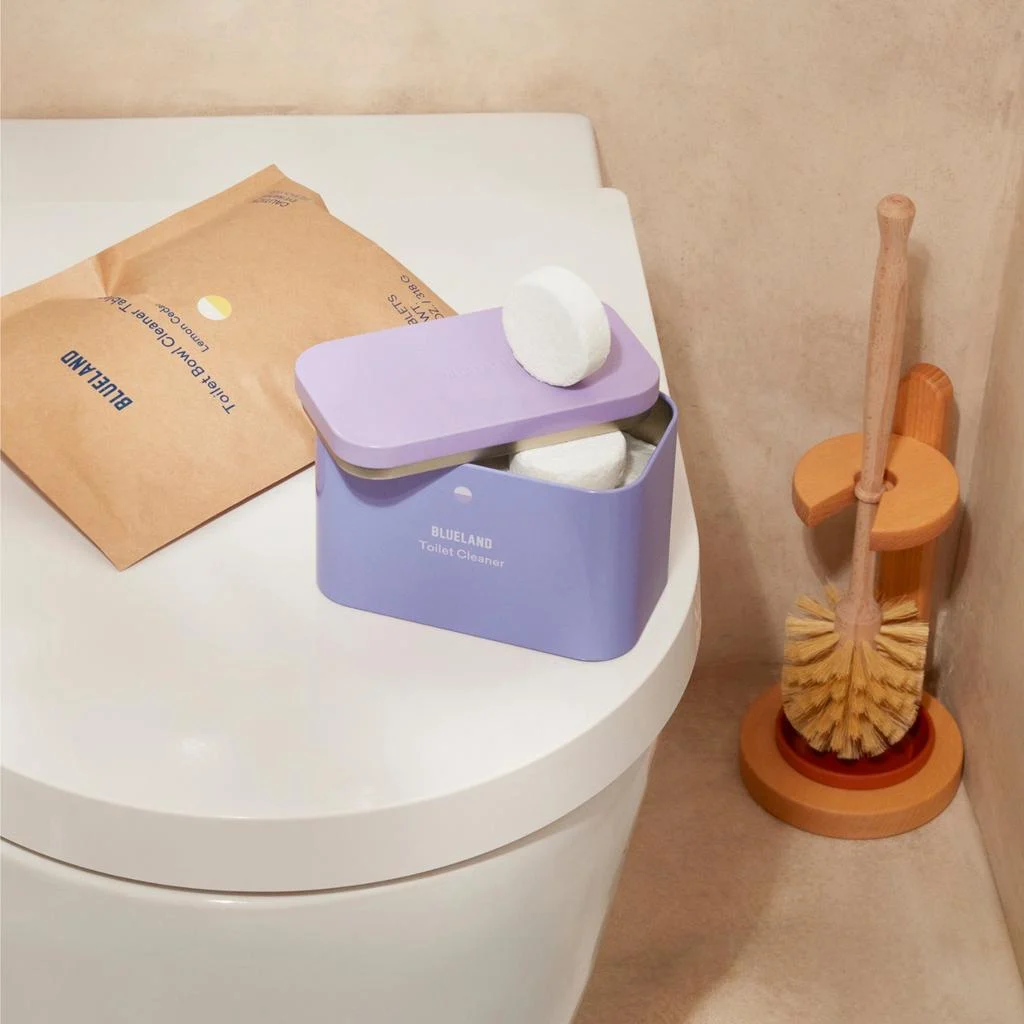
Toilet cleaners come in several formats. Each has a different application method and intended use.
Liquid Toilet Bowl Cleaners
Liquid toilet cleaners are common household products. You apply them around the inside of the bowl, including beneath the rim.
They may contain bleach, acids, surfactants, or other cleaning ingredients. Check the label to understand the formula and intended stains.
Best for: Regular manual cleaning and products designed for specific stain types.
Clinging Gel Toilet Bowl Cleaners
Gel cleaners have a thicker texture than many standard liquids. They are designed to coat the bowl and remain in contact with surfaces.
Some products use angled nozzles to reach beneath the rim. This can make application easier, but it does not remove the need to follow the label’s contact time and brushing directions.
Best for: People who want a product that coats the bowl during manual cleaning.
Toilet Bowl Cleaning Tablets
Toilet cleaning tablets come in different formats. Some are designed for direct use in the bowl, while others are designed for the tank.
Do not treat these as the same product.
- In-bowl tablets are used according to their package directions.
- In-tank tablets release ingredients into tank water.
- Some tablets use bleach, while others use different formulas.
Check the tablet’s label and toilet manufacturer’s instructions before using it.
Best for: People who prefer a tablet-based cleaning method and can follow its specific directions.
Automatic and Continuous-Cleaning Products
Automatic toilet cleaners release cleaning ingredients over time. Some sit in the tank, while others attach to the bowl or rim.
They can support routine maintenance, but they do not replace a full manual clean when the bowl has established stains, mineral scale, or heavy grime.
Best for: Maintaining a cleaner bowl between regular manual sessions.
Foaming Toilet Bowl Cleaners
Foaming cleaners expand when applied or activated. Their coverage depends on the product’s design and instructions.
Do not assume foam means deeper cleaning. Check the label for the intended stains, application method, and contact time.
Best for: People who prefer a foam application and whose cleaning needs match the product label.
Toilet Cleaning Strips and Other Formats
Some products use strips, sheets, or other formats to deliver cleaning ingredients. They may be convenient for storage or measured use.
Check whether the product is intended for bowl cleaning, tank use, or another application. Do not assume a product works in every toilet simply because it is sold as a toilet cleaner.
Which Toilet Bowl Cleaner Is Best for Different Stains?
Toilet stains can have different causes. Mineral deposits, rust, organic grime, and ordinary discoloration do not always respond to the same formula.
What Is the Best Toilet Bowl Cleaner for Hard Water Stains?

Hard water contains dissolved minerals. When water evaporates, these minerals can remain on the bowl and form a rough or chalky deposit.
A regular bleach-based cleaner may help remove organic grime and brighten the surface. However, it may not dissolve established mineral scale as effectively as a product designed for lime or mineral deposits.
Look for a toilet cleaner whose label specifically mentions:
- Hard-water stains.
- Lime scale.
- Mineral deposits.
- Calcium buildup.
Acid-based formulas are commonly used for mineral deposits. Products such as Clorox Lime & Rust Destroyer and Zep Acidic Toilet Bowl Cleaner are marketed for these problems. Check the current product labels before use.
If the stain remains, do not keep adding stronger chemicals. Follow the label, allow the recommended contact time, and use a suitable toilet brush.
What Is the Best Toilet Bowl Cleaner for Calcium and Mineral Buildup?
Calcium deposits can collect around the waterline, beneath the rim, and in areas where water sits. They may look white, gray, yellow, or brown depending on other minerals and grime.
Choose a cleaner specifically labeled for calcium, lime, or mineral deposits. Acid-based formulas can dissolve certain mineral deposits, but their strength and surface compatibility vary.
Before buying, check:
- The active ingredients.
- The surfaces listed on the label.
- The recommended contact time.
- The required protective measures.
- Whether the product is intended for toilets.
Do not use a general bathroom cleaner simply because it mentions limescale. Confirm that its label permits toilet-bowl use.
What Is the Best Toilet Bowl Cleaner for Rust Stains?
Rust-colored stains may come from iron in the water supply or corrosion in plumbing components. They often appear as orange, reddish-brown, or dark rings.
Choose a product specifically labeled for rust removal. Some acid-based toilet cleaners are designed to target rust and mineral stains.
Clorox Lime & Rust Destroyer and Lysol Lime & Rust Remover are examples to compare. Their formulas and directions differ, so check the exact label before choosing one.
If rust stains return quickly, investigate the water source or plumbing. A toilet cleaner can remove visible marks, but it cannot fix the source of recurring iron deposits.
What Is the Best Toilet Bowl Cleaner for Tough Brown and Yellow Stains?
Brown and yellow stains do not always have the same cause. They may result from mineral deposits, iron, organic grime, or a combination of buildup.
Start by checking where the stain appears and whether it feels rough.
- A rough ring near the waterline may indicate mineral buildup.
- Orange or reddish-brown discoloration may indicate iron-related staining.
- A general film may respond to routine cleaning and brushing.
- A stain that returns quickly may point to a water-quality or plumbing issue.
Choose the formula based on the likely cause. Avoid assuming that the strongest bleach product will remove every brown or yellow mark.
What Is the Best Toilet Bowl Cleaner for Toilet Rings?
Toilet rings can form where water repeatedly meets the porcelain. Mineral deposits, iron, and organic residue may all contribute.
For a rough or chalky ring, compare cleaners labeled for hard water or lime scale. For a softer film, a regular toilet cleaner and brush may be enough.
Apply the cleaner around the waterline and beneath the rim. Follow the label’s contact time, then scrub with a toilet brush.
If the ring remains, identify its likely cause before switching products. Never layer different cleaners or apply a second product before following the first product’s flushing and safety directions.
What Is the Best Toilet Bowl Cleaner for Odors?
A bad toilet odor can come from organic residue, urine deposits, a dirty toilet brush, or a plumbing problem. A scented cleaner may hide the smell without removing its source.
For ordinary bowl odors:
- Clean beneath the rim.
- Brush around the waterline.
- Clean the toilet seat hinges with a suitable product.
- Wash or replace a dirty toilet brush.
- Check for leaks or persistent plumbing odors.
If the odor continues after cleaning, investigate the source rather than relying on stronger fragrance.
Bleach vs. Bleach-Free Toilet Bowl Cleaners
Bleach and bleach-free formulas can both have a place in toilet cleaning. The right choice depends on the stain, the product’s intended use, and your household preferences.
What Does Bleach Do in a Toilet Bowl Cleaner?
Many bleach-based toilet cleaners use sodium hypochlorite. It can help whiten surfaces and support disinfecting claims when the product is registered and used according to its label.
For example, Clorox Toilet Bowl Cleaner with Bleach carries manufacturer disinfection claims and specifies a 10-minute contact time for its stated use.
Bleach is not a universal solution for mineral deposits. A cleaner designed for lime scale or rust may be more appropriate for those stains.
Are Bleach-Free Toilet Bowl Cleaners Effective?
Yes, some bleach-free products have specific cleaning and antimicrobial claims. Their performance depends on the ingredients and the product’s directions.
Lysol Power & Free, for example, is marketed as a bleach-free toilet cleaner. Its manufacturer provides separate instructions for cleaning, sanitizing, and disinfecting.
Do not assume that bleach-free means non-toxic, non-corrosive, or safe to mix with other products. Read the label.
When Should You Choose an Acid-Based Cleaner?
Consider an acid-based toilet cleaner when the problem is mineral scale, lime deposits, or rust and the product label permits the intended use.
These products can be corrosive. Some contain hydrochloric acid or other acids and require careful handling.
Never use an acid-based toilet cleaner with bleach. The combination can release chlorine gas.
Is Bleach the Best Choice for Every Toilet?
No. Bleach-based cleaners can help with certain cleaning and disinfection tasks, but they are not designed to solve every stain problem.
Choose based on the type of buildup:
- Use a suitable routine cleaner for everyday grime.
- Consider a labeled mineral remover for hard-water scale.
- Choose a rust-specific formula for rust-colored marks.
- Use registered bleach-based disinfectants only as directed when disinfection is needed.
What Is the Best Toilet Bowl Cleaner for Septic Systems?
A septic system relies on biological activity and wastewater treatment. This does not mean every household cleaner automatically causes damage, or that every product labeled natural is suitable.
Check the exact product’s septic guidance before using it.
What Makes a Toilet Cleaner Suitable for a Septic System?
A product’s compatibility depends on its formulation, intended use, and directions. The manufacturer’s statement should apply to the exact product, not just its brand.
For example, Clorox states that its named bleach-based bowl cleaner is suitable for septic systems when used as directed. This does not establish that every bleach-based cleaner has the same compatibility.
Which Ingredients and Product Directions Should You Check?
Review the label and manufacturer guidance for:
- Recommended amount per use.
- Frequency of use.
- Septic-system compatibility statement.
- Whether the product is intended for the bowl or tank.
- Any warnings about repeated or excessive use.
Avoid relying on broad claims such as chemical-free or natural. Those terms do not establish septic compatibility.
Are Toilet Cleaning Tablets Safe for Septic Systems?
It depends on the tablet. Check the exact product’s septic guidance and follow its dosing instructions.
Do not assume that a tank tablet is safer than a liquid cleaner. A tablet can release ingredients with every flush, so its intended use and compatibility matter.
If your septic-system manufacturer provides specific cleaning-product guidance, follow it.
Are Automatic Toilet Bowl Cleaners Worth Buying?
Automatic cleaners can make routine maintenance easier. They release cleaning ingredients over time, which may help reduce some everyday buildup.
They do not replace a full manual clean when the bowl has established stains, mineral scale, or heavy grime.
How Do In-Tank Toilet Cleaning Tablets Work?
An in-tank tablet dissolves gradually in the tank water. Each flush carries some of the dissolved product into the bowl.
The exact installation method depends on the product. Clorox provides specific instructions for its bleach-based tank tablets, including how to prepare the tank and install the tablet.
Follow the instructions for your specific tablet. Do not handle or install it in a way that conflicts with the manufacturer’s directions.
Are Drop-In and Continuous-Cleaning Products Effective?
They can help maintain the bowl between manual cleaning sessions. However, they may not remove old mineral rings or heavy rust stains.
Choose a product based on its stated use. Check how often it needs replacing and whether it is designed for the tank, bowl, or rim.
Can Automatic Cleaners Damage Toilet Components?
Some toilet manufacturers warn against certain in-tank cleaning products because their ingredients may affect internal parts. Compatibility varies by toilet and cleaner.
Before using a tablet:
- Check the toilet manufacturer’s care instructions.
- Check the tablet’s compatibility information.
- Confirm whether it is designed for tank use.
- Follow the installation and replacement directions.
- Stop using it if you notice a change in flushing or component performance.
Do not assume all tablets have the same effect on toilet parts.
When Is Manual Cleaning Still Necessary?
Manual cleaning is still useful when you need to remove:
- Established mineral deposits.
- Rust stains.
- Rings around the waterline.
- Organic grime.
- Buildup beneath the rim.
An automatic cleaner supports maintenance. It does not replace a suitable brush and targeted cleaner.
Are Natural and Non-Toxic Toilet Bowl Cleaners Effective?
Some shoppers prefer plant-based or other formulas marketed as natural or non-toxic. These products can be worth comparing, but marketing language does not prove safety or cleaning performance.
Read the ingredient information and product directions. Check whether the formula is designed for the stain you need to remove.
What Does Non-Toxic Mean on a Toilet Cleaner Label?
The phrase can be used in different ways in product marketing. It does not automatically mean that a cleaner is safe to swallow, touch, inhale, or mix with other products.
Check for specific evidence, such as:
- Ingredient disclosures.
- Hazard statements.
- Usage restrictions.
- Relevant environmental certifications.
- Manufacturer safety information.
The EPA Safer Choice program evaluates products against ingredient criteria. A certification is more useful than an unsupported green claim, but it does not mean a product is harmless in every situation.
Do Plant-Based Toilet Bowl Cleaners Work?
Plant-based formulas may help with routine cleaning, depending on their ingredients and intended use. Their performance against established mineral scale or rust may differ from that of acid-based cleaners.
Check the product’s stated cleaning uses. Do not assume that a plant-based formula will remove every type of stain.
Are Enzyme-Based Toilet Cleaners Effective?
Enzyme-based products use enzymes to help break down certain types of organic material. Their intended applications vary.
They may be relevant for organic residue or odor-related maintenance. They should not be treated as a universal solution for calcium, lime scale, or rust.
Check the product label for its intended use and the time needed for results.
What Should You Check Before Buying an Eco-Friendly Cleaner?
Look beyond the front label.
- Read the ingredient information.
- Check the product’s cleaning claims.
- Look for recognized certifications where relevant.
- Confirm toilet-surface compatibility.
- Check septic-system guidance if you use a septic tank.
- Review safety warnings and disposal instructions.
A product’s environmental claims and its cleaning performance are separate questions. Evaluate both.
How to Get Better Results From Toilet Bowl Cleaner
A suitable product can still disappoint when it is applied incorrectly. Use the right amount, reach the areas where grime collects, and follow the label’s contact time.
Apply the Cleaner Around the Bowl and Under the Rim
Start by reading the product directions. Some manufacturers instruct users to flush before applying the cleaner.
Apply the product around the inside of the bowl, including beneath the rim when the label permits it. The angled nozzle on many toilet cleaners helps reach this area.
Do not use more product than the label recommends.
Follow the Recommended Dwell Time
Dwell time is how long a cleaner remains on the surface before you scrub or flush.
Different products have different contact times. Some also have separate instructions for routine cleaning, sanitizing, and disinfecting.
Do not apply one product’s timing to another brand. Follow the exact bottle instructions.
Use the Right Toilet Brush for Stubborn Stains
A toilet brush helps loosen grime and remove deposits softened by the cleaner. Choose a brush that can reach beneath the rim and around the waterline.
For stubborn stains:
- Apply the correct cleaner.
- Wait for the stated contact time.
- Scrub the affected area.
- Check whether the stain has loosened.
- Flush as directed.
Avoid abrasive tools unless the toilet manufacturer and cleaner label permit them. Scratching the surface can make future cleaning harder.
Flush and Maintain the Bowl Regularly
Regular cleaning helps prevent grime and mineral deposits from building up.
A simple routine can include:
- Cleaning the bowl with a suitable product.
- Brushing beneath the rim.
- Cleaning the seat and exterior with appropriate products.
- Keeping the toilet brush clean and dry.
- Checking recurring stains for a water-quality or plumbing cause.
The right schedule depends on household use and water conditions.
Toilet Bowl Cleaner Safety: What Should You Avoid?
Toilet cleaners can contain bleach, acids, and other active ingredients. Use each product on its own and follow its label.
Never Mix Bleach With Vinegar or Acid-Based Cleaners
This is one of the most important toilet-cleaning safety rules.
Mixing bleach with an acid can release chlorine gas. Mixing bleach with ammonia can produce hazardous chloramine gases. Some toilet cleaners contain acids, so never combine products because they appear to have different purposes.
Never mix:
- Bleach and vinegar.
- Bleach and acid-based toilet cleaner.
- Bleach and ammonia-based cleaner.
- Different toilet bowl cleaners.
- Cleaning products unless their labels explicitly direct you to do so.
If you accidentally mix products and notice strong fumes, coughing, burning eyes, or breathing difficulty, leave the area and get fresh air. Seek urgent medical or poison-control advice.
Follow Product Labels and Contact-Time Instructions
Read the label before opening the bottle. Follow its instructions for application, contact time, ventilation, protective equipment, and flushing.
Do not assume that a product’s cleaning instructions are the same as its disinfecting instructions.
Keep the original container and label. Never transfer a cleaner into a drink bottle or an unlabeled container.
Protect Toilet Surfaces and Internal Components
Some cleaners are intended only for the toilet bowl. Others may have restrictions for colored surfaces, metal parts, or toilet tanks.
Check the product label and toilet manufacturer’s guidance before use. Do not pour a bowl cleaner into the tank unless the product specifically instructs you to do so.
Keep Cleaning Products Away From Children and Pets
Store cleaners in their original containers. Keep caps closed and products out of reach of children and pets.
Do not leave an open cleaner beside the toilet. Follow the label’s instructions for handling, storage, and first aid.
Frequently Asked Questions About Toilet Bowl Cleaners
What Is the Most Effective Toilet Bowl Cleaner?
The most effective cleaner depends on the stain. A bleach-based formula may suit routine cleaning and labeled disinfection, while an acid-based cleaner may be more suitable for mineral scale or rust.
Identify the problem and choose a product labeled for that use.
What Do Professional Cleaners Use for Toilets?
Professional cleaning routines vary. They may use toilet bowl cleaners, disinfectants, brushes, and other tools based on the site and cleaning requirements.
There is no single product used by every professional. The cleaning task and product label matter more than the brand name.
Are Toilet Bowl Cleaners Safe to Use?
They can be used safely when you follow the label. Some formulas are corrosive or can release hazardous gases if mixed with incompatible products.
Use the recommended precautions, ventilate the area as directed, and store cleaners securely.
What Should You Never Mix With Toilet Bowl Cleaner?
Never mix bleach-based cleaners with acids, vinegar, ammonia, or other household cleaning products. These combinations can release hazardous gases.
Use one product at a time and follow its label.
Do All Toilet Bowl Cleaners Contain Bleach?
No. Some use bleach, while others use acids, hydrogen peroxide, surfactants, or other ingredients.
Check the active ingredients and product description before buying.
Are Toilet Bowl Cleaning Tablets Effective?
They can support regular maintenance, depending on the formula and application method. They may not remove established rust, hard-water stains, or heavy buildup.
Check whether the tablet is designed for the bowl or tank.
Can Toilet Bowl Cleaner Damage Porcelain?
A product used outside its intended application may damage surfaces. Strong acidic cleaners also have specific handling and compatibility requirements.
Follow the cleaner’s label and the toilet manufacturer’s care instructions.
Can You Use Toilet Bowl Cleaner With a Septic System?
Some products are labeled as suitable for septic systems when used as directed. Clorox makes this claim for its named bleach-based bowl cleaner.
Check the exact product rather than assuming all toilet cleaners are compatible.
How Long Should Toilet Bowl Cleaner Sit?
Follow the contact time on the product label. Some products specify different times for routine cleaning, sanitizing, and disinfecting.
Do not use a general waiting time for every cleaner.
Are Natural or Enzyme-Based Toilet Cleaners Effective?
They can help with certain cleaning tasks, depending on the formula. Enzyme-based products are designed for particular types of organic material, while plant-based products vary widely.
Check the intended use and evidence behind the product’s claims.
Can Automatic Toilet Bowl Cleaners Damage Toilet Components?
Some tank-cleaning products may not be suitable for every toilet. Check the toilet manufacturer’s guidance and the tablet’s label before installing one.
How Often Should You Clean a Toilet Bowl?
Clean it based on household use, visible buildup, and water conditions. Regular cleaning helps prevent stains from becoming harder to remove.
Can I Clean a Toilet Bowl Without Toilet Bowl Cleaner?
You can remove some everyday grime with a suitable brush and water, but established mineral deposits may need a product designed for that stain. Avoid mixing homemade solutions with commercial cleaners.
Are Gel and Liquid Toilet Bowl Cleaners Different?
Yes. Gel formulas are thicker and may cling to the bowl, while liquid formulas spread more easily. Neither format guarantees better cleaning. The ingredients and directions matter more.