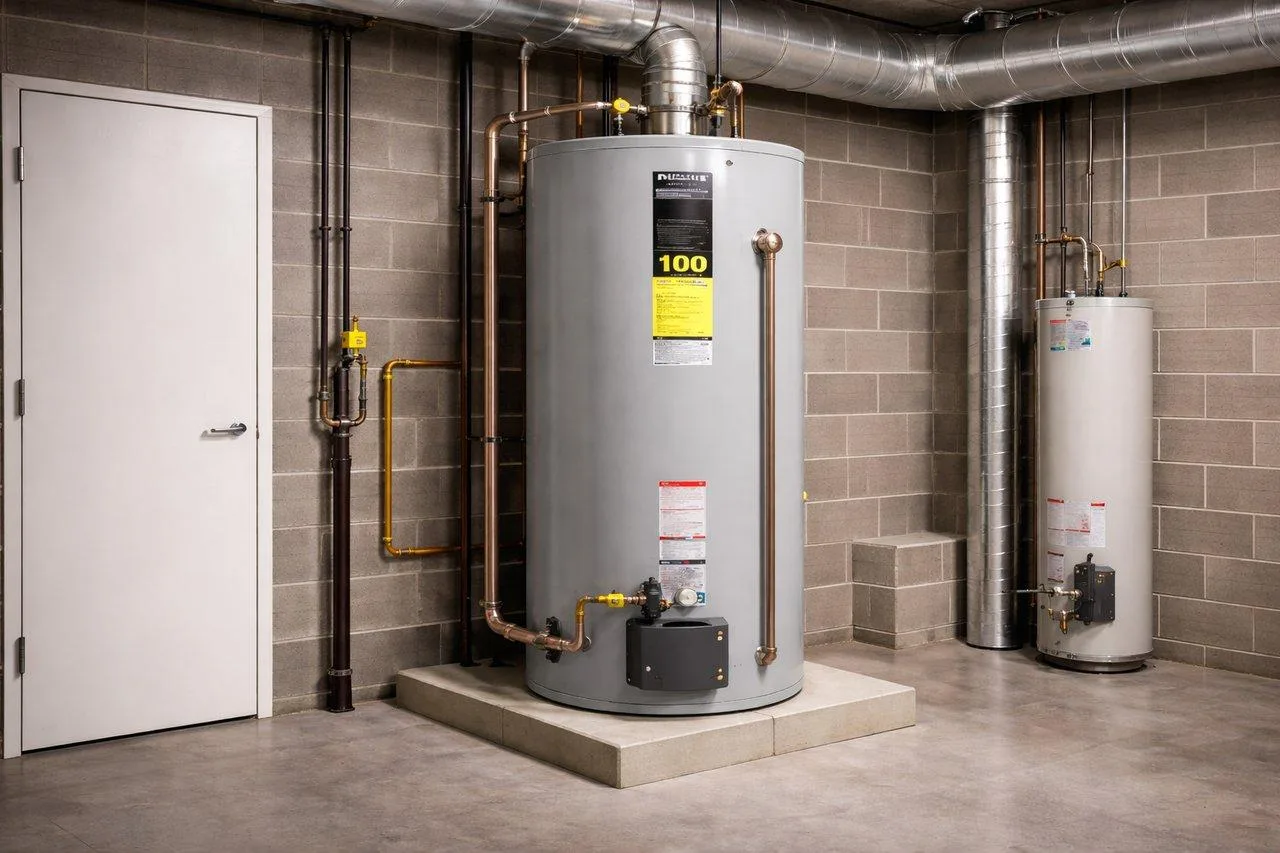
How to Flush a Water Heater (Step-by-Step Guide)
Flushing a conventional tank water heater removes loose sediment that settles at the bottom of the tank. The process involves shutting off the heat source, draining the tank through its drain valve, rinsing out sediment, and refilling it safely.
You can often flush a gas or electric tank water heater yourself if the unit is in good condition and you follow its manufacturer’s instructions. Tankless water heaters are different. They usually need a separate descaling process rather than a traditional tank flush.
Before starting, identify your water heater model and read its owner’s manual. Stop and contact a qualified plumber if the drain valve is stuck, the tank shows heavy corrosion, or you are unsure how to shut off the gas or electricity.
What Should You Know Before Flushing a Water Heater?
Most residential storage-tank water heaters have a similar basic flushing process. However, their drain valves, controls, and maintenance instructions can differ.
Is Your Water Heater a Tank or Tankless Model?

A tank water heater stores hot water inside an insulated storage tank. Over time, minerals and other particles can settle at the bottom. Flushing removes loose sediment through the drain valve.
A tankless water heater heats water as it flows through a heat exchanger. It does not have a large storage tank to drain. Many tankless models need periodic descaling to remove mineral deposits from their internal passages.
This guide’s main procedure is for conventional tank water heaters. See the tankless section below for the difference.
Does Your Water Heater Use Gas or Electricity?
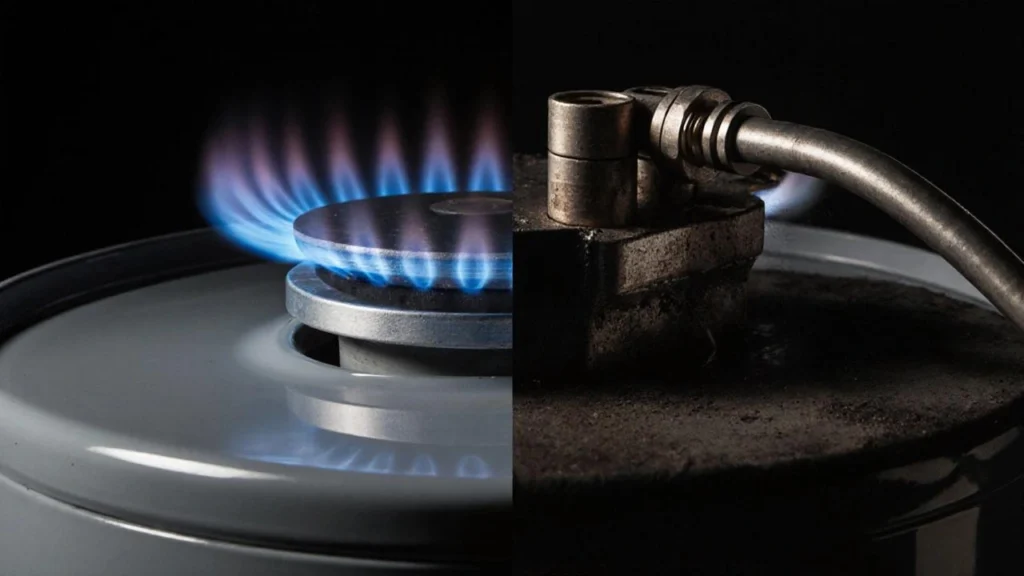
A gas water heater uses a burner to heat stored water. An electric model uses heating elements.
Both types need their heat source shut off before routine flushing. However, the shutdown and restart steps differ. Check the manual before operating a gas control, pilot light, circuit breaker, or disconnect.
Why Should You Check the Manufacturer’s Instructions First?
Your owner’s manual identifies the correct shutdown settings, drain-valve operation, and restart procedure for your model.
Some manufacturers recommend turning a gas control fully off. Others may specify a particular setting. Electric models may use a breaker, disconnect, plug, or control panel.
Do not assume that a procedure shown for another brand applies to your heater. The manufacturer’s instructions should take priority over a general online guide.
Is It Safe to Flush an Older or Neglected Water Heater?
An older water heater is not automatically unsafe to flush. Its condition and maintenance history matter more than age alone.
Consider professional help before flushing if you notice heavy rust, corrosion, leaks, a damaged drain valve, or signs of severe sediment buildup. Be especially careful when the tank has never been maintained and its condition is unknown.
What Tools Do You Need to Flush a Water Heater?
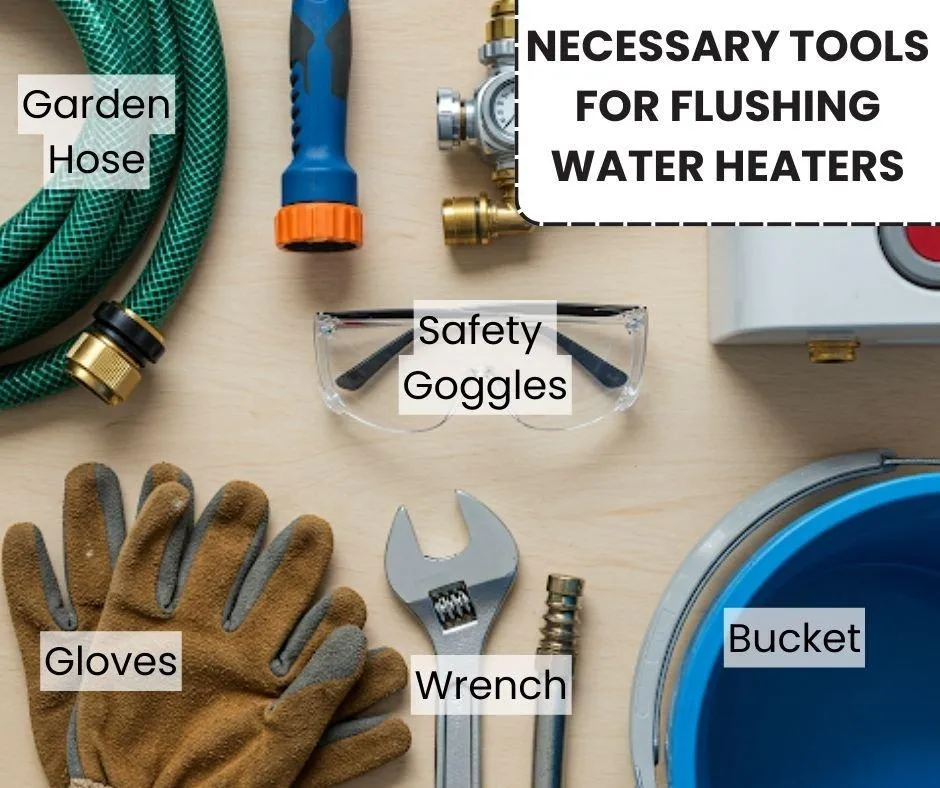
Gather the equipment before shutting down the unit. Most conventional tank water heaters require only a few basic items.
| Tool or material | Purpose |
|---|---|
| Garden hose | Directs water from the drain valve to a safe location |
| Bucket | Collects water when a suitable drain is unavailable |
| Flathead screwdriver | Operates some drain-valve designs |
| Towels or rags | Clean up small spills |
| Protective gloves | Protect hands during maintenance |
| Safety goggles | Protect eyes from splashes |
| Adjustable wrench | Optional, depending on the hose connection |
Check the drain valve before choosing a hose. Some connections need a threaded fitting or cap to create a secure connection.
Where Should You Drain the Water?

Choose a floor drain, suitable exterior drainage area, or another location that can safely handle the water. The receiving point should be lower than the water heater’s drain valve so gravity can move the water through the hose.
A residential tank may hold 40, 50, or more gallons. Make sure the hose is long enough and cannot come loose during drainage.
The water may still be hot enough to cause a burn. Keep children and pets away from the discharge area, and never direct the hose toward a walkway or a place that could flood.
How to Flush a Water Heater Step by Step
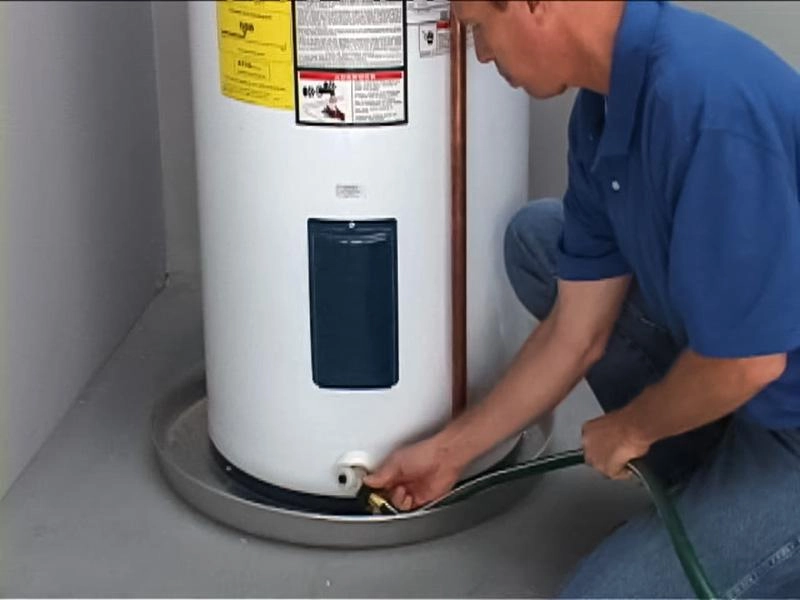
These general steps explain how a conventional tank water heater is commonly flushed. Your manufacturer’s manual may specify a different sequence or valve position, so follow it whenever it differs from this overview.
Step 1: Turn Off the Water Heater’s Heat Source
Turn off the heat source before draining the tank.
For an electric water heater, switch off the correct circuit breaker or disconnect. For a gas model, use the gas control setting specified in the owner’s manual.
This prevents the heating system from operating while the tank is being drained. A dry electric heating element can be damaged if power is restored before the tank is full.
Step 2: Shut Off the Cold-Water Supply
Find the cold-water inlet valve on the pipe entering the top of the tank. Close it to stop new water from entering.
If the unit does not have a separate inlet shutoff, you may need to use the main water shutoff. Do not guess which valve controls the heater. Confirm the correct supply line first.
Step 3: Allow the Water to Cool
Hot water can cause serious burns. Allow the stored water to cool before draining whenever possible.
A. O. Smith recommends turning the heater off several hours before draining to reduce scald risk. The actual cooling time depends on the tank, its starting temperature, and the surrounding conditions.
Wear protective gloves and safety goggles. Do not assume that water is safe to handle simply because the burner or heating elements are off.
Step 4: Connect a Garden Hose to the Drain Valve
Locate the drain valve near the bottom of the water heater. It may have a handle or a slot for a flathead screwdriver.
Attach a garden hose securely. Run its other end to the floor drain or another safe drainage location.
Before opening the valve, check that the hose cannot move or disconnect. A loose hose can release a large amount of water onto the floor.
Step 5: Open a Hot-Water Faucet as Directed
Open a hot-water faucet in the house if your manufacturer’s procedure calls for it. This can allow air into the plumbing and help the tank drain.
A nearby sink or bathtub faucet may work, depending on the home’s plumbing layout. Keep the faucet open during the relevant draining and refilling stages.
Step 6: Open the Drain Valve and Empty the Tank
Open the drain valve slowly. Water should begin flowing through the hose.
Do not force a stiff valve. If water does not flow, sediment may be blocking the opening. Stop rather than applying excessive force or trying to remove the valve.
Drain the tank into the chosen location. The time depends on the tank’s capacity, water pressure, hose setup, and the amount of sediment.
Step 7: Flush Out Loose Sediment
Once the tank has drained, follow the manufacturer’s instructions for rinsing sediment.
A common method is to briefly reopen the cold-water supply while the drain valve remains open. Incoming water stirs loose sediment and carries it through the hose. Repeat only as directed by the manufacturer.
Watch the discharged water. Continue the rinse until it runs clear or until the manual’s stated procedure is complete.
Do not keep forcing water through a blocked drain valve. If the flow stops or the valve will not operate normally, contact a plumber or qualified service technician.
Step 8: Close the Drain Valve and Remove the Hose
Close the drain valve carefully once the rinse is complete. Avoid overtightening or forcing it.
Disconnect the hose and check the valve for drips. A small amount of trapped water may remain in the hose, so direct its end into the drain while removing it.
If the drain valve continues to leak, stop and arrange a repair. Do not assume that tightening it harder will solve the problem.
Step 9: Refill the Tank and Purge Air
Close the drain valve before refilling. Reopen the cold-water inlet and allow the tank to fill.
Keep the appropriate hot-water faucet open as the tank refills. Air may sputter from the faucet at first. Wait until the flow becomes steady, then close the faucet.
This step helps release trapped air from the plumbing. It also helps confirm that water has reached the tank before the heat source is restored.
Step 10: Check for Leaks and Restore the Heat Source
Inspect the drain valve, hose connection, nearby fittings, and floor around the heater. Make sure the tank is full and the hot-water faucet has a steady flow.
For an electric model, restore power only after confirming the tank is full and following the manufacturer’s restart instructions. For a gas model, restore gas operation and relight the pilot if the manual requires it.
Check the area again after the unit restarts. If you smell gas, leave the area and contact your gas utility or emergency service according to local guidance.
Is Flushing a Gas Water Heater Different from Flushing an Electric Water Heater?
The main draining and rinsing process is similar for both types. The main difference is how you shut off and restore the heat source.
How to Flush a Gas Water Heater
Before draining, follow the manual’s instructions for shutting off the gas control or burner. Some models specify an OFF setting, while others may provide a different maintenance setting.
Do not guess the correct pilot or thermostat position. After refilling, follow the manufacturer’s relighting instructions if the pilot went out.
If you are not comfortable operating the gas control or relighting the pilot, have a qualified technician handle the work.
How to Flush an Electric Water Heater
Turn off the correct breaker or disconnect before draining. Confirm that the power is off before opening the drain valve.
The most important restart rule is to make sure the tank is full before restoring power. Heating elements can fail if they are energized without being fully covered by water.
Why Must an Electric Water Heater Be Full Before Power Is Restored?
Electric heating elements are designed to operate while surrounded by water. If an element is exposed to air and energized, it can overheat and burn out.
Keep the heat source off while the tank drains and refills. Restore power only after water flows steadily from an open hot-water faucet and the manufacturer’s refill procedure is complete.
How Long Does It Take to Flush a Water Heater?
The time varies with tank size, water temperature, sediment buildup, drain-valve condition, and water pressure.
The Home Depot describes a typical beginner-level job as taking under two hours. MyHealth Alberta gives an estimate of 20 to 60 minutes for draining, depending on tank size. These are guides, not guarantees for every installation.
What Affects the Flushing Time?
Several factors affect the total time:
- Tank capacity: Larger tanks hold more water and usually take longer to drain and refill.
- Water temperature: Allowing hot water to cool adds preparation time.
- Sediment buildup: Heavy sediment can slow drainage or block the valve.
- Drainage setup: A long hose or a higher discharge point can slow the process.
- Water pressure: The refill and rinse stages depend on the available supply.
How Long Does It Take to Flush a 40-Gallon Water Heater?
A 40-gallon tank may take 20 to 60 minutes to drain under the conditions described by MyHealth Alberta. The complete job takes longer because it also includes cooling, rinsing, refilling, purging air, checking for leaks, and reheating the water.
Do not rush the process to meet a fixed time. A clear discharge, a properly refilled tank, and a safe restart matter more than finishing quickly.
How Often Should You Flush a Water Heater?
Many manufacturers recommend flushing a conventional tank water heater about once a year. However, the correct schedule depends on the model, water quality, and household use.
A. O. Smith recommends referring to the manufacturer’s handbook and says most water heaters should be flushed at least annually. Rheem also recommends annual flushing for many homes and notes that hard-water conditions may call for more frequent maintenance.
How Often Should You Flush a Tank Water Heater?
Use the schedule in your owner’s manual first. If the manufacturer recommends annual flushing, add it to your home maintenance calendar.
Some water conditions may require a shorter interval. Do not change the schedule solely because another homeowner follows a different routine.
How Does Hard Water Affect Flushing Frequency?
Hard water contains more dissolved minerals, such as calcium and magnesium. These minerals can contribute to scale and sediment buildup inside a water heater.
Homes with hard water may need more frequent maintenance. A water-quality test or local water report can help you understand your supply, but the manufacturer’s schedule should still guide the work.
Should You Flush a Water Heater After Five or Ten Years?
Age alone does not determine whether a water heater should be flushed. A five-year-old tank that has been maintained regularly may be in a different condition from a ten-year-old tank that has never been serviced.
If the maintenance history is unknown, or you see corrosion, leaking, or a blocked drain valve, ask a plumber to assess the unit before attempting a flush.
Why Should You Flush a Water Heater?
Water contains minerals and other particles that can settle inside a storage tank. Flushing removes loose sediment and helps maintain the tank’s performance.
How Does Sediment Build Up Inside a Water Heater?
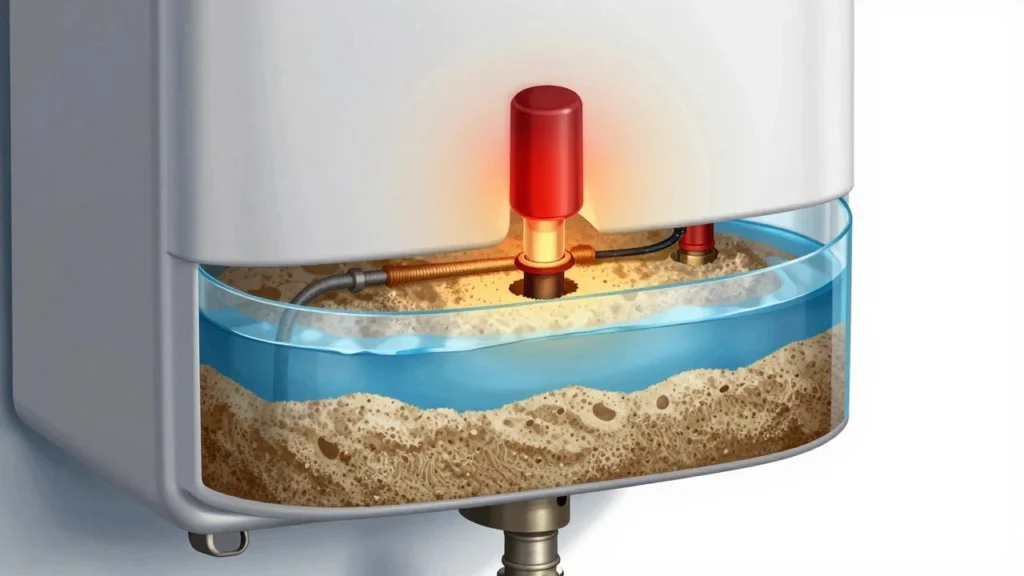
As water heats, some minerals can separate from the water and settle near the bottom of the storage tank. Over time, these deposits can form a layer of sediment.
The amount depends on the water supply, the heater, and its usage. Hard-water areas may experience more mineral buildup.
Can Sediment Affect Water Heater Performance?
Sediment can reduce the amount of usable space in a tank and interfere with heat transfer. It may also contribute to popping or rumbling sounds as water heats around deposits.
Regular maintenance can help limit loose sediment buildup. However, flushing does not repair a damaged tank, replace a worn heating element, or prevent corrosion by itself.
What Are the Signs Your Water Heater May Need Flushing?
Possible signs include:
- Popping or rumbling sounds from the tank.
- Less hot water than usual.
- Longer recovery time after hot-water use.
- Cloudy or discolored hot water.
- Visible sediment in discharged water.
- Slow drainage through the drain valve.
These symptoms can have other causes. For example, rusty water may point to corrosion or a problem elsewhere in the plumbing. Persistent discoloration or unusual noises deserve further inspection.
What Should You Do After Flushing a Water Heater?
The work is not complete when the drain valve closes. The tank must refill, air must leave the plumbing, and the system must be checked before normal operation resumes.
How Do You Remove Air from Hot-Water Lines?
Keep a suitable hot-water faucet open during refilling, following the manufacturer’s instructions. At first, the water may sputter as trapped air escapes.
Wait for a steady stream before closing the faucet. Do not restore electric power until the tank is full and the manual’s restart requirements are met.
Why Are Faucets Sputtering After Flushing?
Sputtering often happens because air remains in the water lines after the tank has drained and refilled. Let the hot-water side run until the flow becomes steady.
If sputtering continues, or the water flow remains weak, investigate further. The issue may involve an aerator, plumbing blockage, or another water-supply problem.
What Should You Do if the Water Looks Brown or Cloudy?
Some sediment may be stirred up during flushing. However, persistent brown, rusty, or cloudy water should not automatically be treated as harmless sediment.
Check whether the discoloration affects only hot water or both hot and cold water. If it continues after the system has settled, contact a qualified plumber or your water provider to investigate the source.
Should You Clean Faucet Aerators After Flushing?
Sediment can collect in faucet aerators and reduce water flow. If a faucet has weak flow after flushing, the aerator may need inspection and cleaning.
Follow the faucet manufacturer’s instructions. Do not assume the water heater is still blocked if only one faucet has reduced flow.
How Do You Check for Leaks After Refilling?
Inspect the drain valve, water connections, and the floor around the tank. Check again after the heater has returned to normal operation.
A valve that continues to drip or a fitting that becomes wet needs attention. Arrange a repair rather than forcing the connection tighter.
How Do You Fix Common Water Heater Flushing Problems?
Some flushing problems are signs that the job should stop. Do not force a valve or take apart a pressurized connection to keep the process moving.
What If Nothing Comes Out of the Drain Valve?
Sediment may be blocking the drain opening, or the valve may be faulty. Confirm that the cold-water supply and faucet positions match the manufacturer’s instructions.
If water still does not flow, stop. A plumber or qualified service technician can assess the blockage without risking damage to the valve or tank.
What If the Water Heater Drain Valve Is Clogged?
A clogged drain valve can prevent the tank from draining. Do not force the handle, push tools into the opening, or remove the valve while the tank is full or pressurized.
A technician can determine whether the valve needs clearing or replacement. This is especially important when the valve is old, brittle, corroded, or already leaking.
What If the Drain Valve Starts Leaking?
A valve may fail to seal because of debris or wear. If it continues to leak after normal operation, contact a plumber.
Do not cap the temperature-and-pressure relief valve or its discharge pipe to stop a leak. That valve is a safety device and must remain able to discharge water when required.
Can Flushing Cause an Older Water Heater to Leak?
Flushing does not automatically cause an old tank to leak. However, an older unit may already have corrosion, weakened fittings, or a drain valve that no longer seals well.
If the heater has not been maintained for years, arrange an inspection before attempting DIY maintenance. This is safer than forcing a heavily restricted or corroded valve.
What If the Water Heater Has Heavy Sediment?
Heavy deposits can block the drain valve and make flushing difficult. A basic garden-hose rinse may not remove hardened buildup.
A technician can assess the tank and use appropriate equipment if needed. Avoid improvised methods involving compressed air, chemicals, or valve removal unless the manufacturer specifically directs the procedure and a qualified person performs it.
Does a Tankless Water Heater Need Flushing or Descaling?
Tankless water heaters do not have a large storage tank to drain. Many models need periodic descaling to remove mineral deposits from the heat exchanger.
Is Flushing a Tankless Water Heater the Same as Flushing a Tank Model?
No. A conventional tank flush drains stored water and removes loose sediment from the bottom of the tank. Tankless descaling circulates a cleaning solution through the unit’s heat exchanger using service valves, hoses, and usually a pump.
The maintenance schedule and procedure depend on the model and water conditions.
What Equipment Is Used to Descale a Tankless Water Heater?
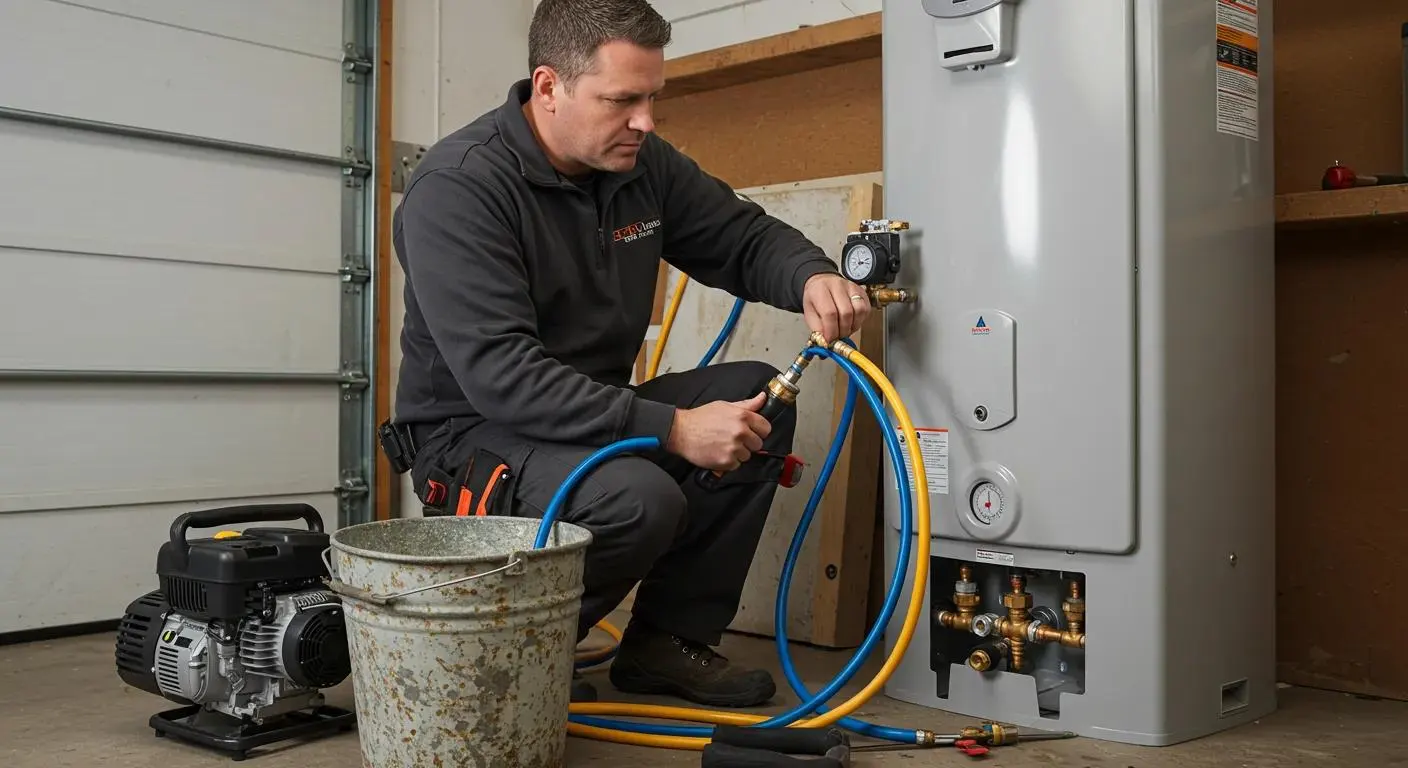
A typical tankless descaling setup may include:
- A compatible descaling or flushing kit.
- A circulation pump.
- Hoses that connect to the service valves.
- A bucket or container.
- The manufacturer-approved cleaning solution.
Not every tankless model uses the same valve arrangement or service mode. Follow the exact manual before connecting a pump or opening service valves.
Can You Use 30% Vinegar to Descale a Tankless Water Heater?
Do not assume that 30% vinegar is safe for your unit. Cleaning-solution requirements differ by manufacturer and model.
For example, Rinnai’s published residential procedure specifies four gallons of undiluted white vinegar for the model range covered by that guide. That instruction should not be applied to every tankless heater. Check your own manual before choosing a solution, concentration, or descaling time.
Should You Flush a Water Heater Yourself or Hire a Plumber?
DIY flushing may suit a homeowner who has a well-maintained tank, the correct manual, safe access, and a working drain valve. Hire a plumber when the equipment’s condition or the procedure is uncertain.
How Do You Know If DIY Flushing Is Suitable?
Before starting, confirm that:
- You can identify the water heater type and model.
- You have the correct maintenance instructions.
- The gas or electrical shutoff is clear.
- The drain valve appears to be in sound condition.
- You have a safe route for the water.
- You understand how to refill and restart the unit.
If any of these conditions are uncertain, professional service is a sensible choice.
When Should You Call a Professional?
Contact a qualified plumber or water-heater technician if the drain valve is stuck, clogged, or leaking; the tank has heavy corrosion; water remains discolored; or the heater continues making unusual noises.
Professional help is also recommended if you are uncomfortable handling gas controls, pilot lights, electrical connections, or tankless service valves.
How Much Does It Cost to Have a Water Heater Flushed?
The cost depends on the heater type, tank size, local labor rates, and the condition of the equipment. Angi’s October 2026 cost guide reports a national average of about $160, with many tank-water-heater flushes listed in the $110–$200 range.
Tankless descaling can cost more because it uses a different process and additional equipment. Ask the plumber whether the quote includes inspection, descaling, repairs, or only routine flushing.
What Other Water Heater Maintenance Should You Consider?
Flushing removes loose sediment, but it is not the only maintenance task that affects a water heater.
Why Does a Water Heater Have a Sacrificial Anode Rod?
Many steel storage-tank water heaters contain a sacrificial anode rod. It attracts corrosive elements so they attack the rod instead of the tank lining.
The rod wears down over time. Inspecting it is a separate maintenance task, and flushing does not replace that inspection. Follow the manufacturer’s schedule or ask a qualified technician to check it.
Should You Inspect the Temperature and Pressure Relief Valve?
The temperature-and-pressure relief valve, often called the T&P valve, is a safety device. It helps release water if temperature or pressure inside the tank becomes too high.
It has its own inspection instructions. Do not open it as a general shortcut to help the tank drain unless the manufacturer’s procedure specifically directs you to do so. If it leaks, will not close, or appears damaged, contact a qualified plumber.
How Can You Keep Track of Water Heater Maintenance?
Record the date of each maintenance visit, the water heater model, and any problems found. Keep the owner’s manual with the records.
A maintenance log can help you follow the recommended schedule and spot changes in performance over time.
Frequently Asked Questions About Flushing a Water Heater
Can I flush my hot water heater myself?
Many homeowners can flush a conventional tank water heater if it is in good condition and they follow the manufacturer’s instructions. Hire a plumber if the drain valve is blocked, the tank is corroded, or you are unsure about the gas or electrical controls.
Is it worth flushing a hot water heater?
Flushing can remove loose sediment that collects at the bottom of a storage tank. It is a routine maintenance task, but it cannot repair corrosion or replace worn components.
What happens if I never flush my water heater?
Sediment may continue to collect inside the tank. Over time, this can reduce available hot-water capacity, contribute to noise, and affect performance.
Can flushing a water heater damage it?
Incorrect flushing can cause problems, especially if the heat source is left on, an electric heater is restarted before the tank is full, or a stuck valve is forced. Following the model’s instructions helps reduce these risks.
What temperature should the water be before flushing?
There is no single flushing temperature that applies to every water heater. Turn off the heat source and allow the water to cool enough to reduce the risk of scalding. Do not confuse the water temperature during draining with the heater’s thermostat setting.
Can you flush a water heater without draining it?
A conventional tank flush requires water to leave through the drain valve so loose sediment can be carried out. Simply opening a faucet does not perform the same maintenance task.
Can you flush a water heater without turning it off?
Do not flush a tank water heater while its burner or electric heating elements can operate. Follow the manufacturer’s shutdown procedure before draining.
Should a new water heater be flushed?
Follow the maintenance schedule in the new unit’s manual. Do not assume that every new model needs an immediate flush. Keep the manual and installation records for future maintenance.
Can you flush a water heater in an apartment?
It depends on the unit, access, drainage, and your lease or building rules. Some apartment systems are shared or maintained by the property owner. Contact the property manager before operating valves or draining the heater.
What should you do if a water heater drain valve is clogged?
Stop if the valve will not drain normally. Do not force it or remove it from a full tank. Contact a qualified plumber or service technician to inspect the blockage.
Can I use 30% vinegar to flush my tankless water heater?
Do not use a generic vinegar concentration. Tankless manufacturers specify different cleaning solutions and procedures. Follow the instructions for your exact model.
Looking for more practical home care advice? Explore our Home Maintenance category for helpful guides, maintenance tips, and DIY solutions.
References
- A. O. Smith: How to Drain and Flush a Water Heater
- A. O. Smith: Water Heater Maintenance Guide
- Rheem: How Often to Flush Your Water Heater
- The Home Depot: How to Flush a Water Heater
- Rinnai: How to Flush a Rinnai Tankless Water Heater
- MyHealth Alberta: Flushing Your Water Heater Tank
- National Board: Residential Water Heater Safety
- Angi: Water Heater Flush Cost (2026)