
How to Clean Quartz Countertops: Safe Methods, Stain Removal & Care
Quartz countertops are easy to maintain when you use the right cleaning methods. For everyday cleaning, warm water, mild dish soap, and a soft microfiber cloth are usually enough.
However, engineered quartz is not completely resistant to stains, heat, scratches, or harsh chemicals. Some cleaning products can damage its resin binder or leave cloudy residue.
The safest approach is to start with gentle cleaning and follow your countertop manufacturer’s care instructions. This guide explains how to clean quartz countertops, remove common stains, prevent streaks, and choose suitable cleaning products.
What Is the Best Way to Clean Quartz Countertops?
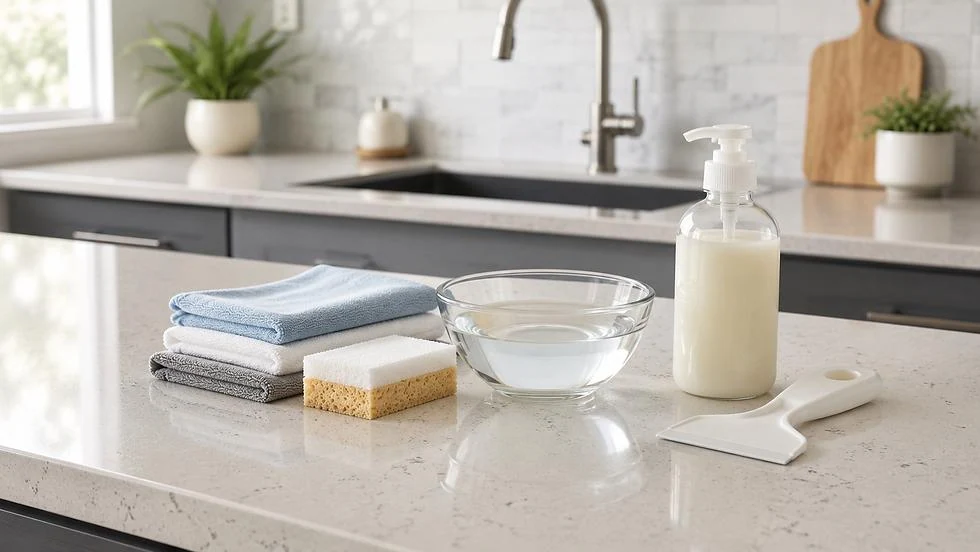
The best way to clean quartz countertops is with warm water, mild dish soap, and a soft microfiber cloth. This simple method removes everyday dirt, food residue, and light grease without relying on aggressive chemicals.
Supplies You Need
Gather these basic supplies before cleaning:
- Warm water
- Mild dish soap
- Soft microfiber cloth
- Non-abrasive sponge
- Clean, dry microfiber towel
- Plastic scraper for dried food residue
Avoid steel wool, metal scrapers, and rough scouring pads. These tools can damage the surface finish.
Step-by-Step Quartz Countertop Cleaning
Follow these steps for routine cleaning.
Step 1: Remove loose dirt and crumbs
Clear the countertop before applying water. Remove crumbs, food particles, and other debris with a soft cloth.
Step 2: Prepare a mild cleaning solution
Add a small amount of mild dish soap to a bowl of warm water. You do not need a strong concentration of soap.
Step 3: Wipe the countertop
Dip a microfiber cloth into the solution. Wring out excess water and gently wipe the entire surface.
Pay attention to areas around the sink, stove, and food preparation spaces.
Step 4: Remove soap residue
Use a separate cloth dampened with clean water. Wipe the surface again to remove leftover soap.
Step 5: Dry the countertop
Dry the surface with a clean microfiber towel. This helps prevent water spots, streaks, and cloudy marks.
Step 6: Check the surface
Look across the countertop under good lighting. If you notice residue, wipe the area again with clean water and dry it.
How Often Should You Clean Quartz Countertops?
Clean quartz countertops after food preparation and whenever spills occur. A quick daily wipe helps prevent residue from building up.
| Cleaning task | Recommended frequency |
|---|---|
| Wipe food spills | Immediately |
| Clean kitchen countertops | Daily or after use |
| Clean bathroom countertops | As needed |
| Remove soap and water residue | Whenever it appears |
| Check seams and edges | During routine cleaning |
| Deep clean | When normal cleaning leaves residue |
You do not need harsh chemicals or complicated cleaning routines for everyday maintenance.
How to Clean Quartz Countertops Without Streaks
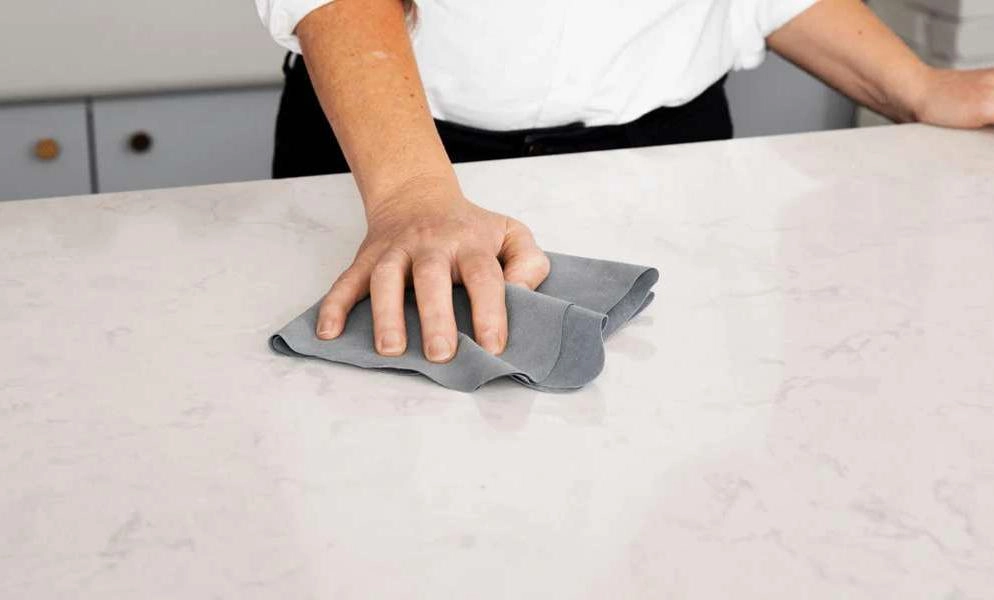
Streaks usually appear when soap, cleaning product, or mineral residue remains on the surface. Hard water can also leave visible marks after evaporation.
Dark and matte quartz finishes may show fingerprints, water spots, and cleaning residue more clearly.
Why Do Quartz Countertops Look Cloudy After Cleaning?
Several issues can make quartz look cloudy:
- Too much dish soap.
- Incomplete rinsing.
- Hard-water mineral deposits.
- Cleaning product buildup.
- Oils or residue transferred from dirty cloths.
- Surface damage or changes in the finish.
Before using a stronger cleaner, check whether the cloudy appearance disappears after rinsing and drying.
How to Get a Streak-Free Finish
Use this simple process:
- Remove loose dirt with a dry microfiber cloth.
- Wipe the surface with a lightly soapy, damp cloth.
- Rinse using a separate cloth and clean water.
- Remove excess moisture.
- Buff the surface with a clean, dry microfiber towel.
Use less soap if the surface looks cloudy after cleaning. Replace dirty cloths because they can spread grease and residue.
How to Remove Water Spots From Quartz Countertops
Water spots often result from minerals left behind when water evaporates.
Start by wiping the affected area with warm water and a microfiber cloth. Rinse the surface and dry it completely.
If the marks remain, they may be mineral deposits rather than ordinary water residue.
Some manufacturers approve specific limescale removers or other treatments. For example, Cosentino provides specific limescale-removal instructions for Silestone. Do not automatically apply those instructions to another quartz brand.
For stubborn mineral deposits, check your manufacturer’s approved cleaning products before using vinegar, acidic cleaners, or descaling products.
How to Remove Stains From Quartz Countertops
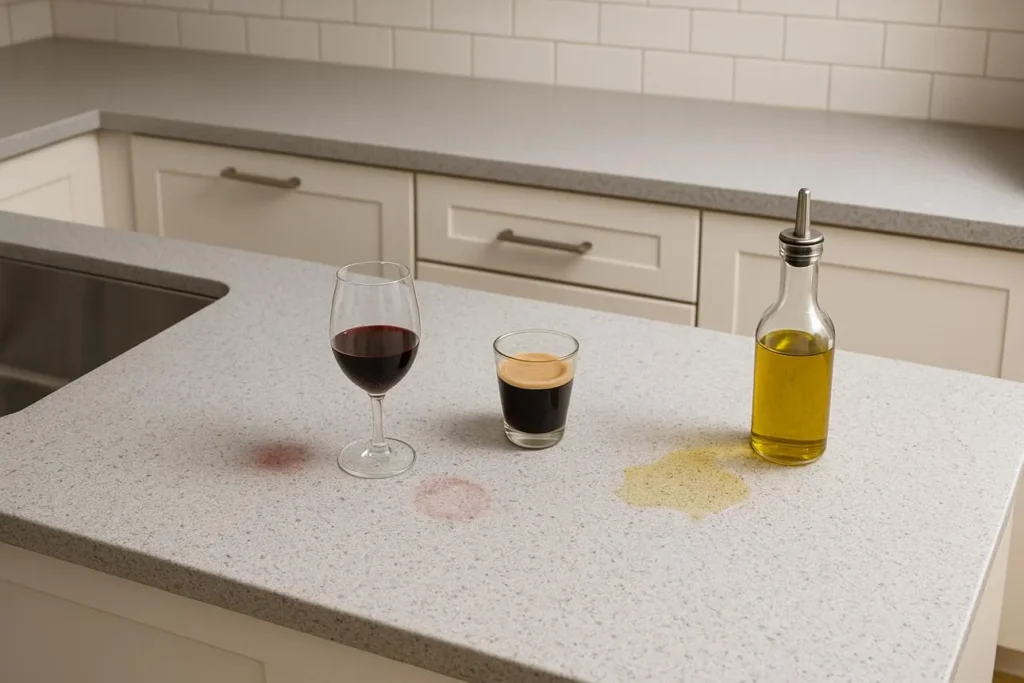
Quartz is nonporous and stain-resistant, but it is not stain-proof. Certain substances can leave marks, discoloration, or surface residue.
Clean spills as soon as possible. Start with mild soap and water before considering a specialty cleaner.
Quartz Countertop Stain Removal Guide
Use this table as a starting point. Always check your manufacturer’s instructions before treating stubborn stains.
| Stain or residue | First cleaning step | Important caution |
|---|---|---|
| Coffee and tea | Blot and clean with mild soap and water | Check approved treatment for persistent discoloration |
| Red wine | Blot immediately and wipe with soapy water | Do not assume bleach is safe |
| Grease and oil | Use mild dish soap and warm water | Avoid aggressive degreasers |
| Rust and metal marks | Identify whether the mark is rust or transferred metal | Use only an approved spot treatment |
| Hard-water deposits | Wipe, rinse, and dry | Check approved limescale removers |
| Dried food | Soften with water and lift gently | Avoid metal scrapers |
| Sticky residue | Soften with a damp cloth | Do not use an unapproved solvent |
| Permanent marker | Check the manufacturer’s spot-cleaning instructions | Some marks may be permanent |
| Super glue | Ask the manufacturer or fabricator about adhesive removal | Do not assume acetone is safe |
| Yellow discoloration | Determine whether it is residue, staining, or surface damage | Persistent discoloration may need professional assessment |
How to Remove Coffee, Tea, and Red Wine Stains
Coffee, tea, and red wine can leave visible marks if spills remain on the surface.
Try these steps:
- Blot the spill with a clean paper towel.
- Mix mild dish soap with warm water.
- Wipe the area using a soft microfiber cloth.
- Rinse with clean water.
- Dry the surface completely.
If discoloration remains, check the countertop manufacturer’s approved stain-removal method.
Some Silestone care instructions permit a specific diluted bleach treatment for selected wine, coffee, tea, and food-coloring stains. That does not make bleach suitable for every quartz surface.
For example, Daltile warns against bleach-containing cleaners on ONE Quartz, while Cambria also lists bleach among products to avoid.
How to Remove Grease and Oil From Quartz
Cooking oil, butter, sauces, and greasy food can leave a film on quartz.
Use this method:
- Remove excess grease with a paper towel.
- Apply warm water mixed with mild dish soap.
- Gently wipe with a non-abrasive cloth.
- Rinse with clean water.
- Dry with a microfiber towel.
If the greasy film remains, use a cleaner approved for your specific countertop.
Do not use oven cleaners, heavy-duty degreasers, or strong alkaline products unless the manufacturer explicitly approves them.
How to Remove Rust and Metal Marks
Rust-colored marks can come from metal objects, cookware, or other sources. However, not every orange or brown mark is actual rust.
Some marks are metal transfer from an object rubbing against the countertop.
Cleaning recommendations differ by manufacturer.
Caesarstone provides a specific spot-cleaning method using a small amount of Bar Keepers Friend powder or oxalic acid on a damp cloth. It instructs users to apply very light pressure, avoid abrasive scourers, rinse thoroughly, and dry the surface.
Do not treat this as a universal quartz cleaning method. Other manufacturers may prohibit abrasive cleaners or recommend different products.
If you cannot identify the mark, contact your countertop supplier before using a rust remover.
How to Remove Hard-Water Stains and Limescale
Hard water contains minerals that can accumulate around faucets, sinks, and other wet areas.
Start with a damp microfiber cloth and clean water. Wipe away loose residue and dry the area.
For stubborn limescale:
- Identify your quartz brand.
- Check its approved limescale-removal products.
- Follow the exact application and contact-time instructions.
- Rinse thoroughly if the instructions require it.
- Dry the countertop.
Cosentino’s Silestone maintenance guide provides specific instructions for anti-limescale products. Other quartz manufacturers may have different restrictions.
Avoid experimenting with concentrated vinegar, acidic descalers, or strong bathroom cleaners.
How to Remove Dried Food and Sticky Residue
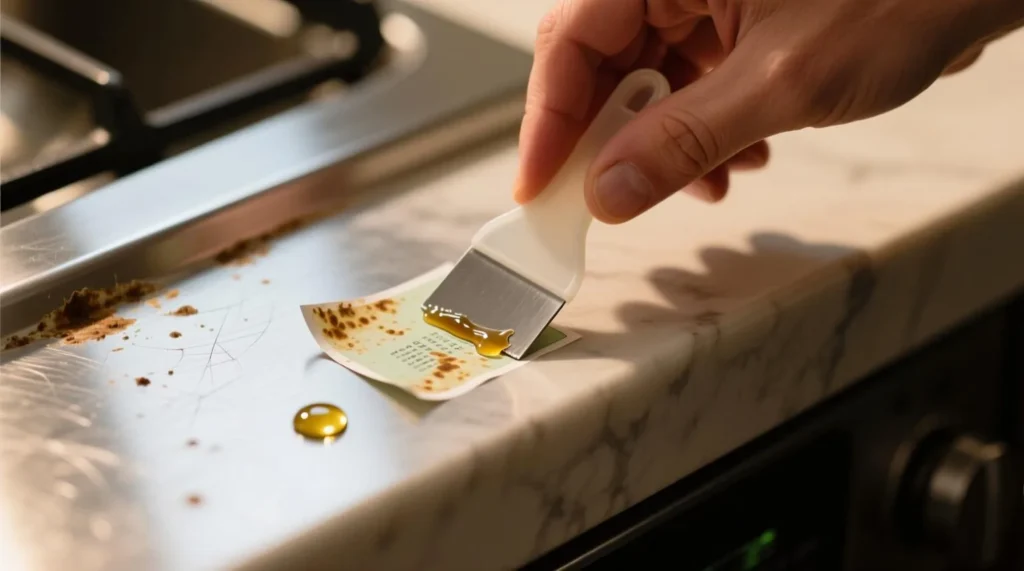
Dried food can become difficult to remove if it remains on the surface.
Do not scrape it with a knife or metal utensil.
Instead:
- Place a damp cloth over the residue.
- Allow the water to soften it.
- Gently loosen the material with a plastic scraper.
- Wipe the area with mild soap and water.
- Rinse and dry.
For adhesive, chewing gum, or stubborn sticky residue, check the manufacturer’s approved solvent or cleaning method.
How to Remove Ink and Permanent Marker
Ink and permanent marker can be difficult to remove from engineered quartz.
Do not immediately reach for nail polish remover, acetone, or paint thinner. These products may damage certain quartz surfaces.
Check your manufacturer’s instructions for an approved spot treatment. Apply only the recommended product and follow its exact directions.
If the mark remains, contact your fabricator instead of repeatedly scrubbing the surface.
How to Clean Yellow Stains on Quartz Countertops
Yellow marks can have several causes:
- Food or cooking residue.
- Oil and grease buildup.
- Cleaning product residue.
- Chemical discoloration.
- Heat-related surface damage.
- Aging or changes in the surface finish.
Start with mild soap and water. Rinse and dry the area.
If the yellow color remains, do not assume it is an ordinary stain. It may involve a chemical reaction or permanent surface damage.
Avoid mixing cleaning chemicals or applying bleach without checking your manufacturer’s instructions.
Which Cleaning Products Are Safe for Quartz Countertops, and Which Should You Avoid?
Not every household cleaner is suitable for engineered quartz. The surface contains natural quartz minerals combined with binders and pigments.
Certain chemicals, abrasive products, and solvents can affect the finish or damage the surface.
Best Everyday Cleaners for Quartz Countertops
For everyday cleaning, start with:
- Mild dish soap.
- Warm water.
- A soft microfiber cloth.
- A non-abrasive sponge.
- A manufacturer-approved quartz cleaner.
Specialty products can also help with certain cleaning tasks.
Weiman Quartz Clean & Shine
Weiman markets this product specifically for quartz surfaces. Check the product label and your countertop manufacturer’s instructions before use.
Simple Green Granite & Stone Cleaner
Simple Green offers a cleaner marketed for stone surfaces. Confirm that the exact product is suitable for your quartz brand and follow its label directions.
Manufacturer-approved cleaners
Some brands publish their own lists of approved cleaning products. Use those lists instead of assuming that a product labeled for granite, marble, or natural stone is automatically safe for engineered quartz.
Can You Use Vinegar on Quartz Countertops?
It depends on the manufacturer.
Caesarstone’s current care guidance allows a diluted vinegar-and-water solution for certain cleaning situations, followed by thorough rinsing and drying.
Other manufacturers have different chemical restrictions. Cambria, for example, advises against exposure to strong acids and other potentially damaging cleaners.
For routine cleaning, mild soap and water remain the safer starting point.
Can You Use Bleach on Quartz Countertops?
Do not use bleach as a general-purpose quartz cleaner.
Manufacturer instructions differ:
- Daltile ONE Quartz: Avoid bleach and cleaners containing bleach.
- Cambria: Lists bleach among products that should not be used.
- Silestone: Provides specific diluted-bleach instructions for selected stains, with strict limits and thorough rinsing.
- VIATERA: Its care guide generally advises against bleach, while describing a limited, carefully controlled exception for certain persistent stains.
Never apply bleach without checking the exact instructions for your countertop brand.
Can You Use Rubbing Alcohol on Quartz?
Some manufacturers permit isopropyl alcohol for specific cleaning or sanitizing tasks. MSI’s Q Quartz care document, for example, identifies a 70% isopropyl alcohol solution as an option for sanitizing its surface.
However, this does not establish that alcohol is suitable for every quartz product.
Check your manufacturer’s instructions before using rubbing alcohol. Do not mix it with bleach or other cleaners.
Can You Use Hydrogen Peroxide on Quartz?
Hydrogen peroxide is not a universal quartz cleaner.
Some engineered-surface manufacturers may approve specific concentrations for selected stains. Others may restrict oxidizing cleaners.
Do not apply concentrated hydrogen peroxide or leave it on the countertop without manufacturer approval.
Can You Use Baking Soda on Quartz?
Baking soda is mildly abrasive. Repeated scrubbing or applying a thick paste can affect some surface finishes.
Some manufacturers approve selected non-abrasive cleaning powders for specific products. Others restrict abrasive cleaners.
Use mild soap and water first. Only use baking soda if your countertop manufacturer confirms that the method is suitable.
Can You Use Windex on Quartz?
Windex and similar glass cleaners should not be treated as universally safe for quartz.
Some older or brand-specific care documents mention certain glass or multipurpose cleaners. Other manufacturers advise against strong or unsuitable chemical cleaners.
Check the exact product formulation and your countertop manufacturer’s instructions before using it.
Can You Use Clorox or Lysol Wipes on Quartz?
Do not assume every disinfecting wipe is safe for quartz.
Wipes can contain bleach, alcohol, fragrance, or other ingredients that may not suit your surface.
Some manufacturers permit certain disinfectants, while others recommend testing or avoiding particular products.
Check the label and countertop care guide before using wipes.
Can You Use Bar Keepers Friend on Quartz?
Bar Keepers Friend is not automatically safe for all quartz countertops.
Caesarstone provides a limited spot-cleaning method for rust and metal marks using a specific Bar Keepers Friend powder product. MSI also lists certain Bar Keepers Friend products in its Q Quartz care documentation.
However, other manufacturers restrict abrasive cleaners. Cambria specifically lists certain abrasive products and cleaners among those to avoid.
Use only the exact product and method approved for your countertop brand. Do not substitute one Bar Keepers Friend formulation for another.
What Should You Never Use on Quartz Countertops?
Unless your manufacturer specifically approves a product for a particular application, avoid:
- Steel wool and harsh scouring pads.
- Abrasive powders and aggressive scrubbing.
- Oven and grill cleaners.
- Drain cleaners.
- Paint removers and furniture strippers.
- Strong acids and alkaline chemicals.
- Unapproved solvents.
- Nail polish remover and acetone.
- Unapproved bleach-based products.
- Unapproved high-strength disinfectants.
If a potentially damaging chemical spills onto the countertop, follow the manufacturer’s emergency-cleaning instructions. Some manufacturers advise immediate rinsing with plenty of clean water.
Quartz Manufacturer Cleaning Guidance
The following comparison shows why brand-specific instructions matter.
| Manufacturer | Routine cleaning | Important product guidance |
|---|---|---|
| Caesarstone | Warm water and mild detergent | Publishes specific approved products and stain treatments |
| Silestone | Neutral soap and damp microfiber cloth | Provides specific instructions for limescale, rust, and selected food stains |
| Cambria | Warm water, soft cotton cloth, and mild soap if desired | Advises against bleach, harsh chemicals, and abrasive pads |
| MSI Q Quartz | Warm water and a soft sponge or dishcloth | Lists selected cleaners and a 70% isopropyl alcohol sanitizing option |
| VIATERA | Warm water and a suitable cloth or sponge | Provides different guidance for polished and brushed finishes |
| Daltile ONE Quartz | Mild detergent, water, and a soft cloth | Warns against bleach-containing cleaners and harsh scouring products |
Always check the current care guide for your exact product and finish. The same manufacturer may update its recommendations or publish different instructions for different product ranges.
How to Disinfect Quartz Countertops Safely
Cleaning and disinfecting are not the same thing.
Cleaning removes dirt, food particles, and other visible residue. Disinfecting uses an appropriate product to reduce or kill certain microorganisms.
For normal household maintenance, routine cleaning is often sufficient. Disinfect when the situation calls for it, such as after handling raw meat or when someone in the household is sick.
Safe Disinfection Steps
- Remove food particles and visible dirt.
- Clean the countertop with mild soap and water.
- Check that the disinfectant is approved for your quartz surface.
- Read the product label before applying it.
- Follow the required dilution and application instructions.
- Keep the surface visibly wet for the full contact time stated on the label.
- Rinse afterward if the product instructions require it.
The U.S. Environmental Protection Agency explains that disinfectants must be used according to their labeled directions. The surface must remain wet for the specified contact time to achieve the stated effectiveness.
Do not mix bleach, alcohol, vinegar, ammonia, or other cleaning chemicals. Chemical mixtures can produce dangerous reactions.
For food-contact countertops, also check whether the disinfectant label requires a potable-water rinse before food preparation.
How to Clean New Quartz Countertops After Installation or Construction
New quartz countertops may have dust, fingerprints, packaging residue, or installation-related marks.
Start with gentle cleaning. Do not assume that every installation residue can be removed with household chemicals.
How to Clean a New Quartz Countertop
- Remove loose dust with a soft microfiber cloth.
- Wipe the surface with warm water.
- Add a small amount of mild dish soap if needed.
- Use a clean, non-abrasive cloth.
- Rinse with fresh water.
- Dry the surface thoroughly.
Check the installation instructions before cleaning seams, edges, or areas near newly installed sinks.
How to Remove Construction Dust and Residue
Construction dust should be removed gently. Avoid dry scrubbing because loose particles can create friction against the finish.
For adhesive, silicone, grout, paint, or caulk residue, contact the installer or fabricator before using a solvent.
Products such as acetone, paint thinner, and strong adhesive removers may damage some quartz surfaces.
If the residue is difficult to identify, ask the installer what material was used and which removal method is approved.
When Cleaning Cannot Fix Quartz Countertop Damage
Not every mark on a countertop is dirt or a removable stain.
Repeated cleaning can make the problem worse if the surface has chemical damage, heat damage, or scratches.
Signs of Possible Permanent Damage
Persistent cloudy patches
Cloudiness may result from residue, mineral deposits, or damage to the surface finish. If rinsing and drying do not help, stop experimenting with stronger cleaners.
Heat marks
Direct heat can cause discoloration or other damage. A cleaning product cannot necessarily reverse heat-related changes.
Scratches and dull areas
Abrasive tools and repeated aggressive scrubbing can affect the finish. Do not try to polish the area with household abrasives.
Chemical discoloration
Strong chemicals can damage some quartz surfaces. Permanent discoloration may not respond to normal cleaning.
Chips and cracks
Chips and cracks are physical damage, not cleaning problems. Contact a qualified countertop fabricator for an assessment.
When to Contact a Countertop Professional
Stop DIY cleaning and contact your countertop supplier or fabricator when:
- A stain remains after the approved cleaning method.
- The surface looks permanently discolored.
- A chemical spill has changed the finish.
- Scratches or dull patches remain.
- A crack or chip appears.
- You are unsure which chemical caused the mark.
Do not keep applying stronger cleaners in an attempt to restore the surface. Professional assessment may prevent further damage.
How to Maintain and Protect Quartz Countertops
Regular maintenance helps preserve the appearance of quartz and reduces the need for intensive cleaning.
Wipe Spills Immediately
Clean coffee, wine, sauces, oil, and other spills as soon as possible.
Although engineered quartz is stain-resistant, dried residue can become harder to remove.
Use Cutting Boards
Quartz is durable, but it is not completely scratch-proof.
Use a cutting board when preparing food. Avoid dragging sharp utensils or heavy metal objects across the surface.
Protect Quartz From Heat
Quartz countertops are not heat-proof.
Place hot cookware on trivets or heat-resistant pads. Protect the surface from slow cookers, air fryers, toaster ovens, electric skillets, and other heat-producing appliances.
Avoid Harsh Cleaning Chemicals
Use mild cleaning products for everyday maintenance. Check the manufacturer’s care guide before using a specialty cleaner.
Keep the Surface Dry
Wipe water around faucets, sinks, and seams. This helps reduce mineral buildup and visible watermarks.
Do Quartz Countertops Need Sealing?
Most engineered quartz countertops do not require sealing.
Their nonporous construction makes them resistant to liquid absorption. Manufacturers such as Caesarstone, Cambria, MSI, and VIATERA state that their products do not require routine sealing.
Do not apply a stone sealer unless the manufacturer specifically instructs you to do so.
Can You Polish Quartz Countertops?
Engineered quartz usually does not need routine polishing.
The factory finish provides its intended appearance. Applying an unsuitable polish or abrasive treatment can leave residue or change the finish.
If your countertop has become dull or scratched, ask the manufacturer or fabricator about professional restoration.
How to Clean White Quartz Countertops
White quartz can show coffee, grease, colored food, and other marks more clearly.
Use mild soap and warm water for regular cleaning. Wipe spills quickly and dry the surface after cleaning.
Avoid using stronger chemicals simply because a mark is more visible. Check the manufacturer’s approved stain-removal instructions first.
How to Clean Black Quartz Countertops
Black quartz may show fingerprints, soap residue, water spots, and mineral deposits.
Use a lightly soapy microfiber cloth, rinse with clean water, and dry thoroughly.
Some manufacturers warn that residue and patina can be more noticeable on darker surfaces. Avoid cream-colored or oily cleaners unless the manufacturer approves them.
How to Clean Matte, Honed, and Brushed Quartz
Matte, honed, concrete, and brushed finishes may show fingerprints, metal marks, and water spots more clearly than polished surfaces.
Use the cleaning method recommended for your exact finish.
For example, Caesarstone notes that its honed, concrete, natural, and rough finishes may need more attention than polished surfaces. VIATERA also provides separate guidance for polished and brushed finishes.
Avoid harsh scrubbing. Use a suitable non-abrasive cloth or cleaning tool.
Regular cleaning and preventive care help protect household surfaces and make everyday upkeep easier. Explore more home maintenance tips for practical ways to care for your home.
Frequently Asked Questions About Cleaning Quartz Countertops
Can Quartz Be Permanently Stained?
Yes. Quartz is stain-resistant, but certain chemicals, prolonged exposure, or stubborn substances can cause permanent discoloration. Follow the manufacturer’s cleaning instructions and remove spills promptly.
Can I Use Dawn Dish Soap on Quartz Countertops?
Mild dish soap, including Dawn, is commonly suitable for routine cleaning. Use a small amount with warm water, rinse away the residue, and dry the surface.
Can You Use Windex on Quartz Countertops?
It depends on the countertop brand and the exact Windex formulation. Some manufacturer documents permit selected glass or multipurpose cleaners, while others advise against certain chemicals. Check your product’s care instructions first.
Can You Use Clorox Wipes on Quartz?
Do not assume all Clorox wipes are suitable for quartz. Check the wipe’s ingredients and your countertop manufacturer’s approved-cleaner list before use.
Is Vinegar Safe for Quartz Countertops?
Not universally. Caesarstone permits certain diluted vinegar cleaning methods, but other manufacturers restrict acidic cleaners. Use mild soap and water unless your brand approves vinegar.
Can You Use Rubbing Alcohol on Quartz?
Some manufacturers permit specific alcohol-based cleaning or disinfecting methods. MSI Q Quartz, for example, lists a 70% isopropyl alcohol solution for sanitizing. Check your own brand’s instructions before using it.
Can You Use Hydrogen Peroxide on Quartz?
Only use hydrogen peroxide if your manufacturer approves the specific concentration and application. Strong oxidizing cleaners may damage certain surfaces.
Can You Use Baking Soda on Quartz?
Baking soda can be abrasive when scrubbed against a surface. Some manufacturers approve selected cleaning powders for specific products, but others restrict abrasive cleaners. Check your countertop’s care guide first.
Can You Use Bar Keepers Friend on Quartz?
Some manufacturers approve specific Bar Keepers Friend products for limited applications. Caesarstone, for example, describes a particular method for rust and metal marks. Other brands prohibit certain abrasive cleaners. Never assume every formulation is safe.
Will Granite Cleaner Work on Quartz?
Not automatically. A cleaner marketed for granite or natural stone may contain ingredients that are unsuitable for engineered quartz. Check the label and your countertop manufacturer’s recommendations.
Can You Use Paper Towels on Quartz Countertops?
Many manufacturers permit soft paper towels for routine cleaning and drying. Use clean, non-abrasive paper towels and avoid rubbing loose grit across the surface.
Can You Steam Clean Quartz Countertops?
Do not assume steam cleaning is safe. Heat and sudden temperature changes can damage some quartz surfaces. Use the manufacturer’s recommended cleaning method instead.
Are White Quartz Countertops Hard to Keep Clean?
White quartz is generally easy to maintain with regular cleaning. However, colored spills, grease, and residue may be more noticeable. Clean spills promptly and dry the surface after washing.
Can Quartz Countertops Be Polished?
Quartz countertops generally do not need routine polishing. If the finish becomes dull or scratched, contact the manufacturer or a qualified fabricator before attempting restoration.
Do Quartz Countertops Need Sealing?
Most engineered quartz countertops do not need sealing because they have a nonporous surface. Check your specific product’s care instructions before applying any sealer.
Are Quartz Countertops Easy to Keep Clean?
Yes. Their nonporous surface makes everyday cleaning relatively simple. Warm water, mild dish soap, and a soft cloth are usually enough for routine maintenance.
Can You Use a Magic Eraser on Quartz Countertops?
Do not use a Magic Eraser unless your manufacturer explicitly approves it. Its abrasive action may affect some quartz finishes. Start with a microfiber cloth and mild soap instead.
Final Thoughts
Cleaning quartz countertops does not require a complicated routine. Warm water, mild dish soap, and a soft microfiber cloth are usually enough for everyday maintenance.
The most important rule is to follow your countertop manufacturer’s care instructions. Different quartz brands have different recommendations for bleach, vinegar, alcohol, abrasive cleaners, and specialty stain removers.
Clean spills quickly, rinse away cleaning residue, dry the surface, and protect it from direct heat. These simple habits help keep engineered quartz countertops looking their best.
If you’re planning kitchen upgrades or other home renovation projects, understanding how to care for your countertop can help protect your investment.
References: