How to Repair a Screen Door: DIY Fixes for Mesh, Rollers, Tracks & More
A damaged screen door does not always need complete replacement. You can often repair torn mesh, loose spline, worn rollers, damaged tracks, and faulty latches with basic tools.
The right repair depends on the problem and your door type. A small mesh hole needs a different fix than a sliding door that keeps jumping off its track.
This guide explains how to repair a screen door step by step. You will learn how to replace screen mesh, patch small tears, adjust rollers, repair hardware, and identify when replacement makes more sense.
Common Screen Door Problems and How to Fix Them
Start by identifying the problem before buying replacement parts. This helps you avoid unnecessary repairs and choose compatible materials.
| Screen door problem | Possible cause | Recommended repair |
|---|---|---|
| Small hole in screen mesh | Puncture or minor tear | Apply a suitable screen patch |
| Large tear or damaged mesh | Worn or badly torn screening | Replace the screen mesh |
| Mesh pulling out | Loose, damaged, or incorrect spline | Reinstall or replace the spline |
| Sliding door keeps jumping off track | Incorrect roller height, worn rollers, or damaged track | Inspect and adjust the rollers |
| Door feels difficult to slide | Dirty track, damaged wheels, or poor alignment | Clean the track and inspect rollers |
| Door will not latch | Misaligned latch or strike plate | Adjust or replace the latch hardware |
| Door frame looks bent | Impact damage or loose frame joints | Check the frame and corner connectors |
| Door slams shut | Closer adjustment or installation problem | Inspect and adjust the closer |
| Retractable screen will not close | Dirty guides, damaged fabric, or cassette problems | Clean the guides and inspect the mechanism |
Important: Screen doors come in different designs. A sliding patio screen, hinged screen door, storm door, and retractable screen do not use identical parts. Check your door model before removing hardware or ordering replacements.
Tools and Materials for Screen Door Repair
Most basic screen door repairs require only a few tools. More complicated repairs may need model-specific replacement parts.
Essential Tools
- Spline roller
- Flathead screwdriver
- Phillips screwdriver
- Utility knife
- Scissors
- Measuring tape
- Needle-nose pliers
- Replacement screen mesh
- Replacement spline
- Screen repair patches
- Work gloves
- Safety glasses
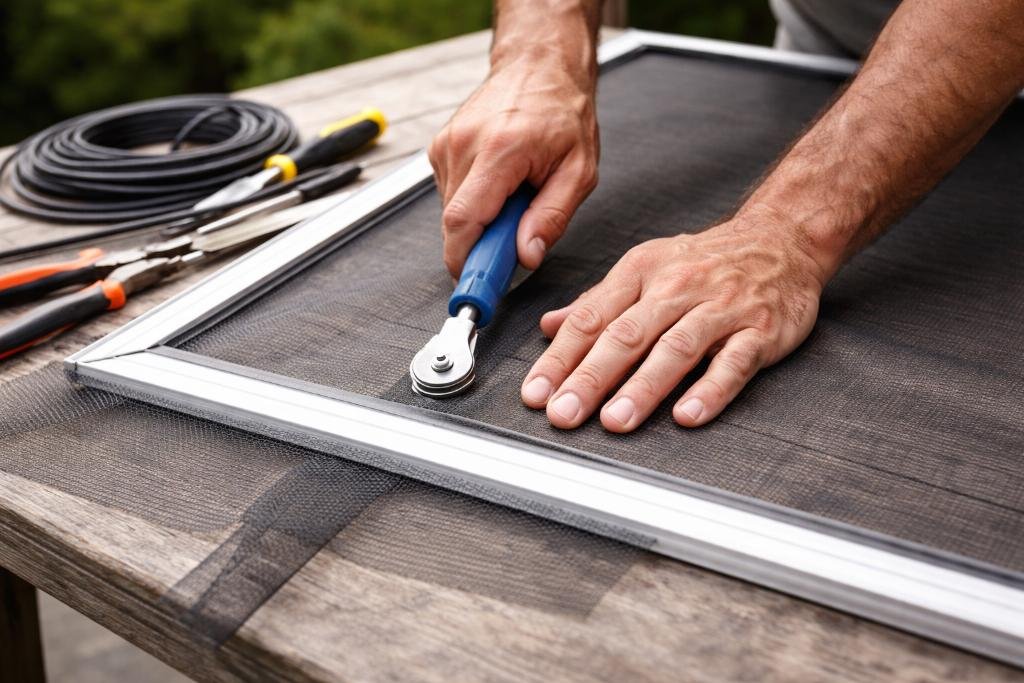
A spline roller has two different roller edges. One helps press the mesh into the frame groove. The other seats the spline over the mesh.
Choose the Right Screen Mesh
The correct mesh depends on your door, environment, and expected use.
| Screen material | Main characteristics | Best use |
|---|---|---|
| Fiberglass screen | Flexible and easy to install | Standard residential screen doors |
| Aluminum screen | More rigid but can crease | Traditional screen applications |
| Pet-resistant screen | Heavier material designed for greater resistance to pet damage | Homes with dogs or cats |
| Solar screen | Designed to reduce sunlight and glare | Areas exposed to strong sunlight |
Check the product specifications before buying. Different mesh materials can require different spline sizes.
How to Choose the Correct Screen Spline Size
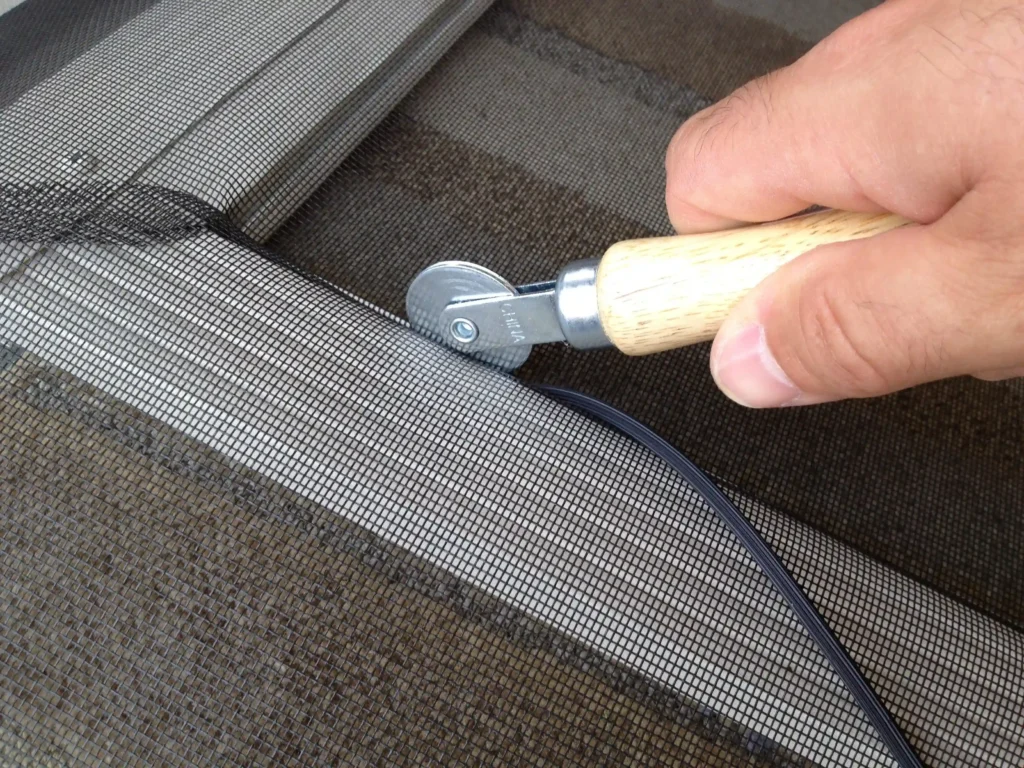
The spline holds the screen mesh inside the frame groove. An incorrect size can cause the mesh to loosen or the spline to pop out.
Do not assume every screen door uses the same spline diameter.
Follow these steps:
- Remove a small section of the old spline if it is accessible.
- Measure its diameter with a suitable measuring tool.
- Measure the spline groove in the screen frame.
- Identify the replacement mesh material.
- Compare your measurements with the manufacturer’s sizing chart.
- Test the fit before installing the entire screen.
For standard screening, the spline diameter often corresponds to the groove measurement. However, some specialty materials require a different size.
For example, Phifer recommends a smaller spline diameter for certain thicker products, including PetScreen, TuffScreen, and some solar screening materials.
Use Phifer’s screen spline sizing guide to check the recommended size for your frame and mesh. You can also review its spline selection chart.
Practical tip: Take a sample of your old spline to a hardware store when possible. It can help you identify a suitable replacement, but still check compatibility with the frame and new mesh.
What Screen Door Repair Kit Should You Buy?
A screen door repair kit can save time because it combines several useful materials.
However, not every kit repairs every type of screen door.
Common kit types include:
- Rescreening kits: Usually include replacement mesh and spline for full screen replacement.
- Screen patch kits: Include adhesive or mesh patches for small holes and tears.
- Spline and roller kits: Include replacement spline and a tool for installing it.
- Sliding door roller kits: Include replacement wheels or roller assemblies for compatible sliding screen doors.
- Hardware kits: May include handles, latches, springs, screws, or other replacement parts.
Check the product dimensions and compatibility before purchasing. A universal-looking kit may not fit your specific frame or roller assembly.
How to Replace Screen Door Mesh Step by Step
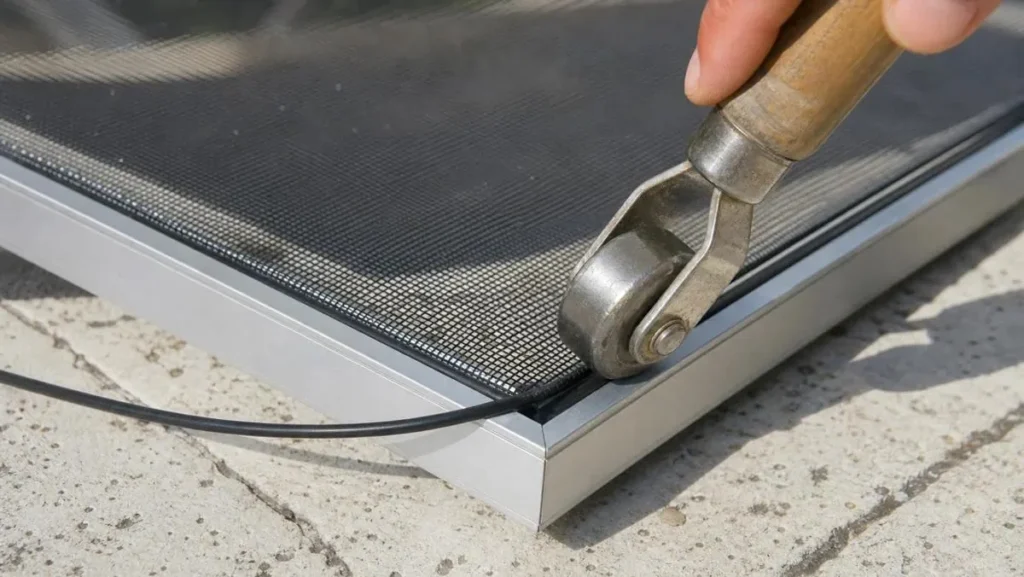
Replacing damaged mesh is one of the most common screen door repairs. It is also a manageable DIY project when the frame and retaining channel are in good condition.
Step 1: Remove the Screen Door Safely
If your screen door is removable, take it out before replacing the mesh.
For a sliding screen door, move the panel to a suitable position. Follow the manufacturer’s removal instructions. Some models require roller adjustment before the panel can be lifted out.
For hinged screen doors, remove the door only if the hinge design allows safe removal.
Ask someone to help if the panel is large or awkward to handle. Wear safety glasses and gloves.
Step 2: Remove the Old Spline
Place the screen frame on a clean, flat work surface.
Find the end of the spline inside the frame groove. Use a small flathead screwdriver to lift it carefully.
Pull the spline out around the frame.
Avoid damaging the groove or bending the frame. If the spline is brittle, remove it in small sections.
Step 3: Remove the Damaged Mesh
Once the spline is out, lift the old mesh away from the frame.
Remove loose pieces and debris from the retaining channel. A soft brush or cloth can help clean the groove.
Inspect the frame before installing new material.
Look for:
- Bent frame sections
- Cracked corners
- Damaged spline channels
- Loose corner connectors
- Corrosion or sharp edges
Repair structural problems before installing replacement mesh.
Step 4: Measure and Cut the New Screen Mesh
Measure the frame and select replacement mesh that covers the entire opening.
Lay the mesh over the frame with enough extra material to reach beyond the spline groove on every side.
Do not treat a half-inch overlap as a universal rule. The required allowance depends on the frame design and installation method.
For some standard fiberglass and aluminum rescreening instructions, manufacturers recommend approximately half an inch of overlap. Other products and frames may require different allowances.
Follow the mesh manufacturer’s installation instructions. For example, The Home Depot’s screen replacement guide describes a half-inch overlap for the screen frames covered by its instructions.
Step 5: Position the New Mesh
Spread the replacement mesh across the frame.
Align the material so it covers the entire opening. Keep enough excess around the edges to secure it inside the spline groove.
Use small clamps or masking tape to hold the mesh in place if needed.
Keep the mesh straight. Avoid pulling it too tightly because excessive tension can distort the frame or create uneven edges.
Step 6: Install the New Spline
Place the correct spline over the mesh and retaining groove.
Use a spline roller to press the spline into the channel.
Work gradually rather than forcing the entire spline into the frame at once.
Keep the mesh aligned as you move along each side. Check the tension before completing the next edge.
If the mesh begins to wrinkle, loosen the affected section and reposition it.
Step 7: Secure the Corners
Corners need careful attention because loose mesh can pull out from these areas.
Press the spline firmly into each corner. Use the correct roller edge and avoid damaging the mesh.
Do not force a screwdriver or sharp object into the groove. You could cut the fabric or damage the frame.
Step 8: Trim the Excess Mesh
Once all four sides are secured, trim the extra mesh.
Use a sharp utility knife carefully. Keep the blade away from the installed screen material and your hands.
Cut along the appropriate edge of the spline groove, following the screen manufacturer’s instructions.
Wear cut-resistant gloves if suitable for the task, and keep your fingers clear of the blade.
Step 9: Reinstall the Screen Door
Check the frame and mesh before reinstalling the panel.
Make sure the spline is seated and the screen remains evenly tensioned.
Reinstall the door according to its manufacturer’s instructions. Test the movement and check that the panel sits correctly in its frame.
How to Patch a Small Hole or Tear in a Screen Door
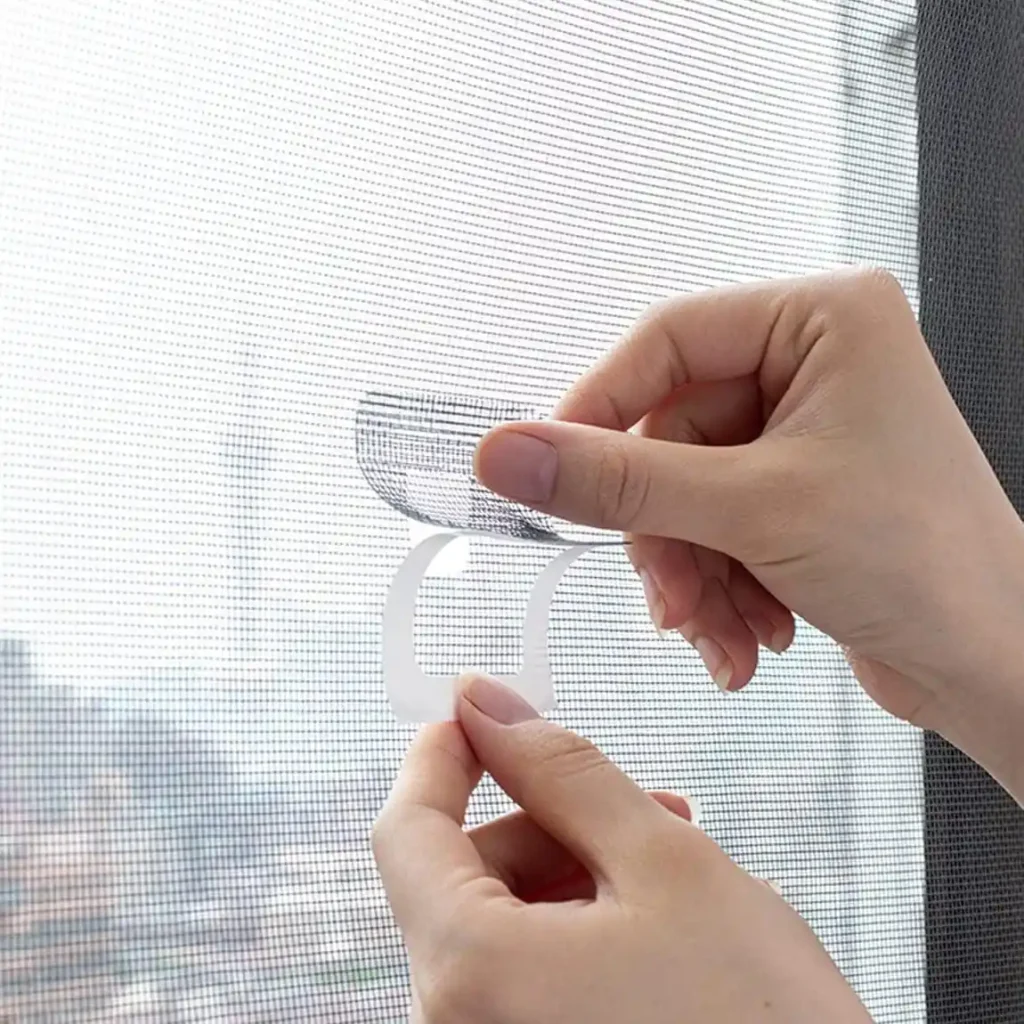
A small hole does not always require complete mesh replacement. A suitable screen patch can repair minor damage.
How to Apply a Screen Patch
- Clean the damaged area gently.
- Remove loose strands without enlarging the hole.
- Choose a patch compatible with your screen material.
- Cut the patch to cover the damaged area.
- Follow the patch manufacturer’s instructions.
- Press or secure the patch as directed.
- Check that the repair does not interfere with the door’s movement.
Some patch products use adhesive. Others use woven mesh or mechanical attachment.
Do not use ordinary household tape as a permanent repair. It may peel away, collect dirt, or leave residue.
When Should You Replace the Entire Screen?
A patch is suitable for small, isolated holes. Full replacement is usually better when:
- The mesh has several tears.
- The damaged area is large.
- The screen material is brittle.
- The mesh has become loose across the frame.
- Previous patches have started coming off.
- The damage affects the screen’s appearance or function.
A clean replacement usually provides a better result than covering extensive damage with several patches.
How to Repair a Screen Door Without Spline
Some screen doors use retaining systems other than traditional round spline. Others use specialized clips, channels, or manufacturer-specific screen inserts.
First, identify how your screen is attached.
If your frame uses a traditional spline groove, do not simply push the mesh into the channel without a retaining material. The mesh may pull out during normal use.
If you cannot find the correct spline, consider these options:
- Check the manufacturer’s parts guide.
- Take the old spline to a hardware store for matching.
- Contact the screen manufacturer for the correct replacement.
- Check whether your model uses a special retaining strip or screen insert.
Some older or alternative screen frames use staples, clips, or other retaining methods. These require a repair method suited to that frame.
Can you use glue instead of spline?
Do not assume adhesive can replace spline. Glue may not hold the mesh securely under normal tension, and it can make future repairs difficult.
Use an approved retaining system designed for your screen frame.
How to Fix a Sliding Screen Door That Is Off Track
A sliding screen door can jump off its track because of worn rollers, incorrect roller height, dirt, or frame misalignment.
Start with the simplest checks before replacing parts.
Step 1: Inspect and Clean the Track
Open the door and examine the upper and lower tracks.
Remove dirt, leaves, hair, and other debris. Use a vacuum or soft brush to clean the channel.
Wipe the track with a suitable cleaner and allow it to dry.
Do not apply heavy oil or grease unless the manufacturer recommends it. These products can attract dust and make the problem worse.
Step 2: Check the Roller Position
Look at the bottom rollers and their position on the track.
Check whether the door sits too low, too high, or unevenly.
If the rollers have adjustment screws, make small adjustments according to the manufacturer’s instructions.
Step 3: Inspect the Door Frame
Check whether the screen door frame is square and straight.
A bent frame can prevent the rollers from sitting correctly. Loose corners can also affect alignment.
Step 4: Reinstall the Door
Follow the model-specific installation instructions.
Many sliding screen doors fit into the upper channel first. The lower rollers then sit on the track or guide.
Do not force the panel into place. Confirm that the rollers and guides are correctly seated.
Step 5: Test the Movement
Slide the door slowly.
It should move without jumping, scraping, or binding. If the problem continues, inspect the rollers and track for damage.
How to Repair Screen Door Rollers and Wheels
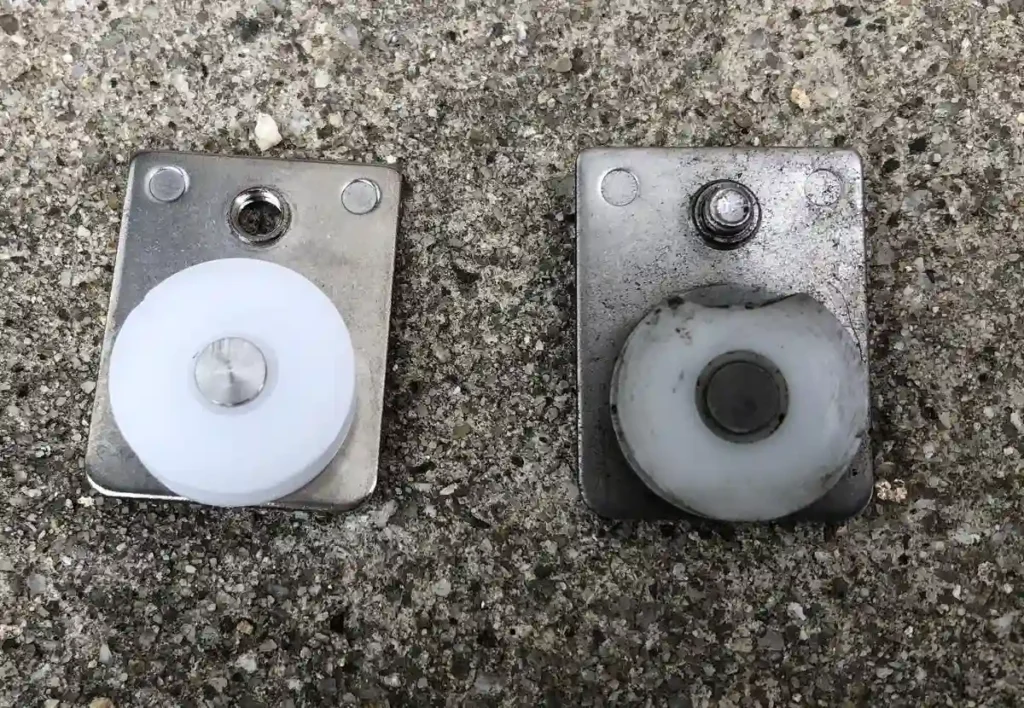
Worn or damaged rollers can make a sliding screen door difficult to operate.
However, a door that feels stiff does not always need new wheels. Dirt, poor alignment, and damaged tracks can cause similar symptoms.
Sliding Screen Door Roller Diagnosis
Use this table to narrow down the problem before removing the door.
| Symptom | Likely cause | What to inspect |
|---|---|---|
| Door feels rough along the entire track | Dirt or debris | Clean the upper and lower tracks |
| Door sticks at one particular point | Bent track or damaged section | Inspect the track for dents, bends, or obstructions |
| Door drags along the bottom | Rollers set too low or worn | Check roller height and wheel condition |
| Door jumps off the track | Incorrect roller adjustment or damaged rollers | Inspect roller seating and adjustment screws |
| Door tilts or sits unevenly | Uneven roller height or loose frame | Compare both sides and inspect frame corners |
| Door makes grinding or scraping sounds | Worn rollers, debris, or track damage | Inspect wheels and track surfaces |
| Door remains difficult to slide after cleaning | Damaged roller assembly or alignment issue | Remove and inspect the roller assembly |
How to Distinguish Roller Failure from Track Damage
A damaged roller and a damaged track can produce similar symptoms. Check both before ordering replacement parts.
Signs of roller failure:
- The wheel looks cracked, flat, or worn.
- The roller does not rotate smoothly.
- The door sits unevenly even on a clean, straight track.
- The adjustment screw does not correct the door’s position.
- The roller housing looks damaged or loose.
Signs of track damage:
- The track has visible dents or bends.
- The door sticks at the same location every time.
- The rollers look intact but cannot travel smoothly.
- The track has a worn or damaged running surface.
If the door becomes smooth after cleaning, debris may have caused the issue. If it remains rough, inspect the rollers and track separately.
How to Adjust Screen Door Rollers
Some sliding screen doors have adjustment screws near the lower corners.
- Locate the roller adjustment screws.
- Identify which side of the door needs adjustment.
- Turn the screw slightly in the direction specified by the manufacturer.
- Test the door’s height and movement.
- Repeat with small adjustments until the panel sits correctly.
Adjustment directions vary by model. For example, Andersen explains how to adjust its gliding insect screen rollers and how to identify when replacement is needed.
Read Andersen’s roller adjustment and replacement instructions before working on a compatible Andersen screen.
How to Replace Sliding Screen Door Rollers
If the wheels are cracked, worn, or no longer rotate correctly, replacement may be necessary.
- Remove the screen door according to its instructions.
- Locate the roller assembly.
- Inspect how the roller is attached.
- Remove the damaged assembly using the correct tools.
- Compare the replacement part with the original.
- Install the compatible roller assembly.
- Reinstall the door and adjust its height.
- Test the door along the full track.
Some rollers are secured with screws. Others use clips, springs, or model-specific fittings.
Do not order replacement wheels based on appearance alone. Check the roller dimensions, housing, mounting method, and door model.
How to Repair a Damaged Screen Door Track
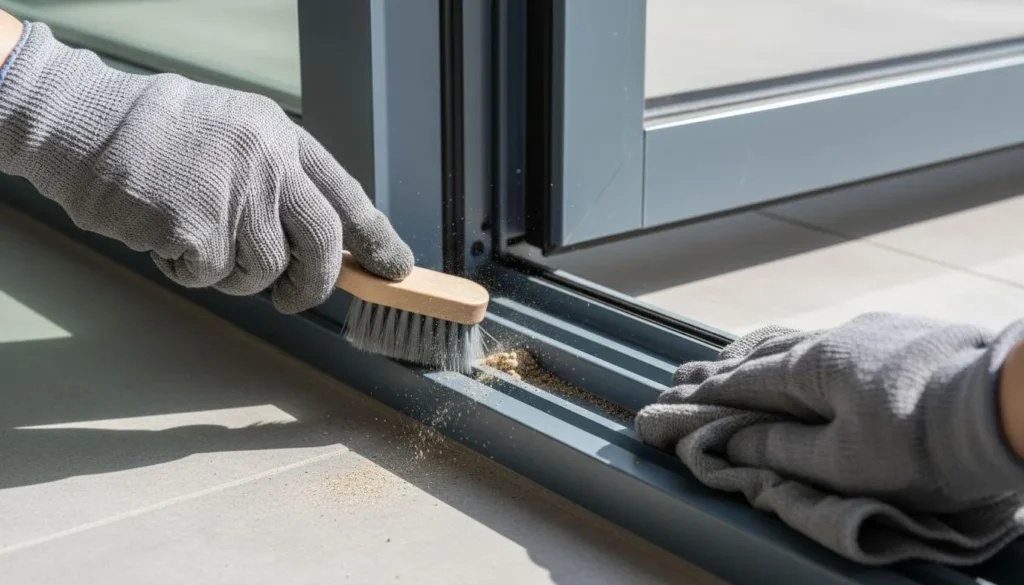
A damaged track can prevent a sliding screen door from moving smoothly.
Start by cleaning the track and checking for obstructions.
Clean a Dirty Screen Door Track
- Open the screen door.
- Remove loose dirt and debris.
- Use a vacuum or soft brush to clean the channel.
- Wipe the surface with a suitable cleaner.
- Let the track dry.
- Test the door again.
Use a lubricant only if the manufacturer recommends one for that track and roller design.
Repair a Bent Track
Small obstructions or minor surface problems may be removable. However, a badly bent or worn track may require replacement.
Avoid hammering or bending the track without knowing its construction. You could damage the frame or make the door alignment worse.
For integrated patio door tracks, check the manufacturer’s service guidance. Some track components are part of the larger door assembly and need specialized repair.
How to Fix a Screen Door That Won’t Latch or Lock
A screen door may fail to latch because the handle, latch, or strike plate is loose or misaligned.
Check the alignment before replacing the entire handle assembly.
Step 1: Inspect the Handle
Move the handle and check for loose screws.
Tighten loose fasteners carefully. Do not overtighten them because this can damage the handle or frame.
Step 2: Check the Latch
Open and close the door slowly.
Observe whether the latch moves freely. Dirt, worn parts, or a damaged spring can prevent proper engagement.
Step 3: Inspect the Strike Plate
The strike plate is the part that receives the latch.
Check whether the latch lines up with its opening. If the strike plate is adjustable, reposition it according to the door instructions.
Step 4: Replace Damaged Hardware
If the handle or latch is broken, identify the correct replacement.
Check the door model, handle dimensions, mounting holes, and latch type.
For storm doors, use the manufacturer’s hardware instructions. A replacement handle that looks similar may not fit the existing latch mechanism.
How to Repair a Screen Door Hinge
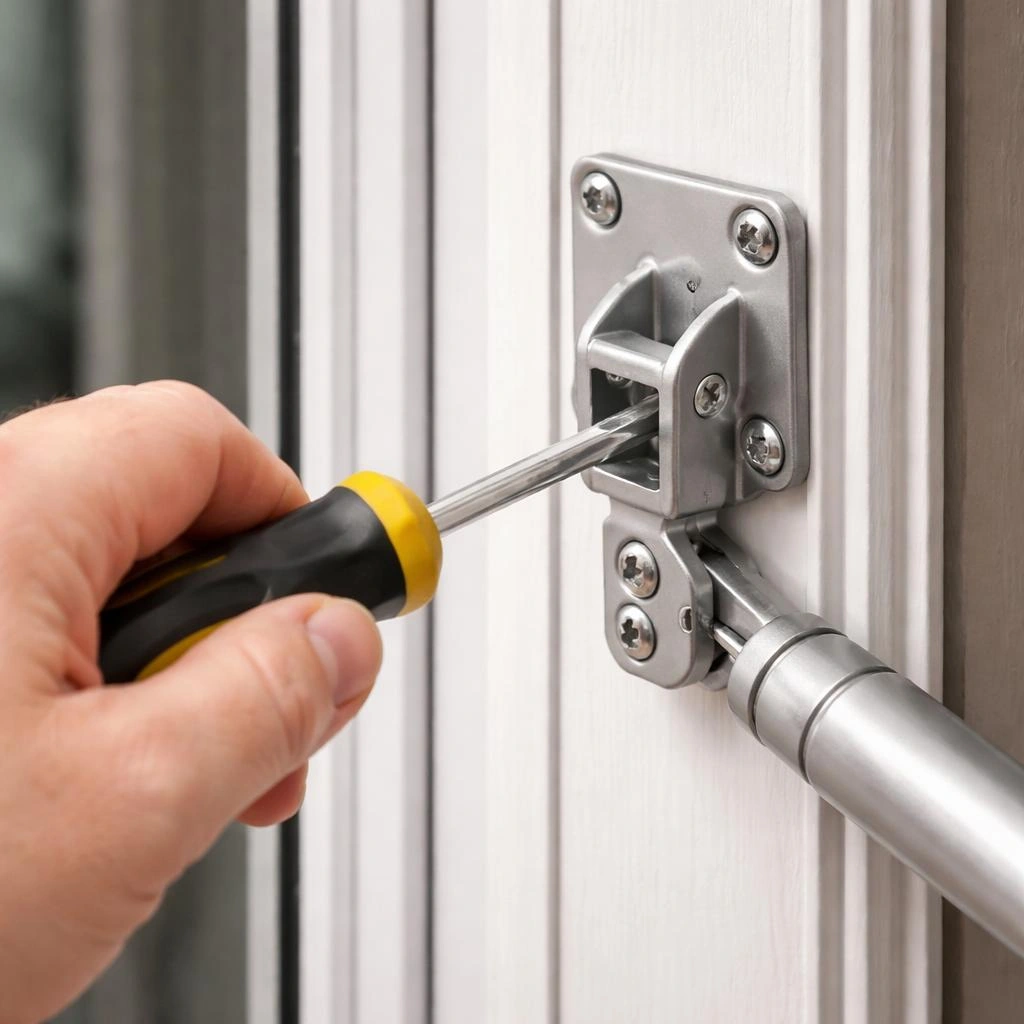
A loose or damaged hinge can cause a hinged screen door to sag, scrape, or close incorrectly.
The repair depends on whether the hinge is attached directly to the screen door or forms part of a storm-door hinge rail.
Tighten a Loose Hinge
- Open the door and support it if necessary.
- Inspect the hinge screws.
- Tighten loose screws carefully.
- Check whether the hinge leaf sits flat.
- Close the door slowly and inspect its alignment.
If a screw hole is stripped, do not keep tightening the same screw. Use a suitable repair method for the frame material or replace the damaged component.
Replace a Damaged Hinge
If the hinge is bent, cracked, or badly worn, it may need replacement.
- Identify the hinge type.
- Check the screw pattern and dimensions.
- Confirm that the replacement suits the door’s weight and design.
- Support the door while removing the old hinge.
- Install the compatible replacement.
- Test the door’s movement and alignment.
Storm doors may use a continuous hinge rail or model-specific hinge assembly. Follow the manufacturer’s instructions rather than treating every hinge as a standard door hinge.
For a LARSON storm door, use its official instruction directory to find the relevant hinge, closer, and screen documentation.
How to Repair a Screen Door Frame
A bent or damaged frame can affect the screen mesh, rollers, and latch alignment.
Inspect the frame before replacing other parts.
Check the Frame Corners
Look for loose joints, cracked corner connectors, or gaps between frame sections.
Some screen frames use plastic corner inserts. Others use different joining systems.
Replace damaged connectors with parts that match the frame profile.
Check for Bent Frame Sections
A slightly misaligned frame may sometimes be adjusted. However, forcing a badly bent aluminum frame back into shape can weaken it.
Replace a damaged section when it cannot hold its shape or support the screen correctly.
When to Replace the Frame
Consider replacing the frame when:
- Multiple corners are damaged.
- The frame is badly twisted.
- The spline groove is broken.
- The door cannot stay square.
- The frame no longer supports the mesh or hardware.
How to Fix a Screen Door Closer or Spring
A closer controls how a hinged screen or storm door shuts.
If the door slams, closes too slowly, or fails to latch, inspect the closer before replacing it.
Check the Closer Hardware
Look for loose mounting screws, damaged brackets, or a bent closer arm.
Tighten loose hardware if the manufacturer’s instructions allow it.
Adjust the Closing Speed
Some hydraulic closers have an adjustment screw.
Make small adjustments and test the door after each change. Do not turn the screw aggressively or remove it.
Adjustment methods differ between closer models. Follow the manufacturer’s instructions for your specific door.
Inspect the Spring
A damaged or disconnected spring can prevent the door from closing properly.
Check the attachment points and spring condition.
Do not remove a spring under tension without following the manufacturer’s safety procedure. A loaded spring can release suddenly.
For LARSON storm doors, consult the official support and product-help pages for model-specific closer, hinge, and hardware guidance.
How to Repair a Retractable Screen Door
Retractable screen doors use a different design from traditional hinged and sliding screen doors.
The mesh rolls into a cassette when the door opens. Guides and tracks keep the screen aligned during operation.
Common problems include:
- Screen fabric coming out of its guide.
- Dirty or obstructed tracks.
- A screen that does not retract fully.
- Loose or damaged pull bars.
- Uneven screen tension.
- Damaged mesh or cassette components.
Clean the Screen Guides
Remove dust and debris from the upper and lower guides.
Use a soft brush or cloth. Follow the manufacturer’s cleaning recommendations.
Check the Screen Alignment
Inspect whether the mesh remains inside its guides.
If the screen has come out, check the manufacturer’s instructions before attempting to reseat it.
Inspect the Cassette
If the screen will not retract, the spring mechanism or cassette may be damaged.
Do not open a spring-loaded cassette unless the manufacturer provides a safe repair procedure.
Some retractable systems require replacement components or professional service. LARSON provides model-specific guidance through its retractable screen support resources.
Should You Repair or Replace a Screen Door?
Not every damaged screen door needs a complete replacement.
A small hole, loose spline, or adjustable roller is usually worth investigating first. A badly damaged frame or unavailable hardware may make replacement more practical.
| Condition | Repair or replace? | Reason |
|---|---|---|
| Small mesh hole | Repair | A suitable patch may solve the problem |
| Large mesh tear | Repair | Replacing the mesh may restore the door |
| Loose spline | Repair | Reinstalling or replacing spline may secure the mesh |
| Worn rollers | Repair | Compatible replacement rollers may restore movement |
| Dirty track | Repair | Cleaning may solve the problem |
| Bent track | Depends | Minor issues may be repairable; severe damage may require replacement |
| Broken latch | Repair | Compatible replacement hardware may be available |
| Slightly loose frame corner | Repair | A suitable connector may restore the joint |
| Severely bent frame | Replace | The frame may no longer support the door properly |
| Damaged retractable cassette | Depends | Replacement parts or professional service may be necessary |
Before replacing the entire door, compare the cost and availability of compatible parts with the cost of a replacement unit.
How Much Does Screen Door Repair Cost?
Screen door repair costs depend on the damaged part, door type, material, and whether you complete the work yourself.
A basic mesh repair usually requires fewer materials than replacing a sliding door roller assembly or repairing a damaged frame.
Your total cost may include:
- Replacement screen mesh
- Screen spline
- Screen patch materials
- Spline roller
- Replacement rollers
- Handles and latches
- Track components
- Labor or professional service
DIY repairs can reduce labor expenses, but the correct replacement parts still matter.
For an accurate estimate, identify the door model and damaged component first. Then compare compatible parts and local service quotes.
Do not rely on a generic repair price. A simple mesh replacement and a model-specific retractable screen repair are very different jobs.
Common Screen Door Repair Mistakes to Avoid
Avoid these mistakes when repairing a screen door:
- Buying the wrong spline size: Check the frame groove and screen material before purchasing.
- Pulling the mesh too tightly: Excessive tension can distort the frame.
- Using ordinary tape as a permanent repair: Household tape may not withstand regular use.
- Forcing damaged rollers into place: Inspect the roller housing and mounting system.
- Ignoring track damage: A new roller will not fix a badly bent track.
- Using the wrong replacement hardware: Check dimensions and model compatibility.
- Cutting mesh before securing it: Secure the screen first, then trim the excess.
- Opening a spring-loaded cassette: Follow the manufacturer’s safety instructions.
- Applying unsuitable lubricants: Use only products recommended for the door’s components.
- Skipping the final test: Check sliding, closing, latching, and screen tension before regular use.
Screen Door Maintenance Tips
Regular maintenance can prevent many common screen door problems.
Use these simple habits:
- Clean sliding tracks regularly.
- Remove dirt and debris from roller channels.
- Inspect mesh for small holes and tears.
- Check spline for loose or damaged sections.
- Tighten loose hardware when appropriate.
- Inspect hinges and closer brackets.
- Check the door’s alignment.
- Clean retractable screen guides according to manufacturer instructions.
- Replace worn rollers before they damage other components.
For Andersen gliding insect screens, the manufacturer recommends regular inspection and provides specific cleaning and roller-care guidance. See its screen cleaning and maintenance instructions.
Frequently Asked Questions About Screen Door Repair
Can I repair a screen door myself?
Yes. Many common repairs are suitable for DIY work. These include patching small holes, replacing screen mesh, cleaning tracks, and adjusting compatible rollers. Structural damage and spring-loaded mechanisms may require professional help.
Can I replace a screen door myself?
Yes, if you have the correct replacement door and installation instructions. Measure the opening carefully and check the hinge direction, frame dimensions, and mounting requirements.
How do I repair screen door mesh?
Remove the damaged mesh and old spline. Clean the frame groove, position replacement mesh, and install the correct spline with a spline roller. Trim the excess mesh after securing all sides.
Can I replace a sliding screen door?
Yes. You can replace a sliding screen door if you find a compatible replacement panel. Check the height, width, frame design, roller system, and track compatibility before purchasing.
Can I replace screen door mesh without removing the door?
Sometimes. Small holes may be patched while the door remains installed. However, full mesh replacement is usually easier when you remove the panel and place it on a flat work surface.
Can I repair a screen door without spline?
Some screen frames use alternative retaining systems. If your frame uses a spline groove, use the correct spline or manufacturer-approved retaining component. Do not assume glue or tape can replace it.
What types of screen door repair kits are available?
Common options include mesh replacement kits, screen patch kits, spline and roller kits, sliding door roller kits, and hardware kits. Choose a kit that matches your screen material and door design.
Which screen door repair method is best for beginners?
Patching a small hole or cleaning a sliding door track is usually a good starting point. Full mesh replacement is also manageable if you have the correct tools and follow the manufacturer’s instructions.
How do I know if my screen door rollers need replacement?
Look for cracked wheels, flat spots, uneven movement, or rollers that do not rotate smoothly. If cleaning and proper adjustment do not solve the problem, inspect the roller assembly for damage.
How do I repair a screen door hinge?
Tighten loose hinge screws and check the door’s alignment. Replace a bent or broken hinge with a compatible part. Storm doors may use model-specific hinge rails, so follow the manufacturer’s instructions.
How do I clean a screen door?
Use a soft brush, mild soapy water, and clean water when suitable for the screen material. Avoid harsh chemicals and abrasive tools. Follow the manufacturer’s care instructions for specialized mesh and retractable systems.
How do I fix a screen door that won’t latch?
Check the handle, latch, and strike plate. Tighten loose screws and correct minor alignment problems. Replace damaged hardware with compatible parts.
How do I fix a screen door that keeps coming off its track?
Clean the track and inspect the rollers. Check roller height, wheel condition, and frame alignment. Replace damaged components if adjustment does not solve the problem.
How much does screen door repair cost?
The cost depends on the repair type, replacement parts, and labor. Mesh patches and basic materials usually involve less work than roller assemblies, track repairs, or retractable screen mechanisms. Request a quote for complex repairs.
Final Thoughts
Most screen door problems become easier to solve once you identify the damaged component.
Start with a simple inspection. Check the mesh, spline, frame, rollers, track, and hardware before buying replacement parts.
Use compatible materials and follow the manufacturer’s instructions. A careful repair can restore your screen door’s appearance and everyday function without replacing the entire unit.