
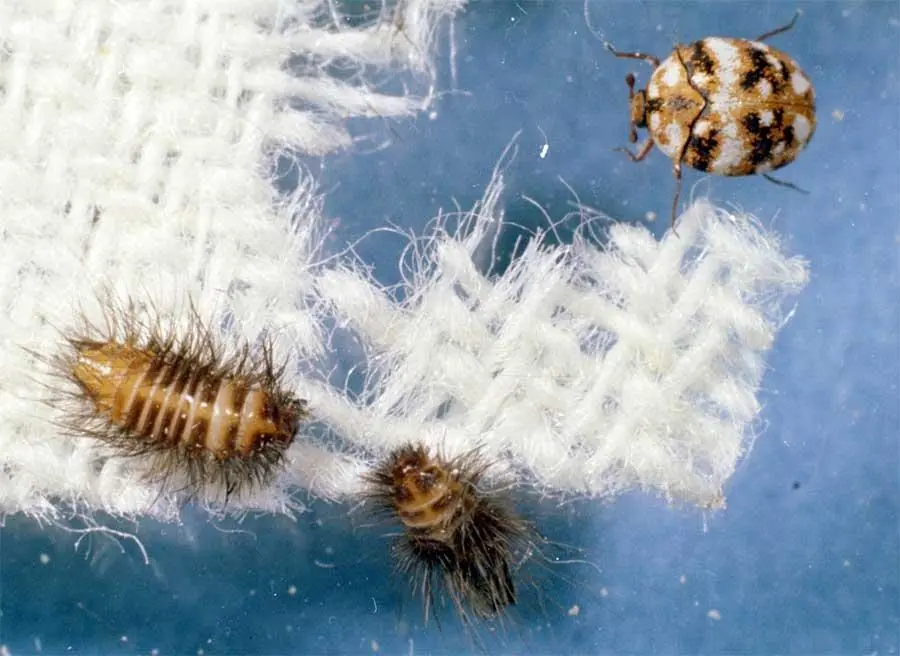
6 Signs You Have a Carpet Beetle Infestation
Carpet beetles can damage wool rugs, clothing, upholstery, and other natural materials. Their larvae often stay hidden in closets, under furniture, and along carpet edges.
The most common signs of carpet beetles include hairy larvae, shed skins, tiny fecal pellets, and irregular fabric damage. You may also spot adult beetles near windows or find larvae feeding on lint, pet hair, and dead insects.
Finding one adult beetle does not automatically mean your home has an infestation. Look for repeated signs, especially larvae and shed skins near damaged materials.
This guide explains how to recognize carpet beetle activity, where to inspect, and when to contact a pest control professional.
What Do Carpet Beetles Look Like?
Carpet beetles have four life stages: egg, larva, pupa, and adult. The larval stage causes most household damage.
Knowing the difference between adults and larvae helps you identify an infestation more accurately.
Adult Carpet Beetles
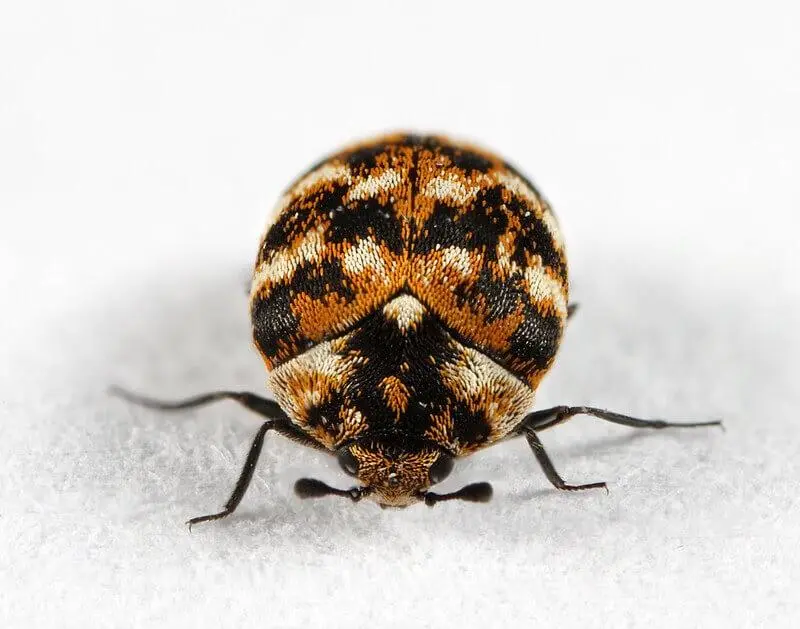
Adult carpet beetles are small, oval-shaped insects. Most measure around 1/16 to 1/8 inch long, although size varies by species.
Their colors also differ. Some have black bodies, while others have mottled patterns of white, brown, yellow, or orange.
Common household species include:
- Varied carpet beetle: Small, rounded, and covered with mottled light and dark scales.
- Black carpet beetle: Dark brown to black, with a more elongated oval shape.
- Furniture carpet beetle: Usually dark with lighter mottled markings.
Adult carpet beetles often feed on pollen and nectar outdoors. They can enter homes through open doors, windows, and other gaps.
You may find them crawling near windowsills, window frames, or light sources. Their presence is worth checking, but one adult beetle alone does not confirm an indoor infestation.
Carpet Beetle Larvae
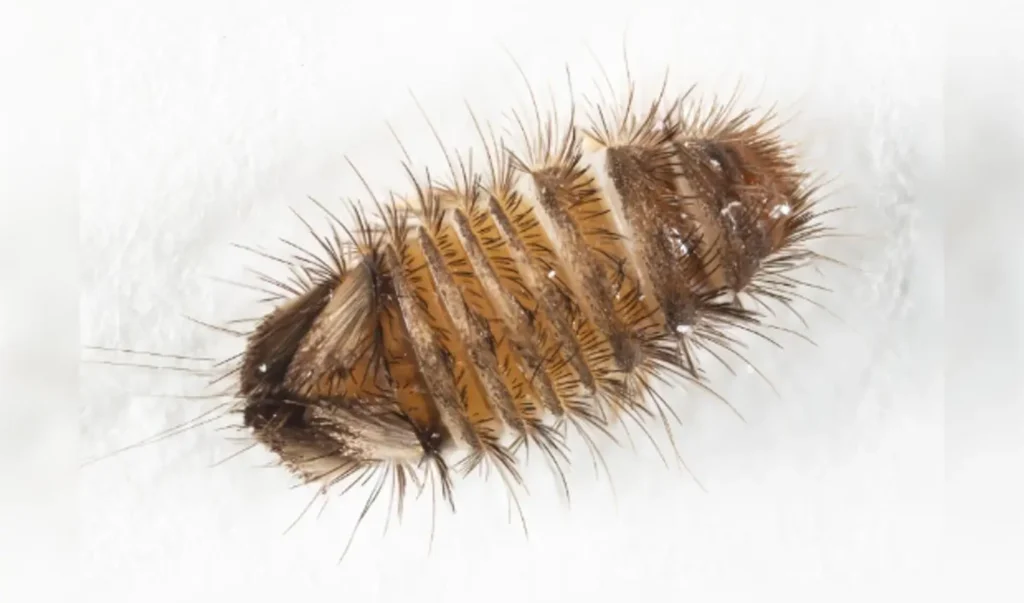
Carpet beetle larvae look very different from adults. They have elongated bodies covered with short, bristly hairs.
Their colors range from tan and golden brown to dark brown. Some species also have noticeable hair tufts near the rear of the body.
Larvae are usually harder to find because they avoid light. They hide in undisturbed areas where they can access food.
Common hiding places include:
- Under rugs and carpets.
- Inside closets and storage boxes.
- Beneath upholstered furniture.
- Along baseboards and floor edges.
- Around pet hair and lint.
- Near dead insects and other organic debris.
Important: Carpet beetle larvae cause most household fabric damage. Adult beetles do not cause the typical feeding damage associated with an infestation.
Carpet Beetle Eggs and Shed Skins
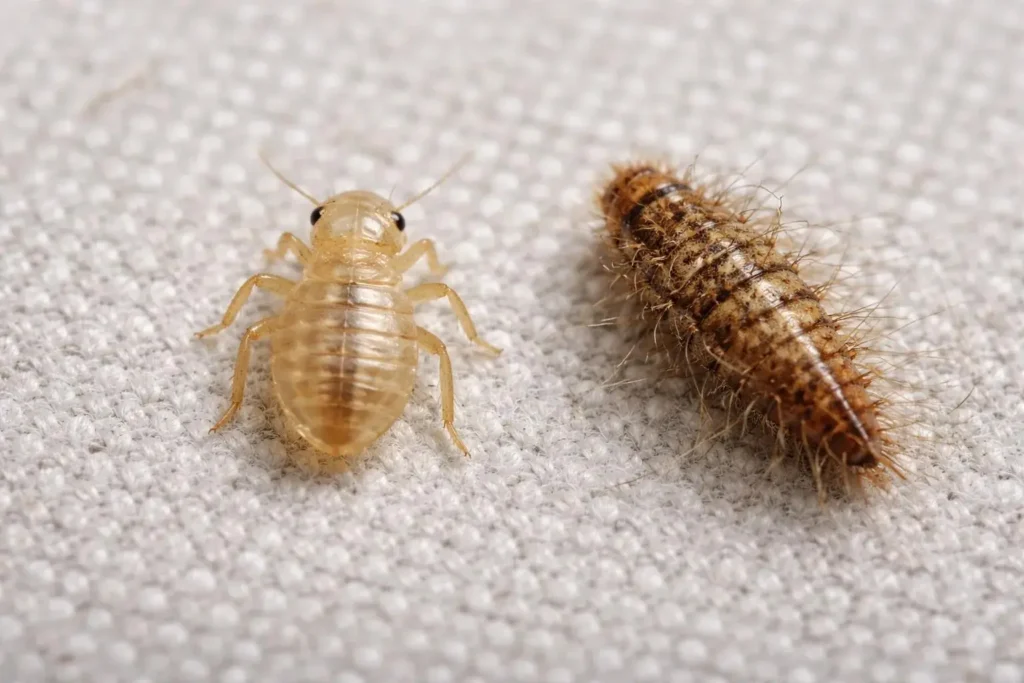
Female carpet beetles lay eggs near materials that can feed their larvae. The eggs are very small and difficult to notice without close inspection.
After hatching, larvae feed and molt several times as they grow. Each molt leaves behind a dry, hollow skin.
These shed skins are useful evidence. You may find them inside closets, beneath rugs, around furniture, or near damaged fabrics.
Carpet beetle larvae eventually enter the pupal stage before becoming adults. The time required to complete this cycle varies by species and environmental conditions.
6 Common Signs of a Carpet Beetle Infestation
Not every carpet beetle sighting means you have an active infestation. Look for several clues and pay attention to where you find them.
1. Adult Beetles Around Windows and Light Sources
Adult carpet beetles often appear near windows, doors, and light sources.
They may crawl along windowsills or collect near window frames. Some enter homes from outdoor flowering plants or through small openings.
Look for small, oval beetles with black or mottled patterns. Their appearance depends on the species.
Finding one adult beetle is not enough to confirm an infestation. However, repeated sightings deserve further inspection.
Check nearby curtains, window frames, carpet edges, and furniture for larvae or shed skins. These additional signs provide stronger evidence of indoor activity.
2. Small, Hairy Carpet Beetle Larvae
Finding carpet beetle larvae is one of the strongest signs of an infestation.
The larvae look like tiny, hairy worms or caterpillars. Their bodies are elongated, segmented, and often covered with brown or golden hairs.
They usually move slowly and avoid bright areas. You may find them beneath furniture, inside closets, or around stored fabrics.
Inspect areas where dust, lint, pet hair, and natural fibers collect. These materials can provide food for developing larvae.
If you find a larva, avoid crushing it before identification. Take a clear photograph or collect a sample in a sealed container if you need professional confirmation.
3. Shed Larval Skins in Hidden Areas
Carpet beetle larvae shed their outer skins as they grow. These hollow remains can stay behind after the larvae move elsewhere.
Shed skins often look like small, dry, brownish shells. They may retain the hairy appearance of the original larva.
Check these locations:
- Inside clothing drawers.
- Beneath area rugs.
- Along closet corners.
- Under beds and heavy furniture.
- Around baseboards and floor vents.
- Near stored blankets and wool clothing.
Finding several shed skins near a susceptible material is a stronger warning than finding one isolated shell.
Look for live larvae and fabric damage nearby. Together, these clues help confirm whether carpet beetles are active.
4. Tiny Fecal Pellets Near Fabrics or Hiding Places
Carpet beetle larvae leave behind small fecal pellets as they feed.
The pellets may look like tiny grains or specks of debris. Their color can vary depending on the material the larvae have eaten.
You may find them near damaged fabrics, inside closets, beneath rugs, or around furniture.
However, small dark particles are not automatically carpet beetle droppings. Dust, dirt, and other insect debris can look similar.
Inspect the surrounding area for larvae, shed skins, and feeding damage. Do not identify an infestation based on tiny particles alone.
5. Irregular Holes and Damage in Natural Fabrics
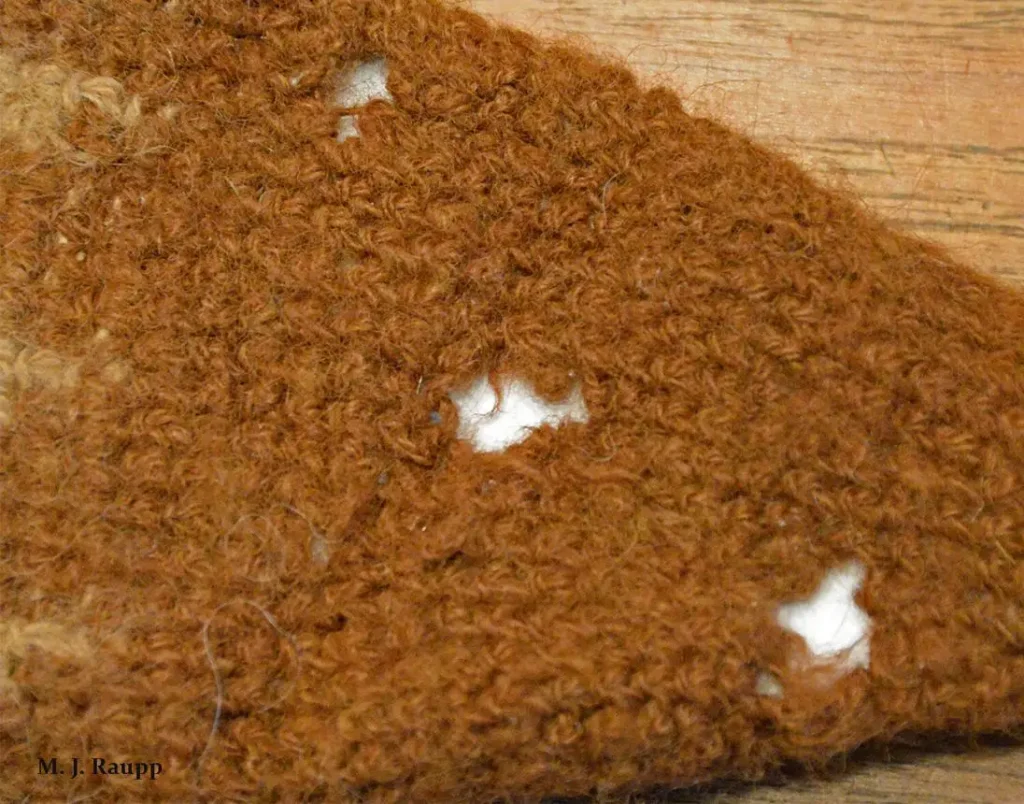
Carpet beetle larvae feed on materials containing animal-based proteins. Common targets include wool, silk, fur, feathers, and felt.
You may notice:
- Irregular holes in wool clothing.
- Thin or bare patches in area rugs.
- Damaged edges of blankets.
- Missing fibers in upholstered furniture.
- Damage to feather-filled pillows or comforters.
The damage may appear in areas that remain undisturbed for long periods.
Carpet beetles can also damage leather and other susceptible materials. Cotton and synthetic fabrics are generally less attractive unless they contain animal fibers or have food, oil, or other organic residues.
Fabric damage alone does not prove carpet beetles are responsible. Clothes moths, other pests, and ordinary wear can produce similar problems.
Check for larvae or shed skins near the damaged item before deciding what caused it.
6. Repeated Larval Activity Around Hidden Food Sources
Carpet beetle larvae do not need a carpet to survive. They can feed on several types of organic material around a home.
Common food sources include:
- Pet hair and animal fur.
- Lint and accumulated dust.
- Dead insects.
- Feathers and wool.
- Hair trapped beneath furniture.
- Organic debris inside vents and wall gaps.
Some carpet beetle species can also infest stored products. Their feeding habits vary, so do not assume every species targets kitchen food.
Pay attention when you repeatedly find larvae near the same hidden material or in several locations around your home.
For example, larvae beneath a rug and shed skins inside a nearby closet may indicate activity beyond a single accidental sighting.
Where Should You Look for Carpet Beetle Signs?
Carpet beetle larvae prefer quiet places with limited disturbance. They often stay close to suitable food sources.
A room-by-room inspection can help you find hidden activity.
Under Carpets and Along Rug Edges
Lift area rugs and inspect their undersides. Pay close attention to edges, folds, and areas beneath heavy furniture.
Look for:
- Live larvae.
- Shed skins.
- Small fecal pellets.
- Irregular thinning or bare patches.
Also inspect carpet edges near walls. Dust, pet hair, and dead insects can collect in these areas.
Inside Closets and Stored Clothing
Closets provide dark, undisturbed spaces where larvae can feed.
Inspect wool sweaters, coats, scarves, blankets, and other natural-fiber items.
Check folds, seams, collars, cuffs, and pockets. Look inside storage boxes and beneath clothing that has remained untouched for months.
Do not assume a damaged garment must be thrown away. First identify the likely cause and assess the damage.
Around Mattresses and Bedroom Furniture
Carpet beetles are not bed bugs. They do not feed on human blood or use mattresses as their primary food source.
However, larvae may appear around bedroom furniture if they find suitable materials or accumulated debris.
Inspect:
- Mattress seams and folds.
- Bed frames and headboards.
- Under-bed storage.
- Wool blankets and natural-fiber bedding.
- Nearby rugs and upholstered furniture.
Check for shed skins, larvae, and damaged materials. A rash or isolated mark on your skin is not proof of carpet beetles in your mattress.
Inside Couches and Upholstered Furniture
Inspect the underside of couches, chairs, and other upholstered furniture.
Pay attention to seams, folds, cushions, and areas where pet hair collects.
Carpet beetle larvae may feed on natural fibers or organic debris trapped inside furniture. They can remain hidden until you move or inspect the item.
Along Baseboards and Floor Vents
Baseboards and floor vents can collect lint, hair, and dead insects.
Use a flashlight to inspect:
- Gaps between flooring and baseboards.
- Corners behind furniture.
- Floor vent openings.
- Areas beneath cabinets.
- Cracks and crevices near storage spaces.
If carpet beetle activity keeps returning after cleaning, inspect less obvious sources. Abandoned bird nests, dead insects, and animal remains in attics or other hidden spaces can sometimes support larvae.
What Damage Do Carpet Beetles Cause?
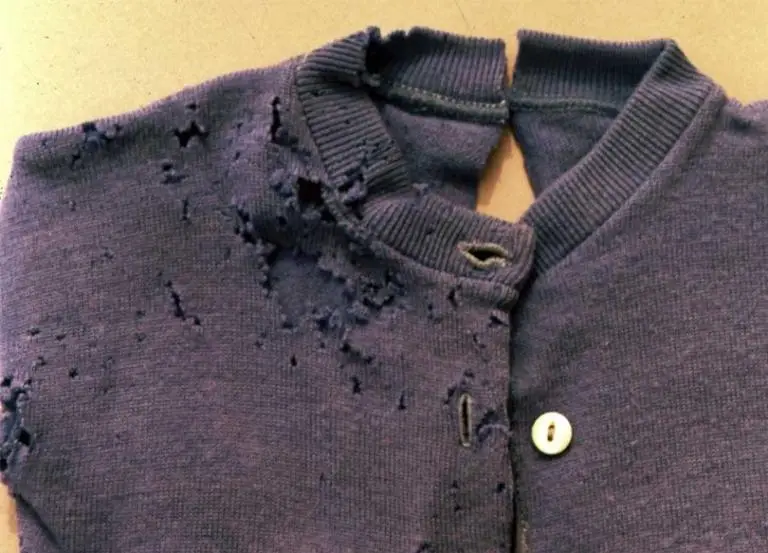
Carpet beetle larvae can damage household items made from natural animal fibers.
Their feeding may leave holes, thin patches, and irregular areas where fibers have disappeared.
Which Materials Do Carpet Beetles Eat?
Common susceptible materials include:
| Material | Examples |
|---|---|
| Wool | Rugs, sweaters, coats, blankets |
| Silk | Clothing, scarves, decorative fabric |
| Fur | Coats, trims, stored garments |
| Feathers | Pillows, comforters, decorative items |
| Felt | Crafts, hats, and household materials |
| Leather | Certain leather goods and stored items |
Cotton and synthetic materials are generally less vulnerable. However, blends containing wool or items contaminated with food, sweat, or other organic matter may attract larvae.
Can Carpet Beetles Live in a House Without Carpets?
Yes. Carpet beetles can live in homes without wall-to-wall carpeting.
The name can be misleading. Their larvae feed on many materials besides carpet.
Wool clothing, upholstered furniture, feather products, lint, pet hair, and dead insects can provide food.
If you do not have carpets, inspect closets, storage areas, furniture, vents, and other places where organic debris collects.
Carpet Beetles vs. Other Household Pests
Carpet beetles are sometimes confused with bed bugs, clothes moths, and other small insects.
Correct identification matters because different pests require different control methods.
Carpet Beetles vs. Bed Bugs
Carpet beetles and bed bugs have different appearances and feeding habits.
| Feature | Carpet beetles | Bed bugs |
|---|---|---|
| Adult appearance | Small, oval beetles | Flat, oval insects |
| Larval appearance | Elongated and hairy | Nymphs resemble smaller adults |
| Main food source | Natural fibers and organic materials | Human and animal blood |
| Fabric damage | Can damage susceptible fabrics | Do not eat fabrics |
| Biting | Do not bite people | Feed by biting people and animals |
Carpet beetle larvae have noticeable hairs. Bed bugs have flatter bodies and lack the same hairy appearance.
Bed bug evidence may include live insects, eggs, shed skins, fecal spots, and rusty stains around sleeping areas.
Skin marks alone cannot reliably identify bed bugs or carpet beetles. Look for physical evidence and seek professional identification if necessary.
Carpet Beetles vs. Clothes Moths
Clothes moth larvae also damage natural fabrics. They can create holes in wool clothing, rugs, and other susceptible materials.
However, clothes moth larvae are generally smooth caterpillar-like insects. Carpet beetle larvae have a noticeably hairy or bristly appearance.
Clothes moth activity may also leave silken webbing or cases on affected materials, depending on the species.
Both pests can damage stored clothing. Finding the actual insect or its larvae is more reliable than identifying the pest from fabric damage alone.
Do Carpet Beetles Bite or Cause Skin Irritation?
Carpet beetles do not bite people. Their larvae can cause skin irritation in some individuals.
Certain larvae have specialized hairs called hastisetae. These detachable hairs can trigger an allergic or irritant reaction after contact.
Possible symptoms include:
- Itching.
- Red or irritated skin.
- Small bumps or rash-like marks.
- Localized discomfort.
This reaction is sometimes called carpet beetle dermatitis.
However, an unexplained rash does not confirm carpet beetle activity. Many other conditions and exposures can cause similar symptoms.
If you develop persistent, severe, or worsening skin irritation, speak with a healthcare professional. Do not diagnose the cause from a photograph or a single insect sighting.
To investigate a possible infestation, look for larvae, shed skins, and other physical evidence around fabrics and furniture.
How Can You Tell If You Have an Active Carpet Beetle Infestation?
The number of adult beetles alone cannot tell you whether an infestation is active.
Finding one adult near a window may simply mean it entered from outside. Finding repeated larvae, shed skins, and fresh fabric damage provides stronger evidence.
Use these clues when assessing the situation:
| Evidence | What it may indicate |
|---|---|
| One adult beetle near a window | Possible outdoor entry; not proof of infestation |
| Repeated adult sightings | A reason to inspect nearby areas |
| Live larvae | Strong evidence of carpet beetle activity |
| Several shed skins | Evidence of larval development |
| Fabric damage with nearby larvae | Stronger evidence of feeding activity |
| Larvae in several locations | Possible wider household activity |
There is no universal number of carpet beetles that confirms an infestation.
The location and combination of evidence matter more than a simple count.
If you find larvae in several rooms, repeated shed skins, or continuing fabric damage, inspect the affected areas carefully. A pest control professional can help identify the species and locate hidden sources when the evidence is unclear.
How to Prevent Carpet Beetle Infestations
Regular cleaning and proper storage can reduce the food and hiding places available to carpet beetle larvae.
These steps also make early activity easier to detect.
Vacuum Hidden Areas Regularly
Vacuum carpets, rugs, furniture, and closet floors.
Pay special attention to:
- Carpet edges and undersides.
- Areas beneath beds and couches.
- Baseboards and corners.
- Upholstery seams.
- Floor vents and cracks.
Remove collected debris promptly. Follow the vacuum manufacturer’s instructions for cleaning or disposing of its contents.
Clean Natural-Fiber Items Before Storage
Wash or dry-clean susceptible clothing and blankets before storing them.
Food stains, body oils, and other residues can attract pests. Clean items are easier to protect during long-term storage.
Store Clothing in Sealed Containers
Keep wool clothing, blankets, and other vulnerable materials in clean, airtight containers.
Inspect stored items periodically. Look for larvae, shed skins, and damage before returning them to regular use.
Remove Pet Hair and Organic Debris
Pet hair, lint, and dead insects can provide food for carpet beetle larvae.
Clean beneath furniture and around pet resting areas. Also inspect corners, closets, and other places where debris collects.
Check Items Before Bringing Them Indoors
Inspect secondhand furniture, used clothing, cut flowers, and other susceptible items before bringing them inside.
Check window screens and seal gaps around doors and windows where practical. These steps can reduce opportunities for adult beetles to enter.
When Should You Call Professional Pest Control?
Consider professional pest control when you repeatedly find larvae, shed skins, or fabric damage despite thorough cleaning.
Professional help may also be useful when:
- Carpet beetles appear in several rooms.
- Larvae keep returning after you clean.
- You cannot locate the source of activity.
- Valuable clothing, rugs, or furniture show continuing damage.
- You suspect activity inside vents or other difficult-to-reach spaces.
A professional inspection can help identify the insect, locate likely food sources, and determine whether treatment is necessary.
Avoid applying pesticides to clothing, bedding, or other surfaces unless the product label specifically permits that use. Always follow label instructions.
Bug Out provides pest control services across North Carolina, including areas such as Charlotte, Raleigh, Durham, and Greensboro.
If you are finding repeated signs of carpet beetles, contact Bug Out to discuss your concerns and request a free quote.
Frequently Asked Questions About Carpet Beetles
What are the first signs of carpet beetles?
Early signs can include adult beetles near windows, small hairy larvae, and shed larval skins. Check nearby rugs, closets, and upholstered furniture for additional evidence.
How do I know if I have carpet beetles?
Look for live larvae, shed skins, tiny fecal pellets, and irregular damage to natural fabrics. Finding several signs near the same area provides stronger evidence than finding one adult beetle.
Are carpet beetles a sign of a dirty house?
No. Carpet beetles can enter clean homes through windows, doors, flowers, and other items. However, lint, pet hair, dead insects, and accumulated debris can provide food for their larvae.
Can carpet beetles live in mattresses?
They can appear around mattresses and bedroom furniture if suitable materials or organic debris are available. They do not feed on blood like bed bugs. Inspect seams, folds, nearby rugs, and upholstered furniture for larvae or shed skins.
Do carpet beetles bite humans?
No. Carpet beetles do not bite people. However, hairs from certain larvae can cause skin irritation or allergic reactions in susceptible individuals.
Can carpet beetles make you sick?
Carpet beetles are not known for spreading human diseases. However, contact with certain larval hairs can cause skin irritation and allergic reactions. Seek medical advice for persistent or severe symptoms.
Can carpet beetles live without carpets?
Yes. Their larvae can feed on wool clothing, silk, feathers, fur, lint, pet hair, and dead insects. Homes without carpets can still provide suitable food and hiding places.
Do carpet beetles go away on their own?
An isolated adult beetle may leave or die without creating an indoor infestation. However, established larvae can continue feeding if they have access to suitable materials. Identify and remove the source rather than relying on the insects to disappear.
How many carpet beetles indicate an infestation?
There is no fixed number. Repeated larvae, shed skins, and fabric damage are more useful indicators than counting adult beetles.
What should I do if I find carpet beetle larvae?
Photograph or safely collect a specimen for identification. Inspect nearby fabrics, rugs, closets, and furniture. Vacuum affected areas and clean or store susceptible items properly. If larvae keep appearing, consider a professional inspection.
Can carpet beetles damage clothes?
Yes. Their larvae can damage wool, silk, fur, feathers, and other susceptible materials. Inspect stored clothing, especially items that remain folded or undisturbed for long periods.
How can I prevent carpet beetles from returning?
Vacuum regularly, remove pet hair and lint, clean natural-fiber items before storage, and use sealed containers for vulnerable clothing. Inspect secondhand items and reduce entry points around windows and doors.