What Flowers Are Safe for Cats? A Complete Guide to Cat Friendly and Toxic Flowers
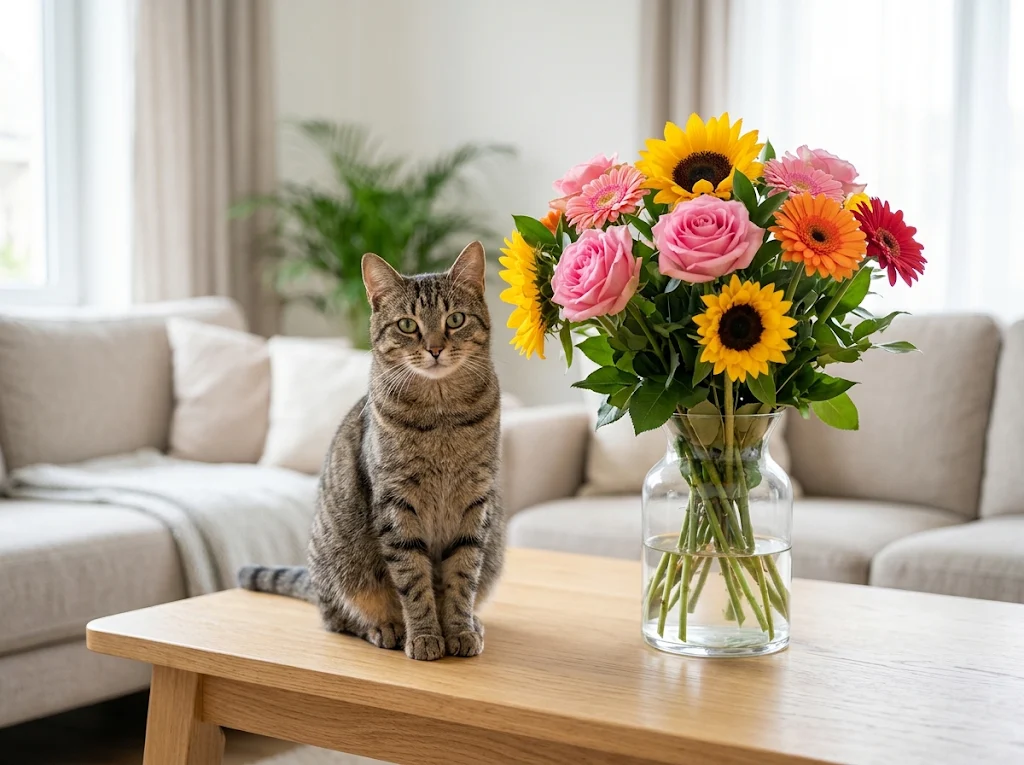
You can enjoy fresh flowers at home without putting your cat at unnecessary risk. However, choosing the right blooms matters. Some common flowers are considered non-toxic to cats, while others can cause serious illness.
Roses, sunflowers, Gerbera daisies, orchids, snapdragons, and zinnias are among the better choices. The ASPCA’s list of non-toxic plants for cats also includes several other flowers. However, a flower’s common name does not always tell you whether it is safe.
Lilies deserve special attention. True lilies and daylilies can cause fatal kidney failure in cats. Even pollen or water from a vase containing these flowers can be dangerous. The FDA warns that every part of these plants can pose a serious risk.
This guide covers flowers for bouquets, indoor displays, and gardens. You will also learn which flowers to avoid, how to check an unfamiliar plant, and what to do if your cat eats one.
Important: Non-toxic does not mean edible. Eating flowers or other plant material can still upset your cat’s stomach. Keep floral arrangements away from curious pets, even when their ingredients appear on a non-toxic list.
Which Flowers Are Safe for Cats? A List of Cat Friendly Flowers
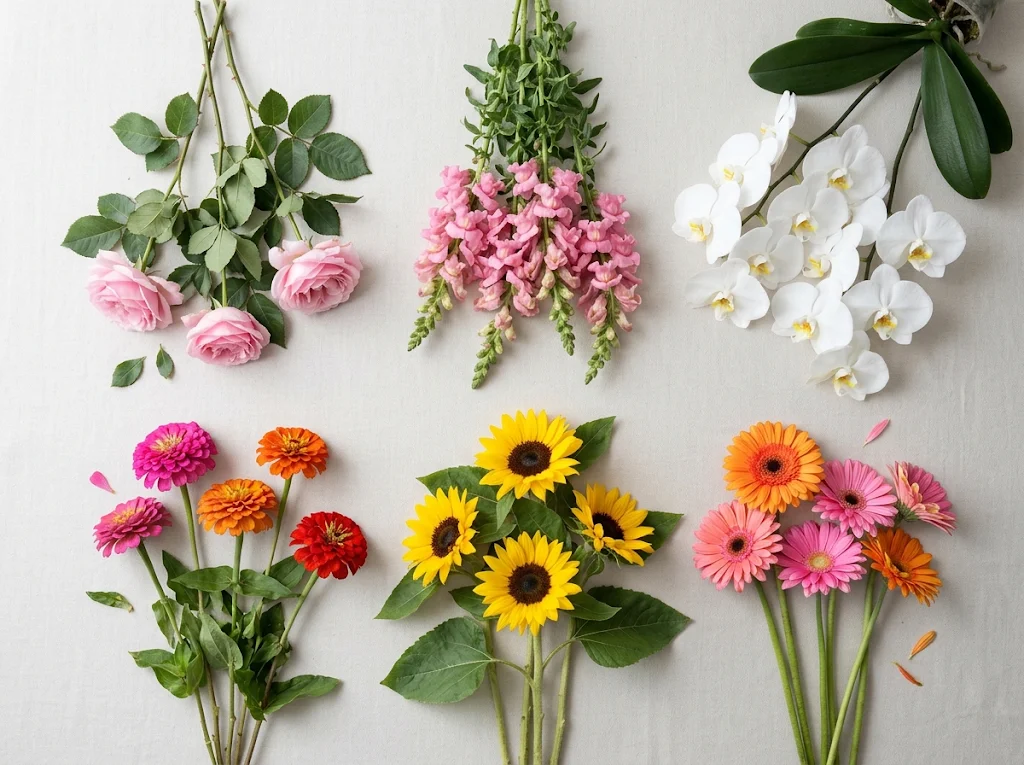
Several popular flowers appear on the ASPCA’s non-toxic plant list or its pet-safe bouquet guides. These include roses, sunflowers, Gerbera daisies, orchids, snapdragons, freesias, statice, and lisianthus.
The following table provides a useful starting point. Always confirm the exact flower and botanical name before buying an arrangement.
| Flower | Botanical name | What to know |
|---|---|---|
| Rose | Rosa spp. | Non-toxic, but thorns can injure paws and mouths |
| Sunflower | Helianthus spp. | Considered non-toxic; eating plant material may upset the stomach |
| Gerbera daisy | Gerbera jamesonii | A non-toxic alternative to many other daisy varieties |
| Orchid | Several orchid genera | ASPCA lists several common orchid types as non-toxic |
| Snapdragon | Antirrhinum majus | Included in ASPCA’s pet-safe bouquet guidance |
| Zinnia | Zinnia spp. | Listed as non-toxic by ASPCA |
| Freesia | Freesia spp. | A non-toxic option for mixed arrangements |
| Statice | Limonium spp. | Commonly used as bouquet filler |
| Lisianthus | Eustoma grandiflorum | A rose-like flower included in ASPCA’s bouquet guidance |
| Stock | Matthiola incana | Listed as a non-toxic bouquet flower |
| Waxflower | Chamelaucium spp. | A filler option included in ASPCA guidance |
| Liatris | Liatris spicata | Also called blazing star; included in ASPCA bouquet guidance |
The ASPCA’s plant database and bouquet guides support many of these choices. Its guidance also makes an important distinction: even non-toxic flowers may cause mild stomach upset when eaten.
1. Roses
Botanical name: Rosa spp.
Roses are one of the most popular choices for homes with cats. The ASPCA identifies roses as non-toxic to cats. They also work well in simple bouquets and mixed floral arrangements.
However, their thorns deserve attention. A cat that bites or plays with a rose stem could injure its mouth or paws. Remove sharp thorns before displaying roses, and place the vase somewhere your cat cannot knock it over.
Rose petals and leaves are not a substitute for your cat’s regular food. Eating large amounts of plant material may cause digestive discomfort.
2. Sunflowers
Botanical name: Helianthus spp.
Sunflowers add bright color to a room and make attractive standalone bouquets. The ASPCA lists sunflowers as non-toxic to cats.
Their large flower heads and sturdy stems also make them popular for home arrangements. However, a curious cat may still pull at the petals or chew the leaves.
Keep the vase stable and remove fallen petals. If your cat eats a noticeable amount, watch for digestive problems and contact your veterinarian if symptoms develop.
3. Gerbera Daisies
Botanical name: Gerbera jamesonii
Gerbera daisies are a useful option for people who enjoy colorful floral arrangements. They come in several shades, including pink, orange, red, yellow, and white.
The ASPCA lists Gerbera daisies as non-toxic to cats. They are also known as Barberton daisies, Transvaal daisies, and African daisies.
One detail matters when shopping: not every flower called a daisy has the same toxicity classification. Gerbera daisies are different from chrysanthemums, which the ASPCA lists as toxic to cats.
Check the botanical name rather than relying on the word “daisy” alone.
4. Orchids
Botanical names: Phalaenopsis, Dendrobium, Oncidium, and Cymbidium
Orchids offer an elegant alternative to many traditional bouquet flowers. Several common orchid types appear in ASPCA guidance as non-toxic to pets.
The ASPCA specifically names Cymbidium, Dendrobium, Oncidium, and Phalaenopsis orchids in its bouquet recommendations.
A living orchid can also provide long-lasting indoor color. Still, protect the plant from chewing and keep fallen flowers away from your cat.
Do not assume every plant sold under a similar common name has the same safety profile. Confirm the orchid’s identity before bringing it home.
5. Snapdragons
Botanical name: Antirrhinum majus
Snapdragons are popular garden flowers with tall stems and clustered blooms. They also work well in cut flower arrangements.
The ASPCA includes snapdragons in its non-toxic bouquet recommendations. Their range of colors makes them useful for brightening indoor displays.
However, non-toxic does not mean suitable for chewing. Some pets may react to the taste of plant material with increased salivation. Keep the flowers out of reach and contact a veterinarian if your cat develops unusual symptoms.
6. Zinnias
Botanical name: Zinnia spp.
Zinnias are colorful flowers that grow well in many home gardens. They are available in several shapes and shades, making them useful for flower beds and seasonal arrangements.
The ASPCA lists zinnias as non-toxic to cats. They can be a practical choice for people who want to grow flowers outdoors.
Choose the correct plant when purchasing seeds or young plants. Keep fertilizers, pesticides, and other garden chemicals away from pets. The flower’s non-toxic classification does not make every product used around it harmless.
7. Freesias
Botanical name: Freesia spp.
Freesias are often used in bouquets because of their delicate appearance and fragrance. The ASPCA includes freesia in its pet-safe bouquet recommendations.
They can work as standalone flowers or as part of a mixed arrangement. However, ask the florist to confirm every flower and filler included in the bouquet.
A safe main flower does not make the entire arrangement safe. Other stems, greenery, and decorative additions need separate checks.
8. Statice and Limonium
Botanical name: Limonium spp.
Statice is a common filler flower. Florists use it to add texture and small clusters of color to larger arrangements.
The ASPCA includes Limonium and statice in its bouquet recommendations. These flowers can help create a fuller arrangement without relying on certain risky fillers.
Make sure the florist identifies the actual plant. Common names can cover different species, so a botanical name is more useful when checking plant safety.
9. Lisianthus
Botanical name: Eustoma grandiflorum
Lisianthus has soft petals and a rose-like appearance. Florists often use it in wedding flowers, gift bouquets, and decorative arrangements.
The ASPCA includes lisianthus in its pet-safe bouquet guidance. It can be a useful option when you want a fuller arrangement with several flower types.
Ask the florist to confirm that the bouquet contains the correct species. Also check the greenery and filler flowers rather than focusing only on the main blooms.
10. Stock and Waxflower
Botanical names: Matthiola incana and Chamelaucium spp.
Stock and waxflower are useful additions to mixed bouquets. Stock has clustered flowers along upright stems, while waxflower adds small blooms and texture.
Both appear in ASPCA bouquet guidance as non-toxic options. They can help replace fillers that carry a greater concern for cats.
However, a florist may use different greenery or substitute flowers depending on availability. Ask for a complete ingredient list before bringing the arrangement home.
Which Flowers Are Harmful or Toxic to Cats?
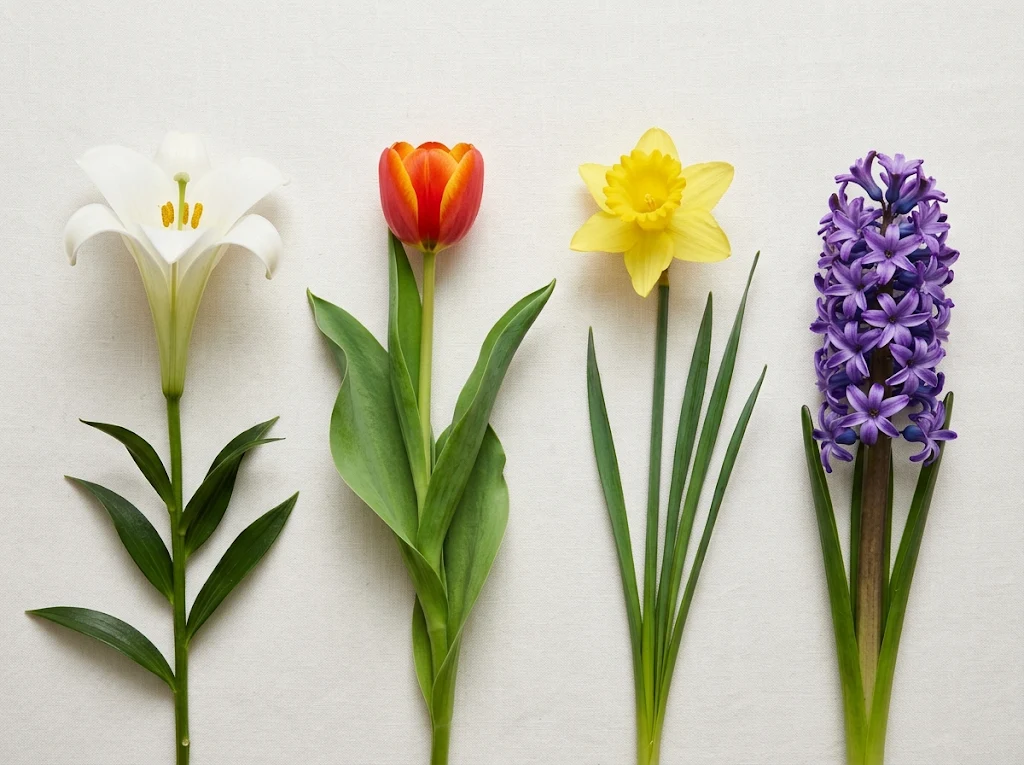
Some common flowers can cause vomiting, diarrhea, mouth irritation, or more serious health problems in cats. The level of danger depends on the plant and the amount of exposure.
The most important flowers to avoid include true lilies, daylilies, tulips, daffodils, hyacinths, chrysanthemums, azaleas, and oleander.
True lilies and daylilies are in a separate risk category because they can cause acute kidney failure. Other toxic flowers may cause different symptoms and should not be treated as equally dangerous.
| Flower | Botanical name | Main concern |
|---|---|---|
| True lilies | Lilium spp. | Potentially fatal kidney failure |
| Daylilies | Hemerocallis spp. | Potentially fatal kidney failure |
| Tulips | Tulipa spp. | Gastrointestinal irritation; bulbs contain concentrated toxins |
| Daffodils | Narcissus spp. | Vomiting and other serious effects, especially after bulb ingestion |
| Hyacinths | Hyacinthus orientalis | Gastrointestinal irritation |
| Chrysanthemums | Chrysanthemum spp. | Toxic compounds can cause several symptoms |
| Azaleas | Rhododendron spp. | Can cause serious poisoning |
| Oleander | Nerium oleander | Can affect heart function |
| Autumn crocus | Colchicum autumnale | Can cause severe, potentially life-threatening poisoning |
| Lily of the valley | Convallaria majalis | Can affect heart rhythm and blood pressure |
These classifications are supported by ASPCA plant information, veterinary resources, and the FDA’s lily warning.
Flowers You Should Keep Out of a Cat’s Environment
True lilies and daylilies: These are the most urgent flowers to avoid. A small exposure can cause kidney damage. Do not bring them into a home where cats live.
Tulips: Tulips contain compounds that can irritate a cat’s digestive system. The bulbs are particularly concerning because they contain higher concentrations of certain toxins.
Daffodils: Daffodils can cause vomiting, diarrhea, and other signs of poisoning. Bulb ingestion can lead to more serious effects.
Hyacinths: These flowers can cause gastrointestinal irritation. Their bulbs are a particular concern if a cat digs them up or chews them.
Chrysanthemums: Often sold as mums or daisy poms, chrysanthemums are listed as toxic to cats by the ASPCA. Do not confuse them with Gerbera daisies.
Azaleas: Azaleas belong to the Rhododendron group. Ingestion can cause serious poisoning and requires veterinary attention.
Oleander: Oleander is a highly concerning flowering shrub. ASPCA identifies the risk of serious heart problems after ingestion.
Autumn crocus: Do not confuse autumn crocus with spring crocus varieties. Colchicum autumnale can cause severe poisoning, including damage to several body systems.
Why You Should Check Bouquet Fillers and Greenery
A bouquet can contain more than its main flowers. Florists often add filler blooms, leaves, and decorative greenery to create a finished arrangement.
These extra stems can introduce risks that are easy to miss.
For example, eucalyptus, English ivy, and asparagus fern appear on the ASPCA’s toxic plant list. Baby’s breath and carnations also require caution. The Cats Protection Society includes baby’s breath and carnations among flowers to avoid in its cat-friendly flower guide.
Do not assume a bouquet is suitable because it contains roses or sunflowers. Ask the florist to identify every flower and greenery stem.
Why Are True Lilies So Dangerous to Cats?
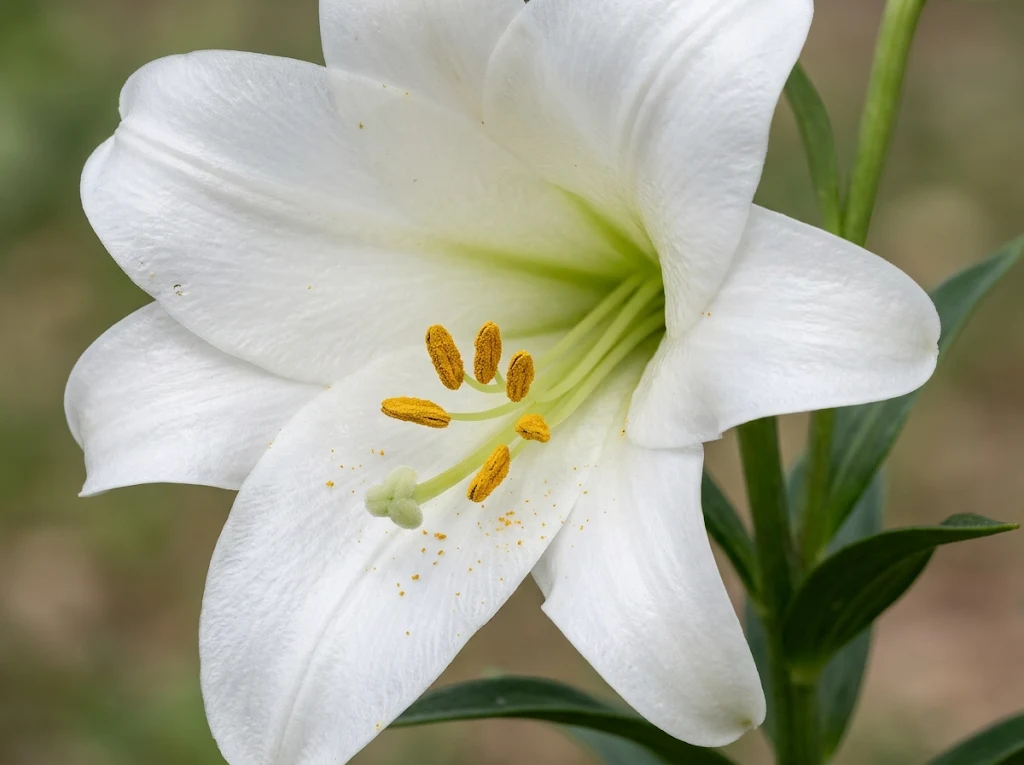
True lilies and daylilies are among the most dangerous plants for cats. They can cause acute kidney failure, and even a small exposure can become life-threatening.
The main groups to recognize are:
- Lilium: True lilies, including Easter lilies, Asiatic lilies, Oriental lilies, and Stargazer lilies.
- Hemerocallis: Daylilies.
The FDA and UC Davis explain that these plants can damage a cat’s kidneys. The exact toxin has not been identified, but the danger is well established.
Which Parts of a Lily Are Toxic to Cats?
Every part of a true lily can be dangerous to cats. This includes:
- Flowers and petals
- Leaves
- Stems
- Pollen
- Roots and rhizomes
- Water from a vase containing lilies
A cat does not need to eat an entire flower to face a serious risk. It may bite a leaf, brush against pollen, and later swallow that pollen while grooming.
Drinking vase water is another possible route of exposure. Pet Poison Helpline confirms that all parts of plants in the Lilium genus can cause poisoning in cats.
Can Lily Pollen Harm a Cat?
Yes. Lily pollen can be dangerous even when a cat does not chew the flower.
Pollen may fall onto a cat’s fur or paws. The cat can then swallow it while cleaning itself.
Removing the pollen from the flower or choosing a pollen-free variety does not make the plant safe. Other parts remain toxic.
The safest choice is to avoid bringing true lilies and daylilies into a home with cats.
How Quickly Can Lily Poisoning Affect a Cat?
Early signs may include vomiting, drooling, reduced appetite, and lethargy. Kidney damage can develop after exposure, and severe cases may progress to kidney failure within 36 to 72 hours.
UC Davis warns that treatment delayed beyond 18 hours generally leads to irreversible kidney damage. This is why suspected exposure requires immediate veterinary care. Do not wait for symptoms to appear.
Are Peace Lilies and Calla Lilies Equally Dangerous?
No. Their names can cause confusion, but they are not true lilies.
Peace lilies (Spathiphyllum) and calla lilies (Zantedeschia) do not cause the same kidney failure associated with Lilium and Hemerocallis plants.
However, they are not harmless. They contain insoluble calcium oxalate crystals that can irritate a cat’s mouth and digestive tract.
Lily of the valley is different again. It can affect heart function and is also dangerous.
The important lesson is simple: never judge a plant by its common name. Check its botanical identity and toxicity information.
Are All Daisy Varieties Safe for Cats?
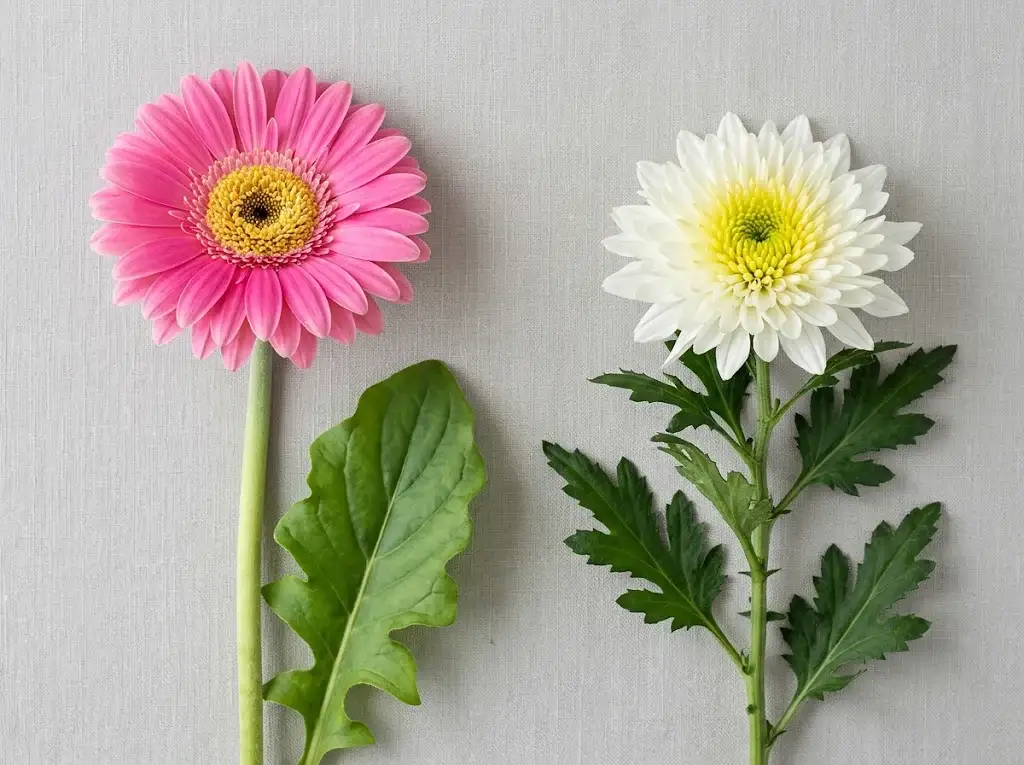
No. Some daisy varieties are considered non-toxic, while others are listed as toxic to cats.
This is one of the most common sources of confusion when people shop for bouquets.
Gerbera daisies (Gerbera jamesonii) appear on the ASPCA’s non-toxic list. They are also known as Barberton daisies and Transvaal daisies.
Chrysanthemums, often sold as mums or daisy poms, are listed as toxic to cats by the ASPCA.
The flowers may look similar in a mixed arrangement. However, their toxicity classifications are different.
Before buying a bouquet, ask the florist to confirm whether the flowers are Gerbera daisies or chrysanthemums. If the label only says “daisy,” request the botanical name.
The same rule applies to other flowers with similar common names. A correct identification is more useful than a broad label.
Which Cut Flowers and Bouquet Flowers Are Safe for Cats?
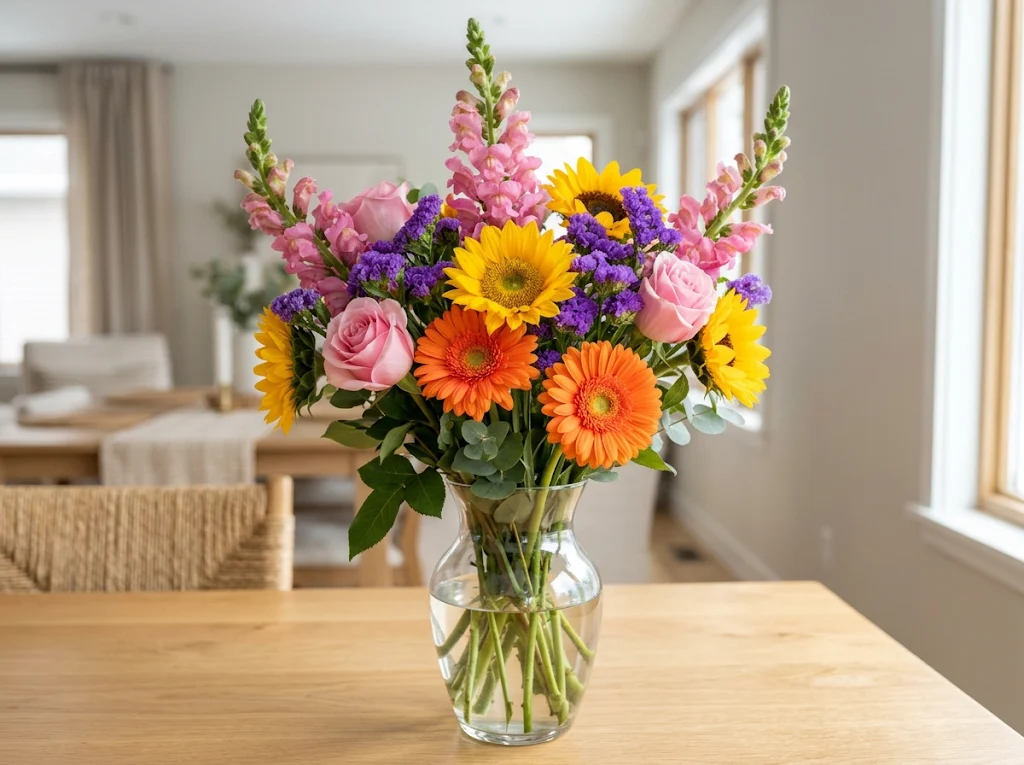
Cut flowers can brighten a room, but mixed bouquets need careful checking. A florist may combine several flower varieties with filler stems and greenery.
The ASPCA’s bouquet guidance includes these options:
- Roses
- Gerbera daisies
- Sunflowers
- Orchids
- Snapdragons
- Freesias
- Statice and Limonium
- Madagascar jasmine
- Stock
- Waxflower
- Lisianthus
- Liatris
These flowers are listed as non-toxic options in ASPCA guidance. However, ingestion can still cause mild stomach upset.
Are Filler Flowers Safe for Cats?
Not all filler flowers are suitable for a home with cats.
Filler flowers are the smaller blooms used to add texture and volume. Some common examples include statice, waxflower, and baby’s breath.
ASPCA includes statice and waxflower in its bouquet recommendations. However, baby’s breath is treated differently by other animal welfare sources. The Cats Protection Society lists it among flowers to avoid.
For a cautious approach, choose fillers that appear in an authoritative non-toxic listing. Avoid uncertain varieties until you have checked their exact identity.
What About Bouquet Greenery?
Greenery deserves the same attention as flowers. A bouquet may include leaves and decorative stems that are not obvious from its product name.
Some greenery to avoid includes:
- Eucalyptus
- English ivy
- Asparagus fern
These plants appear on the ASPCA’s toxic plant list.
Ask the florist to use only identified, non-toxic greenery. If the florist cannot confirm the plant species, choose a simpler arrangement.
What Should You Ask a Florist?
Use these questions before ordering:
- Can you confirm the common and botanical names of every flower?
- Does the bouquet contain true lilies or daylilies?
- What filler flowers are included?
- What greenery will you use?
- Can you replace any plant that is not listed as non-toxic for cats?
A single-variety bouquet can make identification easier. A simple arrangement of confirmed roses, sunflowers, or Gerbera daisies may be easier to check than a mixed bouquet with many unknown stems.
What Flowers Are Safe for Cats Indoors and in the House?
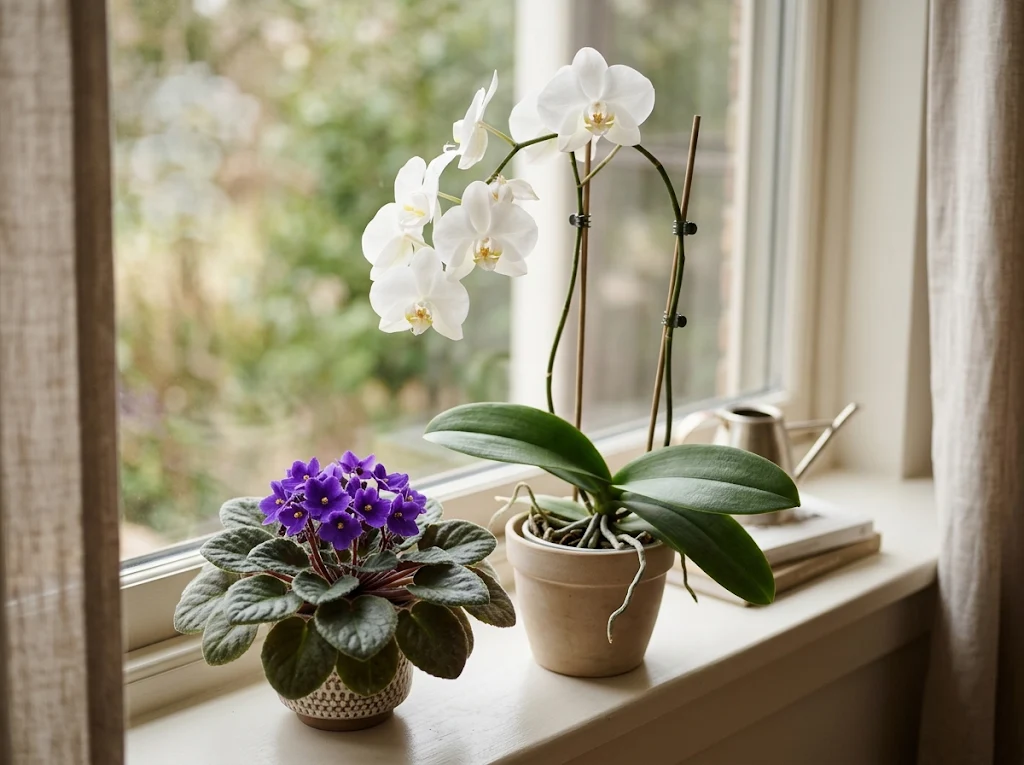
Indoor flowers need extra care because cats can reach them, knock over vases, or chew their leaves.
If you want flowers inside your home, start with varieties listed as non-toxic by the ASPCA. Roses, orchids, Gerbera daisies, and snapdragons are examples of flowers that can work in indoor arrangements.
Some flowering houseplants also appear in non-toxic plant references. African violets are one example.
African Violets
Botanical name: Saintpaulia spp.
African violets are popular indoor flowering plants. Their compact size makes them suitable for windowsills, shelves, and small rooms.
The ASPCA lists African violets as non-toxic to cats. They can provide indoor color without relying on flowers that carry a known serious toxicity risk.
Still, keep the pot away from curious paws. A cat may knock it over or chew the leaves, and eating plant material can cause stomach upset.
Other Houseplants to Consider
If you want greenery alongside flowers, the ASPCA lists several non-toxic houseplants, including:
| Houseplant | Botanical name |
|---|---|
| Spider plant | Chlorophytum comosum |
| Boston fern | Nephrolepis exaltata |
| Friendship plant | Pilea involucrata |
| Zebra haworthia | Haworthiopsis attenuata |
| Easter cactus | Rhipsalidopsis gaertneri |
| Hens and chicks | Sempervivum tectorum |
These plants are not all flowering plants. They are included here because many cat owners also want safe greenery around indoor arrangements.
How to Display Indoor Flowers More Safely
A high shelf may seem like an easy solution, but cats can jump, climb, and knock things over. Placement alone should not be your main safety measure.
Use these precautions:
- Choose flowers with confirmed non-toxic classifications.
- Keep bouquets away from food and water bowls.
- Remove fallen petals and leaves.
- Use a stable, heavy vase.
- Clean up spilled vase water.
- Avoid decorative greenery with an unknown identity.
- Keep plant food, fertilizers, and flower preservatives out of reach.
- Close the door to rooms where you keep plants your cat cannot access.
VCA advises choosing flowers that are not toxic rather than relying on an out-of-reach display.
What Outdoor and Garden Flowers Are Safe for Cats?
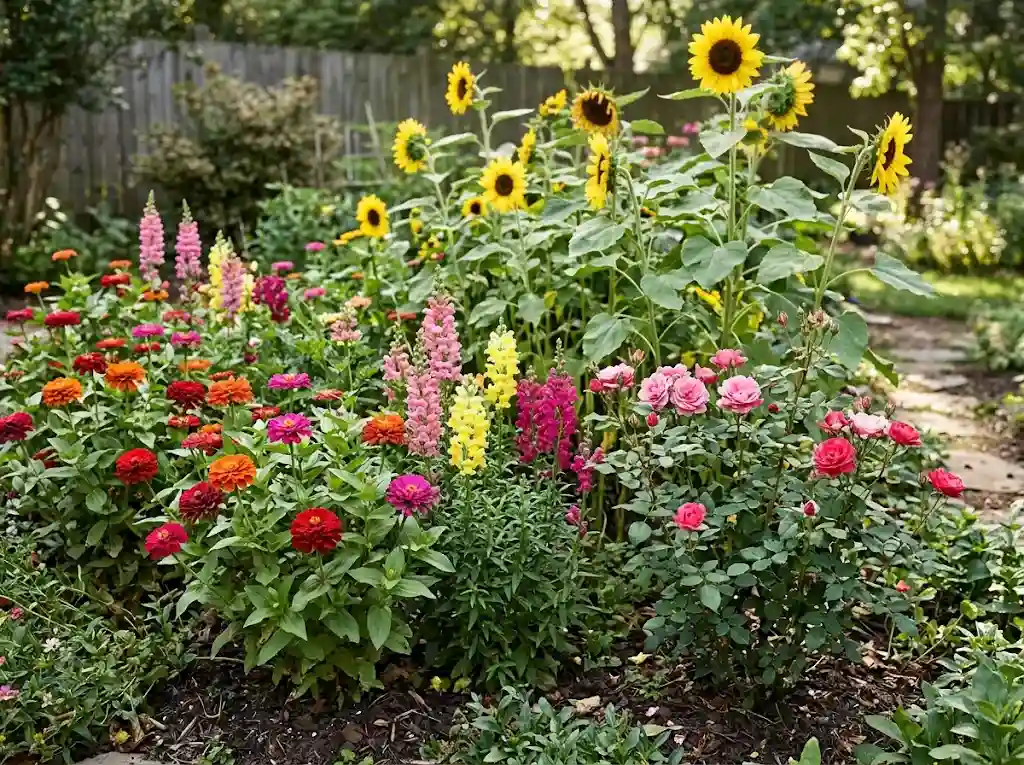
A cat-friendly garden can include attractive flowers without relying on plants known to be toxic. Roses, sunflowers, zinnias, Gerbera daisies, and snapdragons are useful options to investigate.
However, garden safety involves more than flower selection. Cats may chew leaves, dig around roots, or walk through treated soil.
The ASPCA’s non-toxic plant information can help you check individual species before planting.
Garden Flowers to Consider
Zinnias: These flowers provide strong color and work well in sunny garden beds. The ASPCA lists them as non-toxic to cats.
Sunflowers: Their height makes them useful as a garden feature. Keep fallen plant material away from pets that like chewing leaves.
Roses: Roses can grow in garden beds or containers. Remove or manage sharp stems where cats regularly walk.
Gerbera daisies: These can add color to outdoor spaces. Confirm the plant is a Gerbera rather than a chrysanthemum.
Snapdragons: Their upright stems add height and color. They are included in ASPCA pet-safe bouquet guidance.
Petunias: The ASPCA lists petunias as non-toxic plants. They can be used in garden beds and containers.
What Should You Avoid Planting?
Avoid true lilies and daylilies in areas your cat can access. Their presence creates a serious risk, even if your cat does not usually chew plants.
Other plants to avoid include azaleas, oleander, autumn crocus, and daffodils. Check the ASPCA database before adding unfamiliar flowering shrubs, bulbs, or ornamental plants.
Also consider the products used in your garden. Pesticides, fertilizers, slug treatments, and other chemicals may create risks separate from the plant itself.
How to Make a Garden More Cat Friendly
A well-planned garden should reduce opportunities for unwanted chewing and digging.
- Choose plants after checking their botanical names.
- Keep toxic plants out of areas your cat can enter.
- Store garden chemicals in secure locations.
- Follow product instructions before allowing pets into treated areas.
- Remove fallen leaves, flowers, and bulbs from accessible spots.
- Provide a designated area with cat grass.
- Use barriers around plants that need protection.
The safest approach is to prevent access to plants known to be toxic. A garden should not depend on your cat avoiding them.
What Should You Do If Your Cat Eats a Flower?
Do not wait for symptoms after suspected lily exposure.
If your cat eats an unfamiliar flower, identify the plant and contact a veterinarian for advice. If the flower may be a true lily or daylily, seek emergency veterinary care immediately.
Do not wait to see whether your cat becomes sick. Lily poisoning can progress quickly, and early treatment is important.
Step 1: Remove Your Cat From the Plant
Move your cat away from the flowers. Remove any remaining plant material from the area so your pet cannot eat more.
If pollen is visible on your cat’s fur, prevent further grooming if you can do so safely while arranging veterinary help. Do not delay the call to clean the plant or investigate the bouquet.
Step 2: Identify the Flower
Take a clear photograph of the flower, leaves, stem, and any label. If you have the original packaging or florist receipt, keep it.
Look for the botanical name. A common name alone may not be enough to identify a plant accurately.
Bring the photograph or plant information to the veterinary clinic. UC Davis recommends taking a picture or sample when possible to help identify the plant.
Step 3: Contact a Veterinarian Immediately
If you suspect lily exposure, go to an emergency veterinary hospital. Do not wait for vomiting, lethargy, or other symptoms.
For other possible plant exposures, contact your veterinarian or an animal poison control service. They can help assess the risk based on the plant, amount eaten, and your cat’s condition.
Step 4: Do Not Try Home Treatments
Do not induce vomiting unless a veterinary professional specifically instructs you to do so.
Do not give human medication, milk, oil, or home remedies. These actions may make the situation worse or delay proper treatment.
Step 5: Watch for Signs of Poisoning
Possible signs of plant poisoning include:
- Vomiting
- Diarrhea
- Drooling
- Reduced appetite
- Lethargy
- Mouth irritation
- Pawing at the mouth
- Weakness
- Changes in urination
These signs do not identify a specific plant or toxin. Some serious exposures may cause damage before obvious symptoms appear.
With true lilies, kidney damage can develop even if the cat initially appears normal.
Emergency Contact Information
If you are in the United States, these services can help:
| Service | Phone number |
|---|---|
| ASPCA Animal Poison Control Center | 888-426-4435 |
| Pet Poison Helpline | 855-764-7661 |
Consultation fees may apply. Contact your veterinarian or nearest emergency animal hospital as well. Do not let a phone call delay urgent treatment when lily exposure is suspected.
How Can You Check Whether a Flower Is Safe for Cats?
The safest way to identify a flower is to check its botanical name against a reliable veterinary or animal poison control source.
Common names can be confusing. Two flowers may look similar but have different toxicity classifications. A single common name may also refer to more than one plant.
Use the following process before buying a flower, houseplant, or garden plant.
1. Find the Botanical Name
Ask the florist or nursery for the scientific name. For example, Gerbera daisies are Gerbera jamesonii, while chrysanthemums belong to the genus Chrysanthemum.
This distinction matters because Gerbera daisies are listed as non-toxic, while chrysanthemums are listed as toxic to cats by the ASPCA.
2. Search the ASPCA Plant Database
The ASPCA Toxic and Non-Toxic Plant List allows users to search plants by common or scientific name.
Check the entry for cats specifically. Do not assume that a plant listed as non-toxic for dogs has the same classification for cats.
The ASPCA also explains that its database is not a complete list of every plant. If you cannot find a plant, do not assume it is safe.
3. Check Veterinary and Poison Control Guidance
Use more than a general gardening website when a plant’s safety is uncertain.
These sources provide useful information:
- ASPCA Animal Poison Control
- Pet Poison Helpline
- FDA lily safety guidance
- UC Davis School of Veterinary Medicine
- VCA Animal Hospitals
These sources cover plant toxicity, bouquet selection, and emergency guidance.
4. Check Every Part of a Bouquet
Do not check only the largest flower. Identify the filler flowers, greenery, and any decorative stems.
If a florist cannot confirm the ingredients, choose a simpler arrangement. It is better to buy a smaller bouquet with known flowers than a mixed arrangement containing unidentified plants.
5. Treat Unknown Plants as Unverified
A plant missing from a database is not automatically non-toxic. It may simply lack a clear entry or have a different common name.
Do not use social media comments or product descriptions as the final word on toxicity. Ask a veterinarian or poison control service when you cannot confirm a plant’s identity.
Frequently Asked Questions About Flowers and Cats
Which grocery store flowers are safe for cats?
Some grocery store flowers can be suitable options if their exact species are listed as non-toxic. Look for roses, sunflowers, Gerbera daisies, snapdragons, and certain orchids.
Check the entire bouquet before buying it. Grocery store arrangements may contain lilies, chrysanthemums, baby’s breath, or other flowers that require caution. Ask for the flower names rather than relying on a general label such as “mixed bouquet.”
What flowers are safe for cats at Trader Joe’s?
Do not assume every Trader Joe’s bouquet is suitable for a cat household. The flowers and fillers can vary between arrangements and seasons.
Check the label or ask a store employee for the complete flower list. Confirm each botanical name against the ASPCA plant database.
If the arrangement contains true lilies or daylilies, do not bring it into a home with cats.
Are dried flowers safe for cats?
Dried flowers are not automatically safer than fresh flowers. Drying does not establish that a plant is non-toxic.
A dried arrangement may still contain flowers or greenery that are harmful if eaten. Cats may also chew dry stems, leaves, and petals.
Identify every plant in the arrangement before bringing it home. Keep dried flowers away from pets, especially cats that regularly chew decorative plants.
What flowers are safe for cats to eat?
No flower should be treated as a normal food for cats simply because it appears on a non-toxic list.
The ASPCA explains that eating plant material can cause vomiting or gastrointestinal upset, even when the plant is classified as non-toxic.
If your cat enjoys chewing greenery, ask your veterinarian about suitable alternatives such as cat grass.
Are flowers safe for cats and dogs equally?
Not always. Some plants have different effects on cats and dogs.
True lilies and daylilies are especially dangerous to cats because they can cause kidney failure. Dogs may experience gastrointestinal upset after eating some lilies, but they do not develop the same kidney failure associated with these plants in cats.
Always check a plant for the specific animal in your home.
Can I keep flowers in a room where my cat cannot reach them?
A separate room can reduce access if the door remains closed. However, an open shelf or high table is not a reliable barrier for a cat that can jump or climb.
For flowers that are highly toxic, especially true lilies and daylilies, the safest option is not to bring them into the home at all.
How can I stop my cat from eating flowers?
Start by removing toxic plants and providing appropriate alternatives. Cat grass may offer a suitable option for cats that like chewing greenery.
Cornell’s Feline Health Center explains that indoor cats may chew houseplants because they have limited access to grass or other greens. It recommends alternatives such as oat grass, catnip, and catmint.
You can also:
- Provide interactive toys and regular play.
- Keep bouquets and houseplants out of reach.
- Remove fallen leaves and petals.
- Offer safe chewing alternatives approved by your veterinarian.
- Make sure your cat has suitable places to explore and rest.
Do not rely on training alone to protect a cat from a highly toxic plant.
Are pollen-free lilies safe for cats?
No. Removing pollen does not make a true lily safe.
The leaves, stems, flowers, and vase water can also contain the toxic material. Avoid true lilies and daylilies entirely in homes with cats.
Are roses poisonous to cats?
Roses are listed as non-toxic to cats by the ASPCA. However, their thorns can injure a cat’s mouth or paws.
Remove sharp thorns where possible and keep the arrangement away from curious pets. Eating large amounts of rose material may still cause digestive discomfort.
Are tulips or lilies more dangerous to cats?
True lilies and daylilies pose the greater emergency because they can cause acute kidney failure, even after a small exposure.
Tulips are also toxic and can cause gastrointestinal problems. Their bulbs contain concentrated toxins.
Neither flower belongs in a cat’s environment, but suspected lily exposure requires immediate emergency veterinary care.
Are spring flowers safe for cats?
Some spring flowers are suitable, but many popular seasonal varieties are not.
Roses, snapdragons, and certain orchids are among the options listed as non-toxic. Daffodils, tulips, hyacinths, and true lilies should be avoided.
Check the botanical name before buying bulbs, potted plants, or cut flowers.
What should I do if I cannot identify a flower?
Keep your cat away from the plant and do not assume it is non-toxic. Take clear photographs of the flower, leaves, and stem.
Ask the florist or nursery for its botanical name. You can then check the ASPCA database or contact a veterinarian for help.
If your cat may already have eaten an unidentified plant, contact your veterinarian for advice.
Final Thoughts
Choosing flowers for a home with cats starts with accurate plant identification. Roses, sunflowers, Gerbera daisies, orchids, snapdragons, zinnias, and several bouquet fillers are included in ASPCA non-toxic guidance.
However, no flower should be treated as food. Even non-toxic plants can cause stomach upset when eaten.
Avoid true lilies and daylilies completely. Their pollen, leaves, stems, flowers, and vase water can cause life-threatening kidney damage. If exposure is possible, contact an emergency veterinarian immediately.
Before buying a bouquet, check every flower and greenery stem. Use botanical names and trusted veterinary sources rather than relying on appearance or a florist’s general description.
A little checking before a bouquet enters your home can prevent a serious emergency later.
References and Veterinary Sources
The following sources support the plant classifications and safety advice in this article. Use them when checking a specific flower or responding to a suspected exposure.
- ASPCA: Toxic and Non-Toxic Plant List for Cats. Search individual plants by common or scientific name.
- U.S. Food and Drug Administration: Lovely Lilies and Curious Cats: A Dangerous Combination. Explains the risks from true lilies, daylilies, pollen, and vase water.
- UC Davis School of Veterinary Medicine: Lily Toxicity in Cats. Covers symptoms, kidney damage, diagnosis, and treatment.
- Pet Poison Helpline: Lilies. Explains which parts of true lilies can poison cats.
- VCA Animal Hospitals: How to Pick a Cat-Safe Bouquet. Provides guidance on choosing flowers and avoiding toxic bouquet varieties.
- Cornell Feline Health Center: Feline Behavior Problems: Destructive Behavior. Discusses why cats chew houseplants and ways to provide alternatives.
- ASPCA: Mother’s Day Bouquets: What’s Safe for Pets?. Lists flowers commonly used in pet-conscious bouquets.
- Cat Protection Society of NSW: Cat-Friendly Flowers. Offers a quick comparison of flowers to consider and flowers to avoid.
Editorial note: Plant classifications can vary by species and source. This article uses the named veterinary and animal welfare references above. When sources differ or a plant cannot be identified, treat its safety as unconfirmed and ask a veterinary professional.